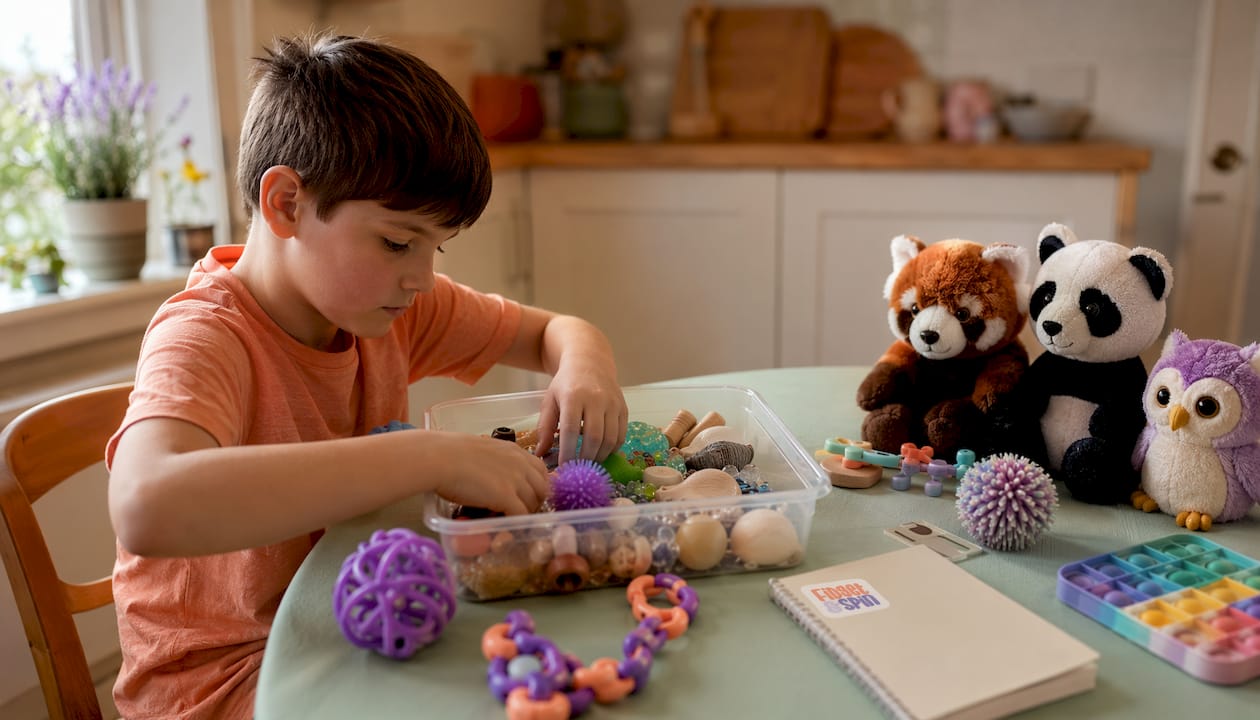
The best practices for sensory play with neurodiverse children start with one principle: follow the child. Not the activity plan, not the other kids in the room, not what you think play should look like. Child-led sensory exploration, environments adapted to reduce overwhelm, and a firm commitment to supporting regulation rather than forcing engagement — these are the foundations that NHS guidance and RCOT recommendations consistently point to. Around 80% of neurodivergent children experience sensory sensitivities or processing differences that affect their attention, engagement, and daily life. That is not a niche concern. It is most of our children.
Here is what that looks like in practice:
- Let the child lead. If Remy wants to line up the same five cars for twenty minutes, that is play. It is regulating, predictable, and entirely his. Redirecting it breaks trust.
- Regulation before engagement. A child who feels unsafe or overwhelmed cannot learn or connect. Safety and calm come first, always, before any expectation of participation.
- Respect self-regulation behaviours. The NHS is clear: do not try to change behaviours an autistic child uses to self-regulate, unless those behaviours cause harm. Spinning, rocking, humming — these are tools, not problems.
- Create distinct sensory zones. Movement spaces, tactile exploration areas, and low-stimulation cosy corners each serve different sensory needs. Not every child needs the same input at the same time.
- Introduce new experiences gradually. Forcing new textures or activities causes avoidance. Child-led introduction builds confidence over time.
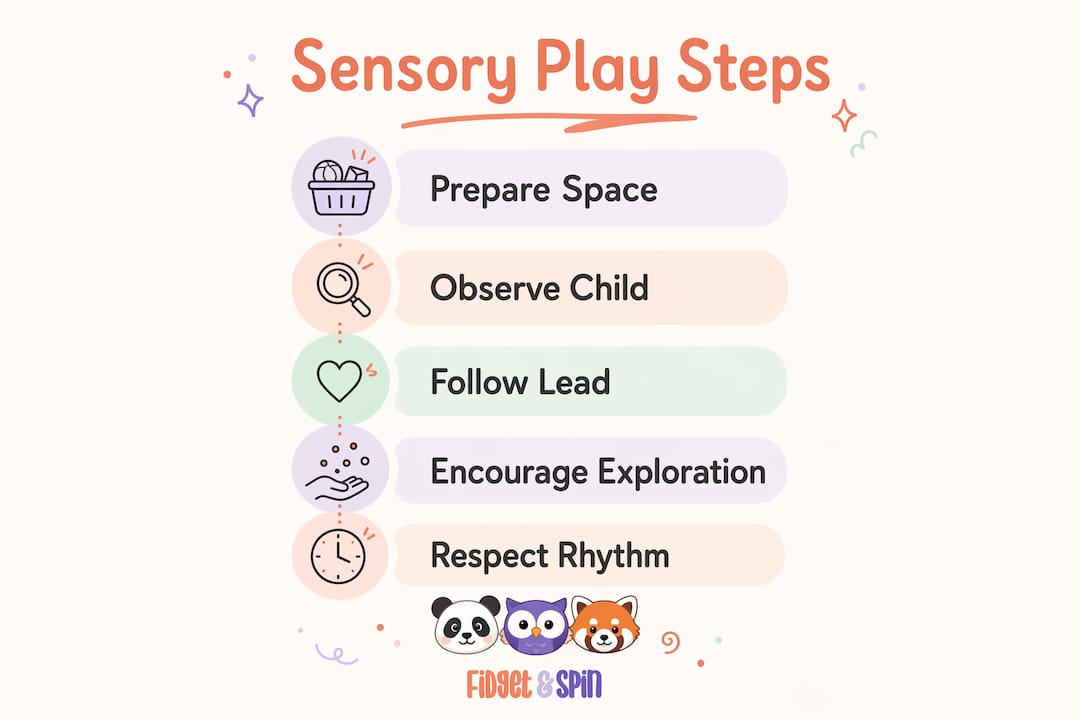
- Observe before you intervene. Watch what your child gravitates towards. Their choices are data.
- Work with an occupational therapist when needed. Embedding sensory strategies into daily routines with professional support produces more sustainable outcomes than one-off clinic sessions.
At Fidget and Spin, our three sensory zones — Wiggle & Bounce, Snuggle & Chill, and Squish & Squeeze — were built directly around these principles, because Remy needed them and nowhere else had them.
Table of Contents
- How to set up a sensory-friendly play space at home
- Why letting your child lead their play changes everything
- What I have learnt from building Fidget and Spin
- Fidget and Spin’s sensory sessions and SEN parties in Brighton
- What I actually think about sensory play advice
- Key takeaways
- FAQ
How to set up a sensory-friendly play space at home
You do not need a therapy room. You need intention and a bit of reorganisation.
The most useful thing you can do is create distinct areas for different sensory states. A movement corner with a small trampoline or crash mat. A quiet nook with a weighted blanket, dim lighting, and a few familiar objects. A tactile tray with rice, kinetic sand, or playdough. These do not need to be permanent installations. A pop-up tent in the corner of the living room counts as a low-stim retreat.
- Manage the sensory environment actively. Noise, lighting, and clutter are the three biggest triggers. Soft furnishings absorb sound. Blackout blinds or fairy lights replace harsh overhead lighting. Fewer toys on display means less visual overwhelm.
- Use sensory tools aligned with your child’s profile. Weighted blankets, chewies, wobble cushions, ear defenders, and fidget toys all serve specific regulatory functions. RCOT guidance frames these as environmental adaptations that support self-regulation, not clinical interventions.
- Offer dry alternatives to messy play. Rice trays, fabric swatches, and pasta bins give tactile input without the distress that wet or mixed textures can cause for some children.
- Build in routine and predictability. Visual timetables and consistent play sequences reduce the anxiety that comes with change. A “now and next” board costs nothing and makes a real difference.
- Prioritise safety. Non-toxic materials, age-appropriate sizes to avoid choking hazards, and clean surfaces matter especially for children who mouth objects or have contact sensitivities.
Pro Tip: Try the “hand under hand” approach when introducing a new texture. Place your hand palm-up under your child’s hand and let them control the contact. It removes the surprise of being touched and gives them full agency over the experience.
Consistency matters more than perfection here. A predictable, low-pressure space your child returns to willingly is worth far more than an elaborate sensory room they find overwhelming.
Why letting your child lead their play changes everything
There is a version of sensory play that looks productive from the outside but quietly undermines the child. It involves an adult steering, redirecting, and “enriching” every moment. I have done it. Most of us have.
Child-led play is different. It means watching Remy spin the wheels of a toy car for ten minutes and sitting with him rather than suggesting we build a tower instead. It means recognising that repetitive play — lining objects up, sorting by colour, returning to the same sequence — is genuine play with genuine developmental value. It is how many neurodiverse children regulate their nervous systems and make sense of the world.
Play is the primary medium through which children develop emotional regulation, behaviour management, and social skills. When we override a child’s chosen play to impose our idea of what is educational, we interrupt that process. We also signal that their instincts are wrong, which erodes exactly the trust that makes connection possible.
Practically, child-led sensory play looks like this:
- Copy before you contribute. Sit alongside your child and mirror what they are doing before introducing anything new.
- Offer, do not insist. Place a new material nearby and let curiosity do the work.
- Join the pattern, not the goal. If your child is sorting objects, sort alongside them. Do not suggest a different game.
- Observe sensory preferences actively. Does your child seek heavy input — crashing, squeezing, jumping? Or do they need calm and low stimulation? Their choices tell you what their nervous system needs right now. Keeping a simple checklist of what they gravitate towards helps you tailor sensory experiences over time.
This approach does not require specialist equipment. It requires patience and a willingness to follow rather than lead. The Whittington NHS Trust’s guidance on autism and play puts it plainly: start where your child is, and build in small steps from there.
If you are concerned about sensory overwhelm tipping into distress, understanding the difference between a meltdown and a tantrum is genuinely useful context for any carer.
What I have learnt from building Fidget and Spin
We left a lot of groups early. Soft play on a Saturday morning, with the music and the shrieking and the other children running unpredictably — Remy would last about eight minutes before it became too much. I would carry him out, both of us frazzled, past the looks from parents who had no idea and probably meant no harm. It still stung.
What I kept noticing was the gap between what those spaces promised and what they actually delivered for children like Remy. “All welcome” rarely meant “we have thought about sensory needs.” It meant “we have not put up a sign saying otherwise.”
When Anthony and I built Fidget and Spin, we started with the things that had always been missing. Separate zones so a child could choose their level of input. No pressure to join in. Permission to stim, to hide, to move constantly, or to sit in the corner with a weighted blanket and not interact with anyone. We shaped the sessions around sensory zone principles informed by RCOT and NHS guidance, and then we kept adjusting based on what families told us was and was not working.
The SEN-friendly birthday parties came from the same place. The dread many parents feel before parties — the noise, the chaos, the cake-cutting moment where everyone sings loudly and a child may cover their ears and cry — is a common experience in this community. We wanted to build something that removed it.

What I know now, after running these sessions and parties, is that the families who benefit most are not the ones whose children are the most severely affected. They are the ones who have simply never been in a space that was actually built for their child. That shift, from tolerating a space to belonging in one, is what good sensory play practice makes possible.
Fidget and Spin’s sensory sessions and SEN parties in Brighton
If you are in Brighton, Hove, or wider Sussex and you are looking for a space that genuinely gets it, Fidget and Spin’s weekly sensory stay-and-play sessions run for neurodiverse children aged 1–6 across three zones: Wiggle & Bounce for big movement, Snuggle & Chill for low-stim calm, and Squish & Squeeze for tactile play and fidgets. Children move freely between zones. There is no register, no circle time, no pressure to participate in anything.
For birthdays, our SEN-friendly party packages cover ages 1–7 across Brighton, Hove, and Sussex. Three packages — The Wee One (£220), The Big One (£320), and The Whole Shebang (£530) — include private venue hire and flexible setups designed around your child’s sensory needs. Concession spots are available through our Pay-It-Forward scheme at checkout. Book online, no phone calls required.
What I actually think about sensory play advice
Most sensory play content online is written for neurotypical children with a paragraph bolted on at the end about “children with additional needs.” It is not malicious. It is just not written by someone who has sat on a car park kerb at 9am, child in arms, wondering if they will ever find somewhere that works.
The advice that actually helps is the kind that starts with regulation, not enrichment. A child who is dysregulated cannot benefit from the most thoughtfully designed sensory bin in the world. Getting the environment right, following the child’s lead, and resisting the urge to redirect or “improve” their play — these are not soft suggestions. They are the preconditions for everything else.
I am also sceptical of the idea that sensory play needs to be elaborate to be effective. Remy has regulated beautifully with a bowl of dried pasta and twenty minutes of uninterrupted time. The inclusive play guidance from Sense makes this point well: forcing new experiences backfires. Simplicity, consistency, and child-led pacing are what actually build confidence.
What neurodiverse families in Brighton and Sussex need is not more advice. It is more spaces that have already done the thinking, so we can just show up.
Key takeaways
Child-led sensory play, regulation-first environments, and respect for self-regulation behaviours are the foundations of effective sensory support for neurodiverse children.
| Point | Details |
|---|---|
| Regulation before engagement | A child must feel safe and calm before meaningful play or learning can happen. |
| Child-led play supports development | Play builds emotional regulation, behaviour management, and social skills when the child leads. |
| Around 80% of neurodivergent children have sensory differences | Sensory processing differences affect attention and daily life for the majority of neurodivergent children. |
| Environmental adaptation over clinical remediation | Adapting spaces with zones, tools, and reduced stimulation is often more sustainable than clinic-based approaches alone. |
| Fidget and Spin | Weekly sensory sessions and SEN birthday parties in Brighton and Sussex, built around these exact principles. |
FAQ
What does child-led sensory play actually mean?
It means following your child’s chosen activity rather than directing it. If they want to line up objects or repeat the same movement, you join that rather than redirect them to something else.
How do I know which sensory inputs my child needs?
Observe what they seek out and what they avoid. Children who crash into things or seek tight squeezes often need proprioceptive input; those who spin or rock may need vestibular input. A checklist of daily preferences helps you spot patterns over time.
When should I involve an occupational therapist?
If sensory differences are significantly affecting your child’s daily participation — at home, in early years settings, or socially — an occupational therapist can help embed personalised strategies into routines, as RCOT guidance recommends.
Are Fidget and Spin sessions suitable for children with PDA?
Yes. Sessions are entirely child-led with no demands, no circle time, and no pressure to engage with any activity. Children can move between zones freely or simply observe.
Do I need specialist equipment for sensory play at home?
No. Rice trays, playdough, a weighted blanket, and a quiet corner are enough to start. The approach matters far more than the materials.
Recommended
- Sensory play best practices for neurodiverse kids | Fidget and Spin Brighton
- The real impact of sensory play on neurodiverse kids | Fidget and Spin Brighton
- Effective early years play strategies for neurodiverse children | Fidget and Spin Brighton
- Effective sensory play strategies for neurodiverse kids | Fidget and Spin Brighton