TL;DR:
- A truly inclusive birthday party prioritizes sensory needs, predictability, and voluntary participation. Planning with small guest lists, familiar venues, and sensory tools ensures comfort for autistic children and reduces social exclusion. Effective preparation and support lead to meaningful celebrations focused on safety and respect.
An inclusive birthday party for an autistic child is one where sensory needs are respected, the environment feels safe, and nobody is expected to perform happiness on cue. If you are searching for a birthday party for autistic child Brighton options, you already know that most mainstream venues were not built with your child in mind. Over 65% of autistic children face social exclusion at parties, and 34% have no friends outside their immediate family. Those numbers are not a verdict on your child. They are a verdict on how parties are typically designed.
What makes a birthday party autism-friendly?
The term “autism-friendly party” gets used loosely, so it is worth being specific. An autism-friendly party is one that reduces unpredictability, manages sensory input, and gives your child genuine control over their experience. That is the standard. Everything else follows from it.
Predictability reduces anxiety and enables enjoyment. Surprises, by contrast, often cause sensory shutdowns. This is why traditional party elements like pass-the-parcel, the sudden blast of “Happy Birthday,” and a room full of balloons can tip a child from coping to overwhelmed in under a minute.
The core features of a genuinely autism-friendly celebration include:
- Sensory environment: Dimmed or natural lighting, lowered music or none at all, and a quiet room where your child can decompress without it being framed as a punishment.
- Visual schedule: A simple, picture-based sequence of what will happen and when. Stick it on the wall. Let your child refer to it. It does more work than you might expect.
- Voluntary participation: Activities are on offer, not compulsory. Nobody is pulled into a circle against their will.
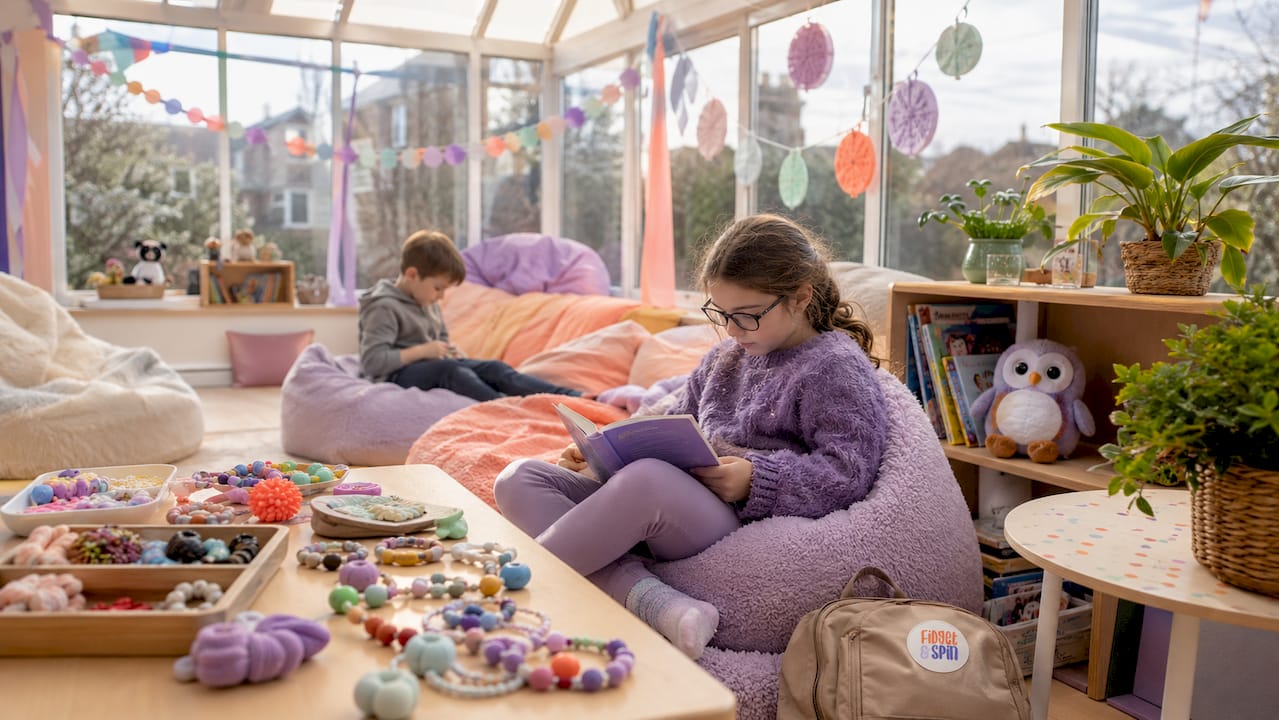
- Sensory stations: Sensory bins, tactile play, and build-your-own snack areas give children something to do that does not require social performance.
- Dietary flexibility: Check with every family beforehand. Food anxiety is real and often overlooked.
- Managed noise moments: Warn your child before the birthday song. Or skip it entirely. The cake still tastes the same.
Pro Tip: If balloons are a trigger, put “no balloons” on the invitation. Most parents will not question it, and the ones who do are giving you useful information about whether they are the right guests.
How to plan an inclusive birthday party in Brighton
Planning well is the single biggest factor in whether the day goes smoothly. Here is a practical sequence that works.
- Choose the right venue or stay home. Familiar environments lower baseline anxiety. Your living room, garden, or a venue your child already knows from sensory play sessions are all valid choices. A shiny new venue with unknown acoustics and unpredictable staff is a risk.
- Preview the venue beforehand. Visit at a quiet time. Walk the route from the entrance to the party space. Identify the toilets, the exit, and the quietest corner. Bring your child if they can manage it.
- Keep the guest list small. Small parties with close friends consistently produce more meaningful social experiences than large gatherings for autistic children. A group of four or five known faces is almost always better than twelve.
- Prepare your child with a social story. Write or draw a short story about what will happen at the party. Include who will be there, what the space looks like, and what your child can do if they feel overwhelmed. Read it together in the days before.
- Communicate with other parents. Asking about guests’ specific needs before the party fosters genuine inclusion. A quick message saying “please let me know about any sensory needs, food preferences, or anything that helps your child feel comfortable” takes two minutes and prevents a lot of surprises.
- Pack a sensory kit. Noise-cancelling headphones, a preferred fidget, a chewy, a comfort object. Keep it accessible, not buried at the bottom of a bag.
Pro Tip: Build in a planned break mid-party. Not as a response to meltdown, but as a scheduled part of the programme. “We’re going to have five quiet minutes in the calm corner after cake.” It normalises regulation for every child in the room.
Here is a simple planning reference for the key decisions:
| Decision | What to consider |
|---|---|
| Venue type | Familiar space vs. new venue; sensory triggers; noise levels |
| Guest list size | Your child’s social comfort; quality of friendships over quantity |
| Party length | Shorter is usually better; 90 minutes to two hours is a reasonable ceiling |
| Activities | Structured and voluntary; sensory stations over competitive games |
| Communication | Contact all parents in advance; share the plan and ask about needs |
What challenges might come up, and how do you handle them?

Every parent I know has had a party moment they did not plan for. The key is not to prevent every difficulty. It is to have a plan when one arrives.
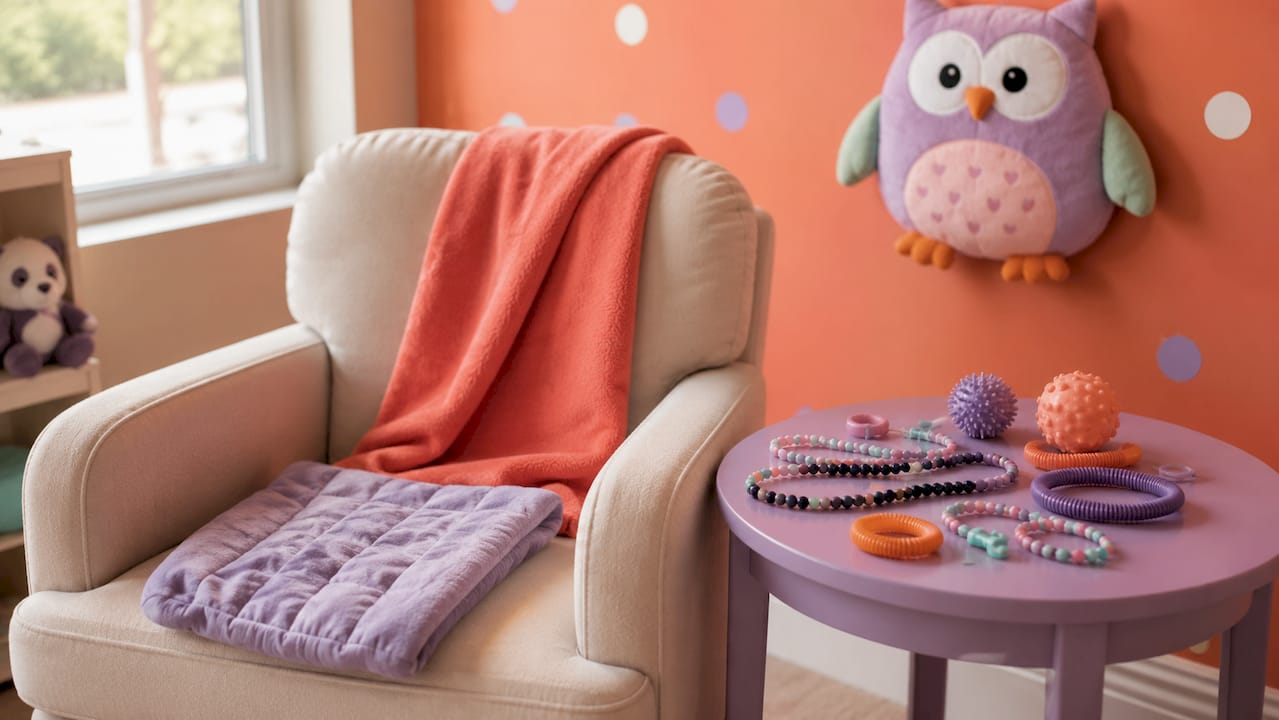
Meltdowns communicate sensory or emotional overwhelm. They are not failure. They are your child telling you something important. Having weighted lap pads, noise-cancelling headphones, and a quiet space ready means you can respond rather than react.
Common challenges and how to meet them:
- Signs of overload: Watch for stimming that shifts from regulated to distressed, covering ears, withdrawal, or a glazed look. These are early signals. Act on them before the point of no return.
- Pressure to participate: Remove it entirely. If your child wants to watch from the sofa, that is participation. Forcing engagement at a party produces the opposite of what you want.
- The trusted adult role: Assign one adult whose only job is to support your child. Not to manage the party, not to chat with guests. Just to stay close, read the signals, and act.
- Post-party fatigue: The day after is often harder than the party itself. Plan for it. Keep the following day quiet, low-demand, and full of preferred activities.
A successful party is measured by whether your child felt safe and respected, not by whether they smiled for every photo or ate the cake with everyone else. Redefining success is not lowering the bar. It is setting the right one.
Brighton venues and resources for sensory-friendly celebrations
Brighton has a growing number of options for parents looking for autism-friendly party venues and sensory-conscious spaces. The landscape is still patchy, but it is improving.
Sensory-friendly birthday parties in the UK typically run for around two hours, cater to small groups, and are staffed by people with SEN training. That combination matters. A venue that ticks the sensory boxes but has staff who have never supported a dysregulated child is only half the solution.
| Resource type | What to look for |
|---|---|
| Dedicated SEN party providers | Staff trained in neurodiverse communication; sensory equipment; calm environments |
| Sensory play venues | Existing familiarity for your child; low-stimulus zones; flexible booking |
| Community play groups | Social confidence building ahead of the party; autism-friendly play groups in Brighton are a good starting point |
| Home-based celebrations | Maximum control over environment; no travel anxiety; sensory kit always to hand |
Book early and have a direct conversation with any venue before you commit. Ask specifically about lighting, sound, capacity, and whether they have hosted neurodiverse children before. A venue that cannot answer those questions confidently is telling you something.
Fidget and Spin runs sensory birthday parties across Brighton, Hove, and wider Sussex for children aged 1–7. The sessions use three sensory zones: Wiggle and Bounce for big movement, Snuggle and Chill for low-stimulus rest, and Squish and Squeeze for tactile play. Packages start at £220 for The Wee One, with The Big One at £320 and The Whole Shebang at £530. Staff are SEN parents themselves, which changes the quality of support in the room.
Key takeaways
An inclusive birthday party for an autistic child succeeds when sensory needs are planned for in advance, the guest list is small, and success is measured by your child’s comfort rather than traditional party metrics.
| Point | Details |
|---|---|
| Predictability is the priority | Use visual schedules and social stories to reduce anxiety before and during the party. |
| Small is almost always better | A group of four or five known guests produces more genuine connection than a large crowd. |
| Sensory kit is non-negotiable | Pack headphones, fidgets, and a comfort object, and keep them accessible throughout. |
| Assign a trusted adult | One person dedicated solely to supporting your child makes regulation far more manageable. |
| Redefine what success looks like | Safety and comfort are the measures that matter, not noise level or number of guests. |
What I have learnt from six years of birthday parties with Remy
The first party we threw for Remy was, in hindsight, a disaster waiting to happen. Twelve children, a hired hall, a balloon arch, and a party bag full of noisy plastic things. He lasted forty minutes before we were in the car park, him in my arms and me wondering why I had thought any of that was a good idea.
Experience genuinely does refine your approach. By his third birthday, we had a social story, a sensory kit, three guests, and a plan for the quiet corner. By his fifth, he told us what he wanted, and we built the party around that. A Lego table, his two best friends, and a very specific flavour of crisps. It was the best one yet.
What I wish someone had told me earlier: the anxiety you feel before each party does not mean you are doing it wrong. It means you know your child. Trust that knowledge. It is more useful than any party planning checklist.
The relief of finding a venue where staff do not look alarmed when your child needs a break is something I cannot fully describe. It changes the whole day. You stop managing the room and start actually being present with your child. That is what we built Fidget and Spin to give other families.
Smaller, quieter, and more controlled is not a consolation prize. For many of our children, it is the version of celebration that actually works.
— Caitlin
Fidget and Spin’s sensory birthday parties in Brighton
Fidget and Spin was built because Anthony and I could not find what Remy needed. Every mainstream venue felt like a gamble.
Our sensory birthday parties are designed specifically for neurodiverse children aged 1–7, with three sensory zones, SEN-trained staff, and a calm, predictable environment. If your child has never been to one of our sessions before, our weekly sensory play sessions are a brilliant way to build familiarity with the space before the big day. Three packages are available, starting at £220, with everything adapted to your child’s needs. Get in touch to ask questions or book.
FAQ
What is an autism-friendly birthday party?
An autism-friendly birthday party is one that prioritises sensory regulation, predictability, and voluntary participation over traditional party formats. It typically includes quiet zones, visual schedules, and small guest numbers.
How many guests should an autistic child’s party have?
Small parties with close friends consistently work better than large gatherings. A group of four to six known children is a reliable starting point for most autistic children.
What sensory tools help at a birthday party?
Noise-cancelling headphones, chewable jewellery, weighted lap pads, and a preferred fidget toy all support regulation during parties. Keep them in a bag your child can access independently.
How do I find autism-friendly party venues in Brighton?
Ask venues directly about lighting, sound levels, capacity, and SEN experience before booking. Fidget and Spin offers dedicated sensory party options in Hove and across Brighton and Sussex.
What do I do if my child has a meltdown at their party?
Meltdowns signal sensory or emotional overwhelm, not failure. Move calmly to a pre-prepared quiet space, use comfort items, and reduce demands. Having a trusted adult assigned to your child in advance makes this much easier to manage.
Recommended
- Autism friendly birthday party Sussex: your local guide | Fidget and Spin Brighton
- Autism-friendly play groups in Brighton: 2026 guide | Fidget and Spin Brighton
- Things to do with autistic toddler Brighton: 9 real picks | Fidget and Spin Brighton
- Autism friendly party games: your 2026 guide | Fidget and Spin Brighton