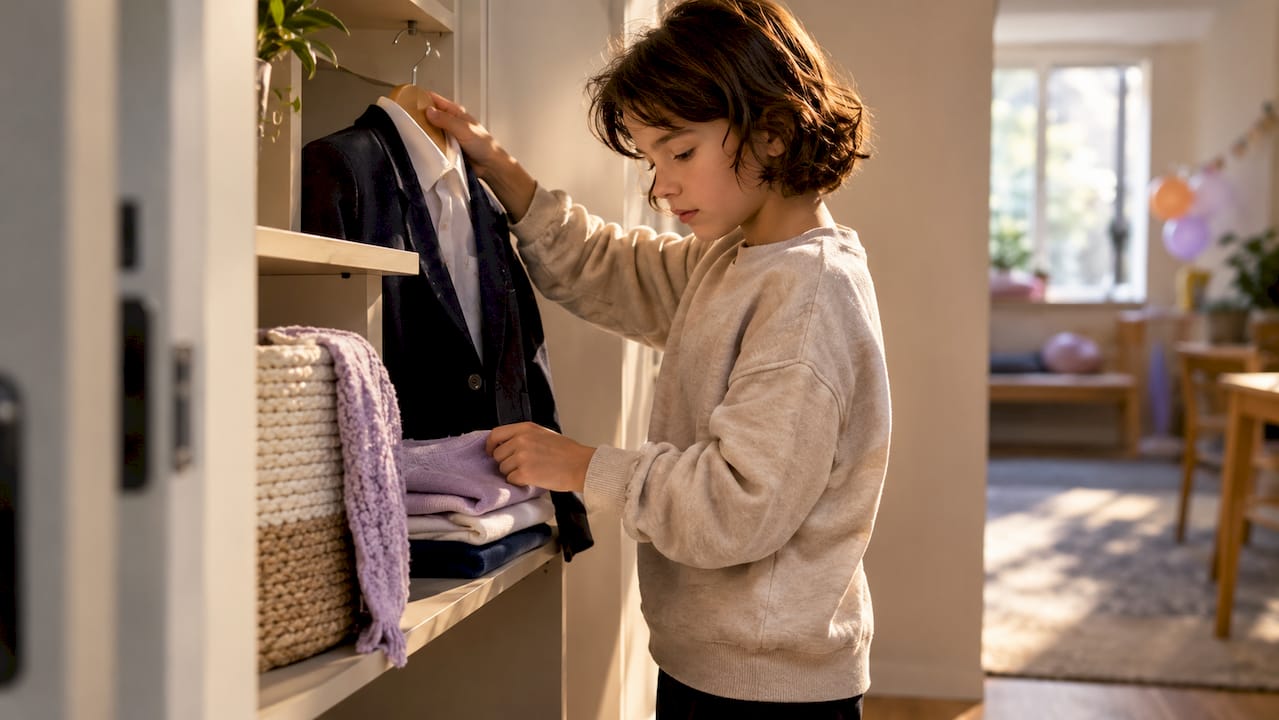
The single best approach is comfort first, formality second: soft, tagless, pre-tested clothes, paired with a spare outfit and a quiet space to retreat to. Leaving early or changing halfway through counts as a win, not a failure. Get the clothing right and the rest of the party has a fighting chance.
TL;DR:
- Removing tags, seams, and stiff fabrics significantly reduces physical discomfort for sensory-sensitive children during parties.
- Arriving early and setting up a quiet, familiar space helps children acclimate to noisy environments and reduce sensory overload.
- Dressing strategies like layering outfits and trying clothes beforehand lower the risk of meltdowns related to uncomfortable clothing.
- Packing a well-stocked sensory go-bag with extra clothes, noise-cancelling headphones, and comfort items is crucial for quick fixes and successful outings.
- Certified sensory-friendly party packages include dedicated zones and are designed to minimize stress, allowing children to enjoy celebrations on their terms.
Table of Contents
- Quick clothing fixes to try this week
- Plan the party around clothing needs
- Practical dressing strategies on the day
- Emergency kit: what to pack in your sensory go-bag
- From my experience: short examples from running sensory sessions and parties
- Why the “just get them used to it” advice misses the point
- If you want a ready-made sensory-friendly party option
- Sources
- FAQ
Quick clothing fixes to try this week
Remy once refused to leave the car at his own cousin’s party because his jumper “felt like ants.” We sat in the car park for ten minutes while I turned it inside out to check the seams. That’s the job, really: treating clothes as sensory data, not stubbornness.
Occupational therapists back this up. Tags, seams, tight waistbands and certain fabrics can cause real physical discomfort for sensory-sensitive children, so the fixes are mostly about removing friction rather than teaching tolerance. A few changes make a genuine difference:
- Go for seamless, tagless, jersey fabrics and skip stiff collars or scratchy synthetics.
- Cut out tags, wash new clothes several times to soften them, and turn items inside out if seams still bother them.
- Choose pull-on waistbands, seamless or elastic-free socks, and soft trainers or plain canvas shoes over anything stiff or buckled.
- Build up wear time gradually: ten minutes at home, then an hour, then a whole afternoon, before the party itself.
Pro Tip: When you find “the one” jumper or trousers that get zero complaints, buy two or three of the same item straight away. Shops discontinue lines constantly, and nothing derails a Tuesday morning faster than the last soft t-shirt going in the wash.
Plan the party around clothing needs
Nobody warns you how loud “quiet” parties can be. A living room with eight kids, a bluetooth speaker and someone’s uncle shouting “SMILE!” is a lot, even before you factor in an outfit that already feels wrong.
Parties bring what one occupational therapy resource calls a “celebration load”: unpredictable timing, unfamiliar faces, and sensory input stacked on top of clothes that already need concentration to tolerate. A handful of planning moves take the pressure off:
- Arrive fifteen minutes early, before the noise builds, so your child can settle into the space and clothes while it’s still calm.
- Set up a permanent quiet corner with soft lighting and one trusted adult, introduced as a normal part of the party rather than a punishment.
- Tell the host what your child needs in plain sensory language: “he can’t wear anything with a collar” lands better than “he’s fussy about clothes.”
- Ask about smart-casual alternatives, such as soft trousers and a polo instead of a stiff shirt, if there’s a dress code at all.
- Check the guest count and food layout in advance. A cramped room and sticky buffet table add tactile and smell pressures on top of whatever the clothing is already doing.
Our guide to low stimulation party ideas goes deeper on venue and guest-list choices if you’re hosting rather than attending.
Practical dressing strategies on the day
Regulation starts before the outfit goes on. A morning with some heavy work, jumping, pushing, carrying something weighted, followed by a calm ten minutes, puts your child in a better place to tolerate clothes that might otherwise feel like too much.
Try the outfit at home earlier in the week, not that morning. Trial-wearing in calm conditions rather than for the first time under pressure cuts the odds of a last-minute meltdown considerably. Think in layers rather than one fixed outfit:
- A comfortable base layer your child can wear for the entire party without needing to change out of it.
- A removable smart layer, a shirt or dress, kept just for the “dressy minutes” and photos.
- A spare pair of shoes in the bag, because feet swell, socks bunch, and buckles that felt fine at 9am feel like a trap by noon.
This is the “dressy minutes” trick: get the smart photos done in the first twenty minutes, then let your child change into whatever feels good for the rest of the day. Nobody remembers the outfit past the cake anyway.
Pro Tip: Watch for the quiet signs before the loud ones. Pulling at a collar, going still, or repeating one phrase usually shows up before shouting or tears. Offer the change of clothes then, not after.
Once photos are done, make the no-pressure policy explicit to other adults too: “he’s had his pictures, he’s changing now” stops well-meaning relatives asking for one more shot in the itchy shirt.
Emergency kit: what to pack in your sensory go-bag
I have left a party with Remy in his socks, holding his shoes, more times than I can count. That’s not a disaster. That’s a plan working.
Pack a proper go-bag and half the day’s stress disappears before it starts:
- A full spare outfit, ideally a duplicate of something you already know works, plus spare socks and shoes.
- Noise-cancelling headphones, a favourite fidget, a safe snack, water, and a soft blanket or lap pad for extra pressure input.
- Small fixes: seam-covering strips, tiny scissors for stray tags, wipes, and a spare nappy or pair of underwear.
- A go-bag with headphones and a familiar fidget on hand also means you’re not scrambling if things tip over quickly.
And if you need to leave after forty minutes, that’s not cutting the visit short. That’s a successful party, on your child’s terms.
From my experience: short examples from running sensory sessions and parties
We turned up early to a friend’s party once, before most guests arrived, just to let Remy walk the space in his own time. He touched the tablecloth, checked where the toilet was, found a corner. By the time other children arrived, he’d already decided the room was safe. That fifteen minutes probably saved the whole afternoon.
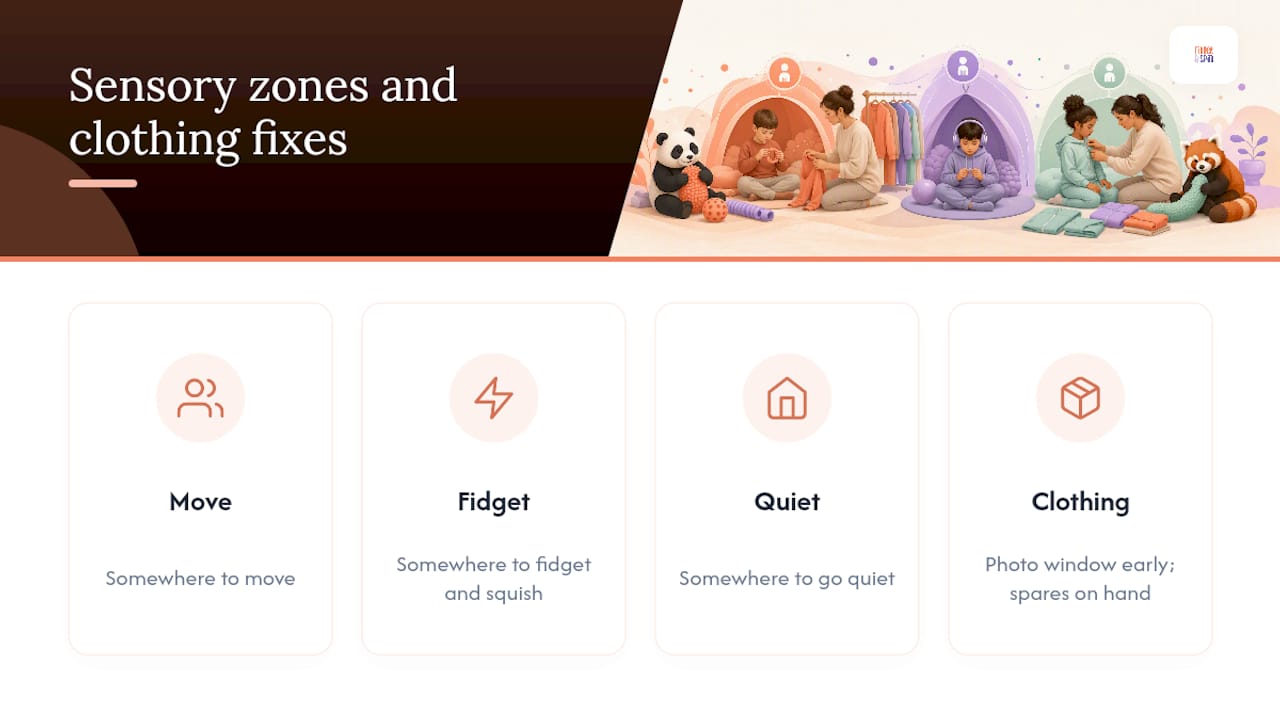
It’s why every Fidget and Spin party runs on three sensory zones instead of one big room: somewhere to move, somewhere to fidget and squish, somewhere to go quiet. Clothes get the same flexibility. We build in a photo window early, then it’s whatever’s comfortable for the rest of the session, and we always keep spares on hand for the child who’s decided, ten minutes in, that today’s outfit was a mistake.
If you run sessions or groups yourself, you can copy both ideas without spending anything: a defined quiet zone, and a spare-clothes box by the door.
Why the “just get them used to it” advice misses the point
The advice I hear most often, from relatives, from well-meaning strangers, from certain corners of parenting forums, is that children need to “get used to” scratchy collars and stiff shoes because that’s what growing up involves. I think that’s backwards, and the occupational therapy guidance backs me up here: a seam that genuinely hurts doesn’t stop hurting because a child wears it more often.

What the research and the lived reality both point to is simpler than the tolerance-building narrative suggests. Fix the physical problem, tags, seams, fabric, first. Only once that’s sorted does it make sense to talk about building confidence in new settings. Most party advice skips straight to the confidence part and wonders why nothing improves.
If you take one thing from this, prioritise the clothing fix before the pep talk. A child who isn’t fighting their own jumper has far more capacity left for everything else the party throws at them.
— Caitlin
If you want a ready-made sensory-friendly party option
Fidget and Spin exists because Anthony and I couldn’t find a party where Remy’s clothes, or his need to leave the room, or his refusal to wear anything with a collar, were just accepted as normal. So we built one. The packages, The Wee One at £220, The Big One at £320, and The Whole Shebang at £530, all come with our three sensory zones already set up: movement, tactile play, and a proper low-stim cosy corner, so you’re not building a quiet room out of a spare bedroom at the last minute.
If DIY party planning fills you with dread rather than confidence, a managed party takes that whole layer off your plate. We handle the space, the pacing and the spare-kit approach so you can focus on your child rather than the guest list. Full details on packages and extras like the bouncy castle or sensory play station are on our parties page, and if you’d rather start with a smaller weekly session before committing to a party, our SEN Stay and Play sessions run across Brighton and Hove for £7.50 a visit.
Sources
For dressing guidance straight from occupational therapists, see Northumbria’s Sensory OT tips and the Devon dressing advice service. For clothing choices specifically, NeuroDifferent’s guide maps sensory-friendly versus adaptive options in detail. Our own birthday planning guide covers the wider checklist beyond clothing.
- Strategies for dressing sensitive children — Bedfordshire & Luton children’s OT
- Top tips for dressing — Sensory OT, Northumbria
- The birthday party paradox — Direct Floortime Therapy
- Navigating dress clothes for sensitive kids — Christina David
FAQ
What clothing works best for children with sensory sensitivities at parties?
Seamless, tagless clothes in soft jersey fabric work best, along with pull-on waistbands and shoes without stiff buckles. Washing new clothes several times before wear softens the fabric further and reduces the chance of surprise discomfort on the day.
How do I get my child to wear “smart” clothes for a special photo?
Try the “dressy minutes” approach: dress them in the smart outfit just for the first twenty minutes of photos, then let them change into their regular comfortable clothes for the rest of the party. Test the smart outfit at home beforehand so it isn’t a first-time experience under pressure.
Is it okay to leave a party early because of a clothing meltdown?
Yes. Leaving early or changing into comfortable clothes partway through is a legitimate, successful outcome, not a failure of the day. A shorter visit where your child stayed regulated beats a longer one spent in distress.
How much does a sensory-friendly party cost at Fidget and Spin?
Fidget and Spin’s party packages start from £220 for The Wee One, with The Big One from £320 and The Whole Shebang from £530, all including sensory zones set up in advance. Extras such as a bouncy castle or photo booth can be added on separately.
What should I pack in a sensory go-bag for parties?
Pack a full spare outfit, spare socks and shoes, noise-cancelling headphones, a favourite fidget, a snack, and small fixes like seam strips or tag scissors. This kind of go-bag, built around comfort items and a change of clothes, means you’re prepared before discomfort turns into a meltdown.