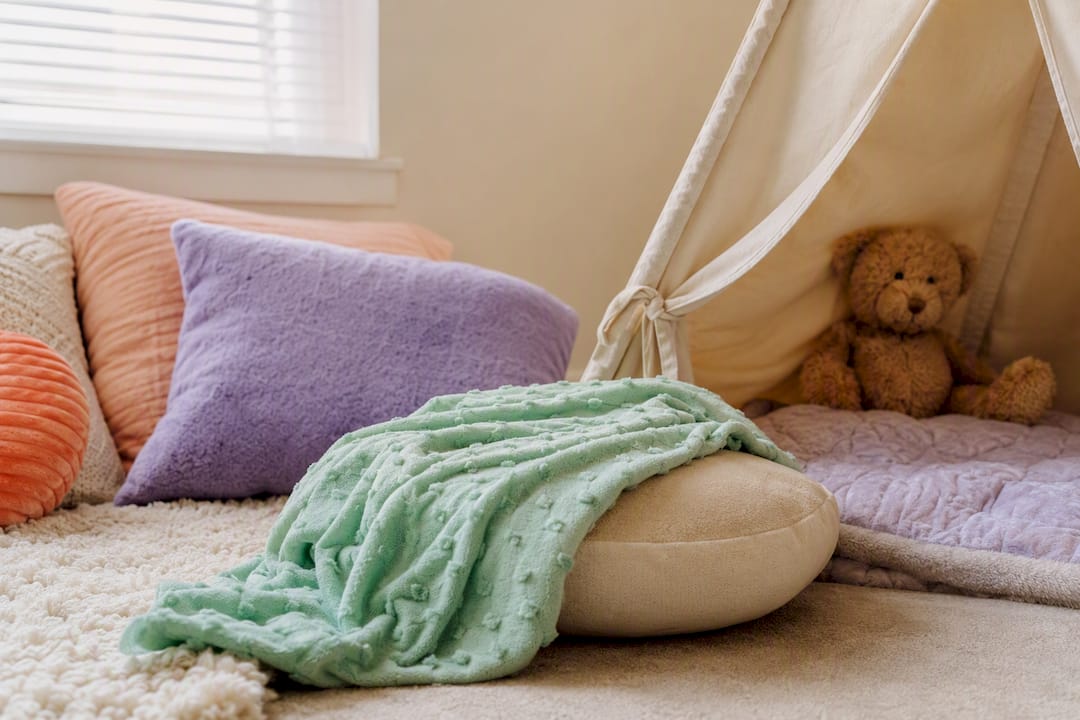
A toddler cosy corner is a small, supervised, low-stimulation nook with one comfortable seat, one tactile support and one visual anchor. Start with those three and rotate what sits in the space every few weeks. You don’t need a Pinterest board or a weekend of DIY. Grab a floor cushion, dim a lamp, and drop one comfort item into a small basket nearby.
- Seat: a beanbag, floor cushion or folded duvet
- Comfort item: a familiar blanket, soft toy or fidget
- Visual anchor: one picture or feelings card showing what the space is for
Introduce it when your toddler is already settled, not mid-meltdown. Keep it boring, keep it small, and let it earn its place slowly.
Key Takeaways
A calming toddler cosy corner needs only a seat, one tactile item and one visual anchor, introduced during calm moments and practised often.
| Point | Details |
|---|---|
| Start minimal | One seat, one comfort item, one visual anchor is enough to begin with tonight. |
| Define the boundary | A rug, tape line or canopy signals the space is different from the rest of the room. |
| Rotate, don’t accumulate | Swap one item every two to three weeks instead of adding more over time. |
| Introduce when calm | Practise short, positive visits regularly, never only during a meltdown. |
| See it modelled | Fidget & Spin’s Snuggle & Chill zone shows low-stim setups in action at weekly sessions and parties. |
Table of Contents
- Cosy corner setup for toddlers: the principles that actually matter
- Eight cosy corner ideas for toddlers you can copy this weekend
- How to set up your toddler’s cosy corner step by step
- Sensory tools that help toddlers, and what to leave out
- Keeping the cosy corner safe
- Teaching your toddler to actually use the corner
- When the cosy corner isn’t working
- My lived-experience guide: building cosy corners that actually work
- What most cosy corner advice gets backwards
- Want to see a cosy corner in action?
- Sources
- FAQ
Cosy corner setup for toddlers: the principles that actually matter
Many parents initially try elaborate setups with many cushions, tents, and toys, but often find toddlers either ignore these or treat them as additional play areas. The principles matter more than the props.
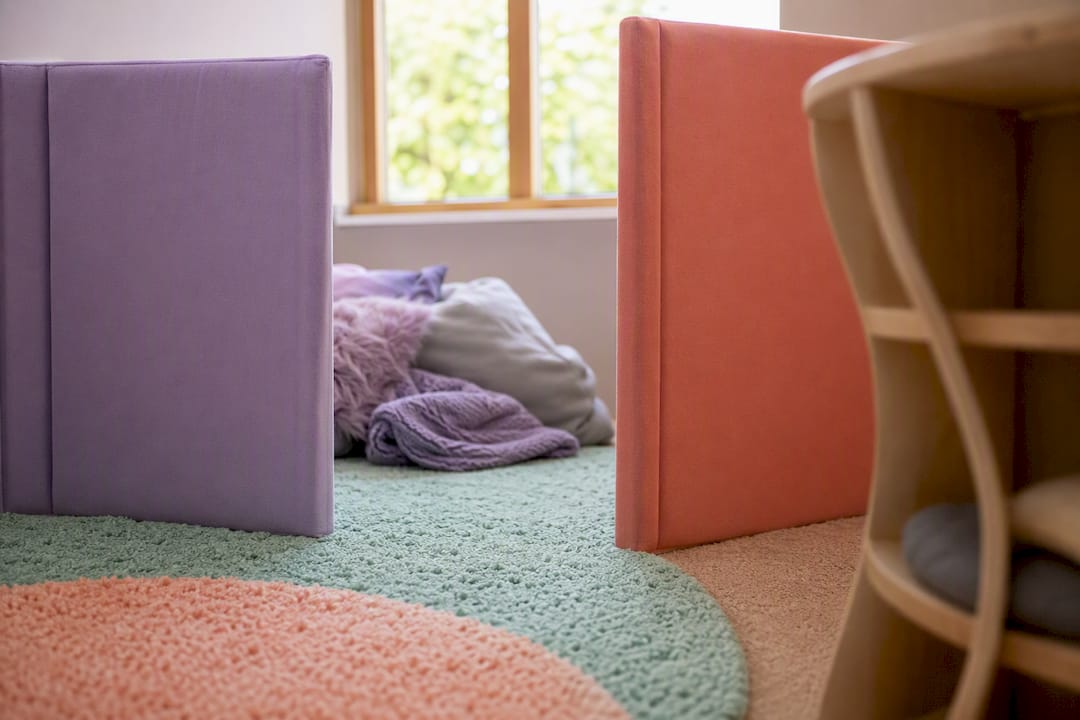
Pick a spot that’s out of the main traffic flow but still within your eyeline, then mark it clearly. A rug, a low shelf, a strip of tape, even a canopy, all tell a toddler’s brain “this bit is different.” That boundary line does more work than people expect, because it gives a subtle but reliable signal that the space serves a different purpose to the rest of the room, according to Community Playthings’ guidance on calm corners in early years settings.
- Choose a low-traffic, visible spot and mark a clear boundary.
- Start with three core items only, and rotate anything extra.
- Match tools to your child’s own sensory profile, not a generic list.
- Introduce and practise the space during calm moments, never mid-meltdown.
- Keep an adult nearby and supervise every single time.
Practitioners consistently find that three core items beat a full toy box: a seat, a tactile support, and a visual anchor.
Pro Tip: If your toddler already has a favourite comfort object, put that in the corner first. Familiarity beats novelty every time when you’re trying to build a calming association.

Eight cosy corner ideas for toddlers you can copy this weekend
None of these need a trip to a specialist shop. Most use things already in your house.
- The minimal den. One floor cushion, one soft lamp, one small basket. That’s it. This is the fastest setup and the one I’d recommend to any parent starting from scratch tonight.
- The reading nook. A low shelf with three or four familiar books and a cushy seat. Even very young children benefit from a quiet, predictable space with soft cushions and a small rotation of familiar books, which doubles as gentle support for early literacy.
- The canopy or pop-up tent. Gives a contained, cosy feeling without shutting your toddler away from you. Keep it supervised and keep the opening in view.
- Beanbag with a lap pad. Some toddlers find deep pressure grounding. A weighted lap pad on a beanbag can help a child settle faster than words ever will.
- The tactile basket corner. One textured blanket, one tub of putty, one board book with different textures. Nothing more.
- The listening corner. Noise-reducing headphones, a short quiet playlist, and a visual card showing “quiet time.” Brilliant for toddlers who find household noise overwhelming.
- Move-and-rest combo. A small crash mat or cushion pile just outside the cosy corner lets your toddler bounce out excess energy before settling into the calm space.
- The personalised pocket. Theme it around whatever your toddler is currently obsessed with, dinosaurs, tractors, a particular cartoon character. A corner that reflects a genuine interest gets used far more than a neutral one.
Pick one. Don’t try to build all eight at once, that defeats the entire point of a low-stimulation space.
How to set up your toddler’s cosy corner step by step
Before you buy or move anything, decide what job the corner needs to do. Is it there to prevent overwhelm before it builds, help your toddler de-escalate mid-meltdown, or somewhere to recover afterwards? The answer changes what you put in it.
- Pick a spot that’s quieter than the rest of the room but still easy for you to supervise from nearby.
- Mark the boundary with furniture, a rug, tape on the floor, or a simple canopy.
- Choose low seating your toddler can climb into independently, and that you can get down to as well.
- Swap harsh overhead lighting for a lamp, a dimmable bulb, or soft string lights.
- Keep storage tidy and visible, one basket, not a toy box tipped out on the floor.
A calm-down corner doesn’t need expensive kit. Most effective home setups reuse things you already own and focus on consistency rather than novelty.
Pro Tip: Tidy, limited displays reduce the mental load of choosing what to do, which is exactly what you want in a space meant for winding down, not decision-making.
Sensory tools that help toddlers, and what to leave out
What calms one toddler can wind another one right up. Weighted lap pads soothe some children and distress others entirely, so trial one item at a time rather than filling the corner in one go, a method practitioners rely on for exactly this reason.
Worth including:
- A soft cushion or beanbag
- A familiar blanket or comfort item
- One fidget toy, not a collection
- Noise-reducing headphones
- A simple feelings card or visual cue
Worth avoiding:
- Bright, flashing toys with lights or sounds
- Small parts that could come loose
- Strong scents from candles or diffusers
- Too many colours or patterns competing for attention
Swap items periodically to keep the space fresh without turning it into a cluttered play area.
Keeping the cosy corner safe
Safety sits underneath everything here. A calm space that isn’t a safe one isn’t calm at all, it’s a hazard with soft lighting.
- Supervise every visit and co-regulate alongside your toddler when needed, you’re not sending them off alone.
- Check every textile and toy for choking hazards and wash soft items regularly.
- Choose open canopies or low pop-up tents over anything heavy or prone to collapsing.
- Keep cords, string lights and any weighted items well out of reach.
Around 90% of choking incidents in young children involve household items rather than toys bought for the purpose, which is worth remembering before you repurpose a decorative cushion or an old toy from a sibling’s stash.
Teaching your toddler to actually use the corner
Nobody’s toddler walks into a new cosy corner and instinctively knows what it’s for. You have to show them, calmly, repeatedly, when nothing’s wrong.
- Introduce the space when everyone’s calm. Sit together, take a few slow breaths, or read one short book in it.
- Use the same simple phrase every time, “This is our cosy corner”, and let your toddler choose to sit or not.
- Practise short, positive visits often, not just when things go wrong.
- Tell siblings and other carers the rules too, so it never gets used as a threat or a timeout.
Introducing the space during calm moments rather than crisis points makes a toddler far more likely to reach for it independently later on.
When the cosy corner isn’t working
If your toddler’s cosy corner has quietly turned into just another play area, you’ve probably let too many toys creep in. Pull most of them out and re-draw the boundary.
- Corner’s become a play area: reduce items and reclarify the boundary.
- Toddler avoids it entirely: personalise it around their interest and practise together first.
- Space seems to wind them up: remove one item, dim the light, add headphones.
- It’s been used as a punishment: stop, reset, and reintroduce it gently during a calm afternoon.
None of these are failures. They’re just information about what your toddler needs next.
My lived-experience guide: building cosy corners that actually work
I’ve left more baby groups early than I can count, Remy overwhelmed, me apologising, everyone else carrying on like nothing happened. That side-eye in soft play stays with you.
Snuggle & Chill is our low-stim zone at Fidget & Spin, and parents ask the same thing every week: “How do I build this at home without spending a fortune?” You don’t need much.
Simplicity, predictability, child choice. Those three rules run everything we do in Snuggle & Chill, and they’re the same three that make a home cosy corner work.
What most cosy corner advice gets backwards
Most guidance I’ve read treats a cosy corner like a shopping list, buy the tent, buy the beanbag, buy the sensory bin, done. That’s backwards. The research and the practice both point the same way: it’s the boundary, the routine, and the adult’s calm presence that make a corner work, not the inventory sitting inside it.
Where conventional advice really falls down is timing. Parents are told to set up a calm corner and introduce it during a meltdown, when a toddler is already flooded and can’t learn anything new. Every credible source on this points the same direction: introduce it when things are calm, practise it repeatedly, and let your child build the association slowly. Skip that step and even the best-designed corner becomes just another thing your toddler refuses.
If you take one thing from this, prioritise the boundary and the routine over the props. A cardboard box with a cushion in it, introduced calmly and practised often, will outperform an expensive tent that’s shown up for the first time mid-meltdown.
— Caitlin
Want to see a cosy corner in action?
If you’d rather watch how a low-stim space actually works with real toddlers than build one alone from scratch, that’s exactly what our weekly sessions are for. Fidget & Spin runs Snuggle & Chill as one of three sensory zones in every stay-and-play, alongside big movement and tactile play, so you can see co-regulation modelled by people who do it every week, not just read about it.
We run sessions across Brighton, Hove and wider Sussex for neurodiverse children aged 1 to 6, and our SEN-friendly birthday parties (from The Wee One at £220 through to The Whole Shebang at £530) build a calm space into every party we host, so nobody’s child gets left overstimulated in the corner of someone else’s celebration. Concession spots are available through our Pay-It-Forward donations at checkout, no means-testing, no awkward conversation. Book a spot on our Monday Stay & Play sessions or check dates for a sensory-friendly birthday party to see Snuggle & Chill for yourself.
Sources
- Creating calm corners for self-regulation in early years settings
- How to create a calm corner in an early years setting
- Early years continuous provision ideas for calm and sensory areas
- How to create a calm down corner in your home to support an autism-friendly home environment
FAQ
What is a cosy corner for toddlers?
A cosy corner is a small, supervised, low-stimulation space with simple comfort items that helps a toddler settle, recover from overwhelm, or wind down before a nap or bedtime.
How many items should a toddler cosy corner have?
Start with three: a comfortable seat, one tactile support, and one visual anchor, then rotate other items in slowly rather than filling the space at once.
Where should I put a cosy corner in a small home?
Choose a quieter spot away from main foot traffic but still within easy sight, a landing, a bedroom corner, or a defined section of the living room all work.
How do I stop my toddler treating the cosy corner as a play area?
Reduce the number of items, redraw the boundary clearly, and reserve certain toys for the corner only, this keeps its purpose distinct from general play.
Can I see a cosy corner set up in person before building one at home?
Yes. Fidget & Spin’s Snuggle & Chill zone models a low-stim cosy space in every weekly session and SEN-friendly birthday party across Brighton, Hove and Sussex.
Recommended
- Creative sensory play ideas for parents and early years | Fidget and Spin Brighton
- Sensory friendly lighting: what to change first at home | Fidget and Spin Brighton
- Sensory regulation activities for toddlers: a real guide | Fidget and Spin Brighton
- How to throw a quiet birthday party for neurodiverse kids | Fidget and Spin Brighton