
TL;DR:
- Fidget toys provide controlled sensory input that helps neurodiverse children regulate alertness and improve focus.
- Choosing tactile, quiet tools over visual or noisy ones is essential for supporting concentration during low-engagement tasks.
If you’ve ever handed your child a squish ball and watched someone else’s eyebrows shoot up, you already know the scepticism that surrounds fidget toys. The assumption that they’re just toys — distractions dressed up as therapy — is everywhere. But for many neurodiverse children aged one to seven, understanding how fidget toys help focus is genuinely life-changing. Not in a dramatic, overnight way. More in a “we actually made it through story time” way. This guide pulls together the research, the occupational therapy wisdom, and the very real parenting experience behind why fidget tools work, which ones to choose, and how to use them without losing the plot.
Table of Contents
- Key takeaways
- How fidget toys help focus: the sensory bridge your child’s brain needs
- Not all fidgets are equal
- When fidget toys help, and when they do not
- Integrating fidgets into daily life and early years settings
- My honest experience with fidget toys
- Come and see it in action
- FAQ
Key takeaways
| Point | Details |
|---|---|
| Sensory input aids regulation | Fidget toys provide controlled motor feedback that helps the brain stay alert without tipping into overload. |
| Not all fidgets are equal | Visual and noisy toys like spinners can distract; quiet tactile tools like putty or stress balls tend to work better for focus. |
| Context matters enormously | Fidgets support low-engagement tasks well but may hinder deep concentration if chosen poorly or used without thought. |
| The two-toy strategy works | Pairing one alerting fidget with one calming fidget gives children options for different regulation states throughout the day. |
| Integration beats isolation | Fidget tools work best as part of wider sensory and emotional regulation support, not as a standalone fix. |
How fidget toys help focus: the sensory bridge your child’s brain needs
Remy, my six-year-old, cannot sit still. He never has been able to. For years I thought it was something we needed to manage, minimise, or apologise for. Then an occupational therapist explained something that reframed everything: his brain needs sensory input to stay engaged. Without it, it goes looking for its own.
That is exactly what fidget toys are doing. They are not distractions. They are controlled sensory feedback that gives the brain just enough input to stay at the right level of alertness. Think of it like background music when you are trying to read. For some brains, a small degree of sensory noise is what keeps the foreground activity in focus.

The science calls this arousal regulation. Every brain operates on a spectrum from under-aroused (foggy, disengaged) to over-aroused (overwhelmed, dysregulated). Neurodiverse children, particularly those with ADHD, autism, or sensory processing differences, often find it harder to land in the middle. Small repetitive movements act as a natural mechanism that helps the brain balance sensory input and stay alert.
Here is what the research actually shows:
- 80 to 82% of students in a Stanford study generated more creative ideas while fidgeting, with no loss of memory.
- Forcing children to sit perfectly still can actually hinder cognitive processes. Permitted, constructive fidgeting supports regulation without creating distraction.
- Fidget tools that keep the hands busy without pulling the eyes away allow the brain to maintain focus on the primary task.
“Movement is a natural self-regulatory mechanism. If a toy isn’t working, it is likely too visually or auditorily distracting.” — Stanford research insight
The key word is controlled. The fidget is doing quiet work in the background while the brain stays present for the task at hand. That is the sensory bridge. Not a cure. Not magic. Just a small thing that makes the cognitive load more manageable.
Not all fidgets are equal
Here is where most parents go wrong, and honestly, it is not their fault. Fidget spinners were everywhere a few years ago and marketed as focus tools. But spinners typically require visual attention and can pull a child’s gaze away from what they should be doing. For some children, they actively reduce attention rather than support it.
The distinction worth understanding is this: tactile fidgets work through the hands and body. Visual fidgets work through the eyes. When a child is meant to be listening or watching something, you want their hands busy and their eyes free.
| Fidget type | Examples | Best for | Watch out for |
|---|---|---|---|
| Tactile, quiet | Putty, stress balls, textured rings | Focus during listening tasks | May need replacing as novelty fades |
| Weighted, proprioceptive | Lap pads, palm stones | Calming and grounding | Not alerting for under-aroused states |
| Visual or auditory | Spinners, clickers, pop tubes | Sensory breaks, not focus tasks | Can distract child and peers |
| High-movement | Wobble cushions, foot bands | Physical regulation needs | May be too alerting in calm settings |
Research from 2018 confirmed that some fidget types negatively impact focus in children with ADHD. The toy matters as much as the intent.
Pro Tip: Try a two-toy approach. Occupational therapists often recommend pairing one alerting fidget with one calming fidget so children can reach for what their nervous system actually needs in a given moment, rather than defaulting to whatever is in their pocket.
When it comes to cost, quiet tactile tools are genuinely affordable. Simple stress balls and sensory putty start at a few pounds each. For children aged one to seven, the selection does not need to be complex. Resistance, texture, and quiet usability matter more than anything labelled “premium” or “therapeutic grade.”
One thing worth checking: a fidget that is too easy to manipulate may not provide enough proprioceptive input to be useful. There needs to be a little resistance, a little sensory work happening in the hand, for the brain to register it as meaningful input.
If you want guidance on matching specific tools to your child’s sensory profile, this adaptive tools guide from the Growing Balanced Blog is genuinely helpful.
When fidget toys help, and when they do not
You hand over a fidget during a group activity and your child immediately starts bouncing it off the table. Sound familiar? This is the nuance bit. Fidgets are not an on-switch for concentration. Effectiveness depends heavily on task complexity and the individual child’s sensory profile.

The general pattern practitioners observe is this: fidgets support low-engagement tasks really well. Listening to a story, sitting in a waiting room, tolerating a group activity without bolting. Where they can hinder is during tasks requiring deep cognitive immersion, like learning a new fine motor skill, where the divided attention becomes a problem rather than a support.
Signs that a fidget is working:
- Your child settles more quickly into the activity.
- Eye contact or engagement with the task improves.
- Meltdowns or refusals reduce during previously tricky situations.
- The fidget stays hands-level rather than becoming a visual performance.
Signs it is not working:
- The fidget becomes the main event. The child is playing with it, not alongside it.
- Noise or movement is disrupting others or escalating the child.
- The child is more dysregulated after than before.
Pro Tip: Introduce a new fidget toy during a low-stakes moment at home first. Let your child explore it freely before you ask them to use it as a regulation tool. The brain needs to habituate to a new sensory input before it can fade into the background helpfully.
Setting timed usage can also help, particularly in early years settings. A fidget is for this activity, then it goes back. Children with ADHD and PDA especially benefit from predictable limits rather than open-ended rules about when things are “allowed.”
Integrating fidgets into daily life and early years settings
Getting a fidget toy into your child’s hands is the easy part. Getting it to work consistently across different environments takes a bit more thought.
Here is how to introduce and build fidget use in a way that actually sticks:
- Start at home. Introduce the toy during a familiar routine, mealtimes or a short screen break, before expecting it to work in a group setting.
- Name its purpose simply. “This helps your hands feel busy so your brain can listen.” Children aged three and above can understand this at their own level. You are not medicalising it, just making it make sense.
- Talk to educators and key workers early. Many early years practitioners welcome fidget tools once they understand the purpose. A brief note or five-minute conversation goes a long way. Bring a spare toy they can keep in the setting.
- Create a fidget basket, not a fidget rule. A small selection gives the child agency and teaches self-regulation rather than compliance. Agency is especially important for PDA children.
- Build in sensory breaks alongside. Fidgets work best when they are one part of a broader sensory-aware day, not a substitute for movement breaks, cosy quiet time, or tactile play.
“Quiet, simple tactile tools, normalised in classrooms and play settings, help maintain focus and reduce stigma around the very natural need to move.” — The Metiss Group
Fidget toys help release sensory energy, which supports emotional regulation and concentration as part of wider behavioural support. If you are trying to make play more inclusive alongside this, our guide on inclusive play for neurodiverse kids covers the sensory environment side of things well.
The bigger picture
Fidget tools are not a fix. They are one thing in a toolkit that, with time and observation, you build to fit your specific child. Fidgeting is natural self-regulation, not a bad habit or a sign that something is wrong. The goal is never to stop the movement. The goal is to give the movement somewhere useful to go. Choosing the right fidget, watching how your child responds, and adjusting without self-criticism: that is the whole job. And you are clearly already doing it, because you are here.
My honest experience with fidget toys
I bought Remy his first proper fidget tool after a particularly grim storytime session at our local library. He had been crawling under chairs, disrupting the whole group, and I came home feeling like we had failed some kind of public parenting exam.
The first tool I tried was a spinner. Terrible choice for him. He spent the whole time watching it, completely gone from whatever we were meant to be doing together. The second was a small textured silicone ring. He wore it on his finger during a short activity and actually stayed present for six whole minutes. I know that sounds modest. It was not modest. It was enormous.
What I have learned through trial and error, and later through our work building Fidget and Spin, is that the freedom to move matters more than the specific toy. The fidget is not magic. What it does is give the body permission to do something small and repetitive, so the brain can do something bigger.
I have also learned to let go of the stigma. Yes, people stare. Yes, a child squeezing a stress ball at a playgroup still gets looks in 2026. But Remy’s ability to stay in the room, to hear a story, to share a space with other children, is worth more than any stranger’s comfort with what that looks like.
If you are at the beginning of this and it feels like guesswork, it is. That is normal. Keep going.
— Caitlin
Come and see it in action
At Fidget and Spin, we built our sensory sessions around exactly this: children who need to move, who need to squeeze and press and fidget, and who deserve a space where that is not just tolerated but actually planned for.
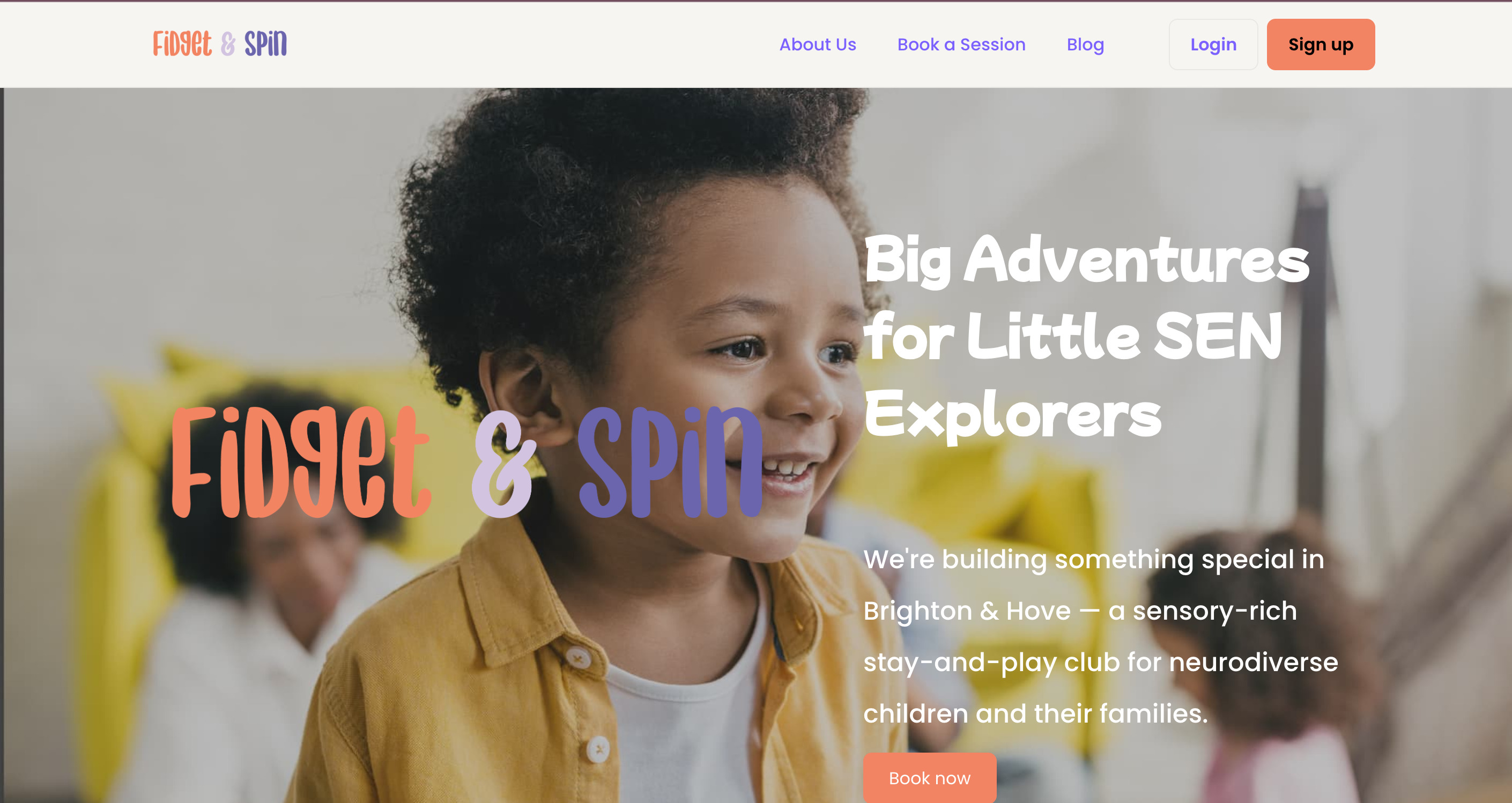
Our weekly stay-and-play sessions in Brighton and Hove include a dedicated Squish and Squeeze zone full of tactile fidget tools, sensory putty, textured materials, and calming hands-on play. We see every week how access to the right sensory input helps children settle, engage, and sometimes do things their parents did not dare hope for yet. If you want to see what that looks like in practice, come and book a session with us. Spaces are small and sessions are genuinely designed for neurodiverse children aged one to six. No side-eye. No pressure. Just play that works for your child.
FAQ
Do fidget toys actually improve focus in children?
Yes, when chosen correctly. Quiet tactile fidgets provide controlled sensory input that helps regulate alertness without pulling attention away from the task, particularly for neurodiverse children with ADHD or sensory processing differences.
What type of fidget toy is best for concentration?
Tactile, non-visual tools like stress balls, silicone rings, or sensory putty work best for concentration tasks. Spinners and clickers tend to draw a child’s eyes and can reduce focus rather than support it.
Can fidget toys help children with ADHD or autism?
They can, though effectiveness varies by child and context. Research shows fidget tools aid sensory regulation and attention for many neurodiverse children, particularly during low-engagement tasks like listening or waiting.
How do I know if a fidget toy is helping my child?
Look for signs of settling: improved engagement, less avoidance, fewer meltdowns during previously difficult activities. If the fidget becomes the focus itself or escalates dysregulation, it is likely the wrong tool or the wrong moment.
At what age can children start using fidget toys?
Many children benefit from sensory fidget tools from around age two, though simple textured objects suit even younger children. A neurodiversity-affirming OT can help identify appropriate tools for your child’s specific developmental stage and sensory profile.
Recommended
- How to make play inclusive for neurodiverse kids | Fidget and Spin Brighton
- What is neurodiversity? A guide for parents and carers | Fidget and Spin Brighton
- What is neurodiversity? A guide for parents and carers | Fidget and Spin Brighton
- Educational games for neurodiverse kids: boost skills | Fidget and Spin Brighton