
TL;DR:
- Finding genuinely sensory-supportive spaces for neurodiverse children remains challenging but achievable across the UK.
- Key features include bookable quiet sessions, sensory aids, social stories, trained staff, and accessible online information.
Finding a space where your neurodiverse child can simply be — curious, loud, wobbly, or wonderfully full-on — without you holding your breath the whole time, feels like searching for a unicorn sometimes. You scan a venue’s website, it says “family-friendly,” and you arrive to find flashing lights, echo-heavy flooring, and a queue that would stress out most adults. The good news? Genuinely sensory-supportive spaces do exist across the UK. Many venues now offer quiet sessions, sensory aids, and pre-visit resources specifically designed to make outings more manageable. This guide will help you find them, evaluate them, and make the most of every visit.
Table of Contents
- How to recognise a sensory-friendly space
- Top sensory-friendly venues and spaces in the UK
- Quick checklist for stress-free outings
- Comparison: sensory-friendly features at a glance
- What other guides miss about sensory-friendly spaces
- Next steps: find the right space for your child
- Frequently asked questions
Key Takeaways
| Point | Details |
|---|---|
| Know what to look for | Booking, quiet hours, and sensory aids are must-haves at supportive venues. |
| Plan your visit | Check availability ahead, pack essentials, and use social stories for easier transitions. |
| Use real examples | Explore venues like Dalton Park and Fidget and Spin for tried-and-tested sensory support. |
| Build flexibility | Always have an exit strategy and adapt to your child’s unique sensory needs on the day. |
How to recognise a sensory-friendly space
Not all venues that claim to be “inclusive” have thought it through properly. Some have added a token quiet corner and called it a day. So how do you spot the ones that have genuinely done the work?
The most reliable indicator is specificity. A venue that vaguely says “we welcome all children” is very different from one that publishes a downloadable social story, lists its sensory aids on the accessibility page, and offers a bookable quiet session on Tuesday mornings. Detail is everything.
Here are the core features to look for when evaluating any space:
- Bookable or reduced-stimulation sessions: Quiet hours, sensory mornings, or low-footfall slots mean fewer surprises for your child.
- Sensory aids on loan: Venues that provide ear defenders, tinted sunglasses, and sensory bags show they understand sensory thresholds, not just accessibility ramps.
- Published social stories or sensory maps: These are pre-visit tools that help children understand what to expect, reducing anxiety before you even leave the house.
- Trained staff: Venues with staff who have received neurodiversity awareness training are more likely to respond calmly and helpfully if your child needs extra support.
- Clear, accessible information online: If a venue’s accessibility information is buried three pages deep or nonexistent, that tells you something.
“A truly sensory-friendly space isn’t just quiet. It’s predictable, flexible, and ready for your child before they arrive.”
When checking a venue online, head straight to the accessibility or “plan your visit” section. If it mentions sensory bags, autism-friendly sessions, or partnerships with organisations offering support for neurodivergent children, that’s a very encouraging sign. If you can’t find anything useful online, a quick phone call can reveal a lot. Ask specifically: “Do you have reduced-stimulation sessions? Can I book a quiet time slot? Do you have sensory aids available?” How staff respond to those questions tells you as much as the answer itself.
Pro Tip: Arrive at least 15 minutes before a session starts. Early arrival means your child can explore the space while it’s at its calmest, giving them a chance to settle before other families filter in.
For families based in or visiting the South East, a Brighton sensory playgroup can offer a structured, purpose-built environment as an alternative to testing unfamiliar public venues.
Top sensory-friendly venues and spaces in the UK
Once you know what you’re looking for, some UK venues stand out as excellent examples of what’s possible. These aren’t perfect for every child, but they’ve invested meaningfully in making sensory-friendly access a real priority.
McArthurGlen Cheshire Oaks runs sensory-friendly shopping mornings and has invested in dedicated Sensory Spaces. They work in partnership with the North East Autism Society, which means their sensory bags and quiet events are developed with genuine specialist input, not just goodwill.
Dalton Park offers a bookable Sensory Space and has a comprehensive accessibility section on its website. The approach is practical and parent-focused: you can check what’s available, book ahead, and arrive with a clear plan.
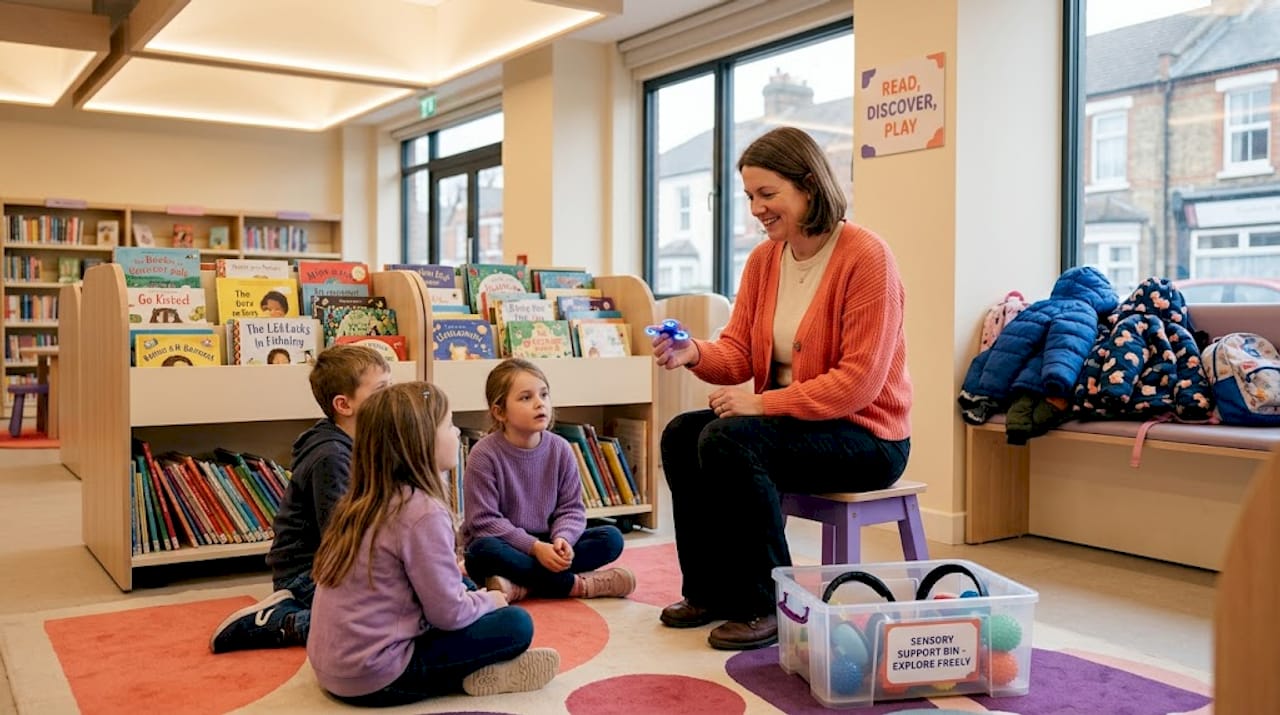
Local libraries and museums are often underestimated. Many have begun running dedicated sensory play sessions for young children, sometimes in partnership with local SEND charities. These sessions tend to be smaller, quieter, and more predictable than large commercial venues. They’re also usually free or very low cost, which matters.
Here’s a quick summary of what these venue types typically offer:
| Venue type | Quiet/sensory hours | Bookable space | Sensory aids | Social stories/maps |
|---|---|---|---|---|
| McArthurGlen Cheshire Oaks | ✅ Sensory mornings | ✅ Yes | ✅ Bags, ear defenders | Sometimes |
| Dalton Park | ✅ Yes | ✅ Sensory Space | ✅ Yes | ✅ Yes |
| Libraries/museums | Often | Some | Sometimes | Sometimes |
| Sensory playgroups | ✅ Every session | ✅ Yes | ✅ Built-in | ✅ Yes |
It’s worth noting that around 1 in 6 children in the UK are estimated to have sensory processing differences, which means demand for these spaces is growing. More venues are starting to take notice, and provision is improving year on year. But quality still varies enormously, which is why knowing what to look for matters so much.
When you do find a venue that works well, make the most of it. Ask if they have a newsletter or social media page so you can stay up to date with new sessions. Some venues are also open to feedback, and a polite message about what helped your child can lead to even better provision next time.
Quick checklist for stress-free outings
Knowing which UK venues to trust, here’s a practical checklist to streamline your next sensory-friendly adventure.
Preparation genuinely shifts the whole experience. When you’ve thought through the logistics in advance, you’re free to actually be present with your child rather than firefighting in the car park. Arriving during quiet session times and bringing familiar supports can ease transitions enormously.
- Check session availability and book ahead. Don’t assume quiet sessions will be available on the day. Many fill up quickly, especially school holiday slots.
- Pack your child’s preferred sensory supports. A familiar fidget toy, weighted lap pad, or comfort item from home can act as an anchor when surroundings feel unfamiliar. Learn more about how sensory sessions work to understand which tools tend to be most effective.
- Confirm what sensory aids the venue provides. Some venues loan ear defenders and sensory bags, but availability isn’t always guaranteed. If your child relies on these, bring your own as a backup.
- Plan for breaks. Build in downtime deliberately, not just when things go wrong. Even a five-minute reset in a quieter spot can prevent a full sensory overload.
- Have an exit strategy. Decide in advance where you’ll go if your child becomes overwhelmed. Knowing there’s a plan removes some of the parental anxiety that children so often pick up on.
- Use a social story beforehand. Walk through the visit verbally, through pictures, or via a published social story if the venue provides one. Familiarity with what’s coming reduces the cognitive load on your child.
- Manage your own expectations. Some visits will be brilliant. Some will be short. Both are fine.
Pro Tip: Create a laminated “outing card” with pictures of the key stages of a visit. This gives your child a visual sequence they can refer to throughout, which supports communication and reduces anxiety at transition points.
Comparison: sensory-friendly features at a glance
To wrap up the venue section, here’s an easy-to-read comparison of sensory-friendly features so you can weigh up what will work best for your family.
Many UK venues provide quiet hours, sensory maps, and pre-visit resources, but features and policies vary significantly by location and even by day of the week. This table is designed as a quick reference, not a definitive guide. Always check directly with venues before visiting.
| Feature | McArthurGlen Cheshire Oaks | Dalton Park | Libraries/museums | Sensory playgroups (e.g. Fidget and Spin) |
|---|---|---|---|---|
| Quiet/sensory hours | ✅ Yes | ✅ Yes | Some locations | ✅ Every session |
| Pre-booking available | ✅ Yes | ✅ Yes | Often | ✅ Yes |
| Sensory aids on loan | ✅ Bags, aids | ✅ Bags, aids | Rarely | ✅ Built-in |
| Social stories/maps | Sometimes | ✅ Yes | Sometimes | ✅ Yes |
| Staff trained in neurodiversity | Partial | Partial | Varies | ✅ Yes |
| Personalised support | Limited | Limited | Limited | ✅ Yes |
What jumps out from this comparison is how much sensory playgroups offer that general public venues simply can’t replicate. It’s not a criticism of shopping centres or museums. They’re doing their best within real constraints. But a purpose-built sensory play environment, designed entirely around the needs of neurodiverse children, offers something qualitatively different.
Key questions to ask any venue before you book a sensory play session or make the trip:
- What time are your quietest periods?
- Do you offer a bookable sensory or quiet space?
- What sensory aids are available, and do I need to bring my own?
- Do you have a social story or visual guide for first-time visitors?
- Have your staff received any neurodiversity awareness training?
If a venue struggles to answer these confidently, it doesn’t necessarily mean they’re unwelcoming. It might just mean they haven’t yet built the infrastructure to support sensory needs well.
What other guides miss about sensory-friendly spaces
Most articles on this topic give you a list of features and a few venue names. That’s useful. But here’s what they don’t tell you.
No checklist survives contact with the actual day. You can do everything right: book the quiet slot, pack the sensory bag, read the social story three times on Sunday evening. And then the fire alarm test happens to be that morning, or the “sensory space” is being used for a birthday party, or your child is just having one of those days where everything feels like too much. That’s not a failure of planning. That’s parenting a neurodiverse child.
What matters more than any checklist is your confidence in adapting. Real sensory-friendly outings are built on flexibility, not rigidity. The venues that genuinely understand this are the ones that don’t just have a quiet room, but have staff who notice when a family is struggling and quietly offer help without being asked.
There’s also a subtler issue: variable staff knowledge. A venue might have excellent sensory provisions on paper, but if the member of staff you encounter on the day doesn’t know they exist, or responds to your child’s behaviour with visible discomfort, the environment shifts completely. This is why building relationships with specific trusted venues over time is so valuable. Regular visits mean familiar faces, predictable layouts, and staff who’ve met your child before.
I’d also gently push back on the idea that finding the “perfect” sensory-friendly space is the goal. There isn’t one. What there is, is a patchwork of imperfect-but-useful spaces, each offering something different. A library works brilliantly on a low-stimulation Tuesday. A community-based sensory play session offers social warmth and structured exploration. A walk in a quiet park costs nothing and gives your child proprioceptive input without a booking form in sight.
Trust yourself. You know your child better than any venue guide does. Use these resources as a starting point, not a rulebook.
Next steps: find the right space for your child
You’ve done the reading. Now let’s make it real.
If you’re based in or near Brighton and Hove, or you’re looking for a genuinely purpose-built sensory play experience, Fidget and Spin was created with exactly this in mind.
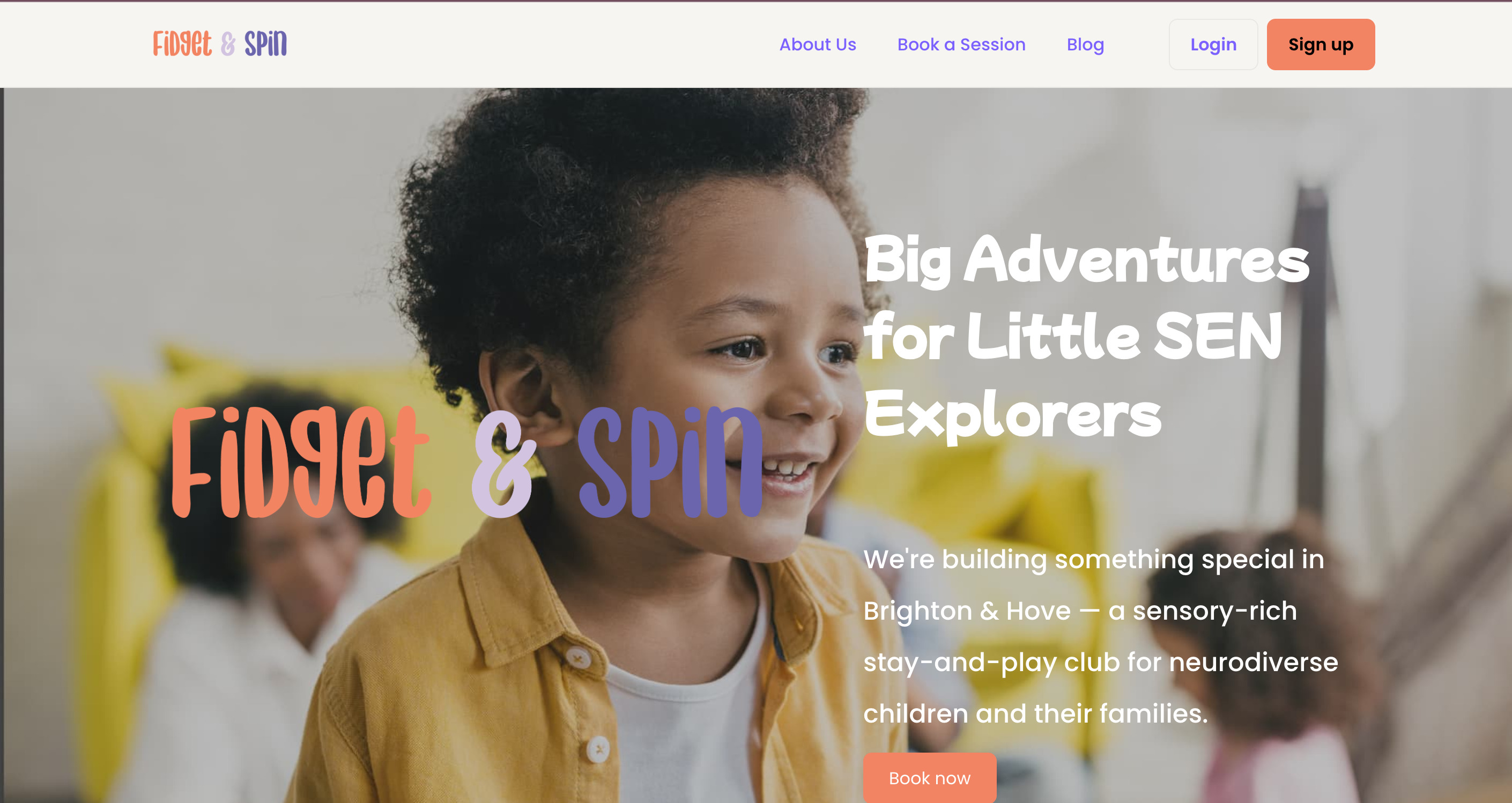
Our sessions are designed from the ground up for neurodiverse children aged 1 to 7. Every element, from the themed sensory zones to the pacing of group activities, is shaped around the needs of children with varying sensory thresholds, communication styles, and social comfort levels. There’s no pressure, no performance, and no judgement. Just play, at your child’s pace. You can see how sessions work before you commit, and if you’re ready to take the next step, you can book a sensory play session that suits your family’s schedule. Come and see what a truly inclusive Brighton sensory playgroup feels like.
Frequently asked questions
What should I pack when visiting a sensory-friendly space?
Bring your child’s preferred sensory aids and a comfort item from home, plus noise-cancelling headphones if your child is sensitive to sound. While some venues provide ear defenders and sensory bags, availability isn’t always guaranteed, so packing your own essentials is wise.
How do I find out if a venue offers quiet or sensory-friendly hours?
Check the venue’s accessibility or “plan your visit” page first, as many venues publish quiet hours and booking details online. If nothing is listed, a direct phone call to ask about quiet or sensory sessions is always worth making.
Can I request special sensory supports at most UK venues?
Some venues loan sensory bags or aids, but provision varies widely. Sensory bags are available at certain venues like Dalton Park with specific conditions attached, so always check availability and book any resources ahead of your visit.
What if my child gets overwhelmed during a visit?
Have a clear exit strategy planned before you arrive, and use any quiet spaces available within the venue for short reset breaks. Short visits with low expectations are far better than long visits that end in distress for everyone.