

Themed play is child-led exploration built around a single idea, whether that’s pirates, space, a farm, or a rainy-day puddle walk. You pick a theme, gather a few relevant materials, and then step back. The child does the rest. It sounds deceptively simple, and honestly, it is. What makes it powerful is the combination of familiar context and open-ended possibility. When Remy was three, the word “play” meant nothing to him. But “dinosaur digging”? He was on the floor before I’d finished the sentence.
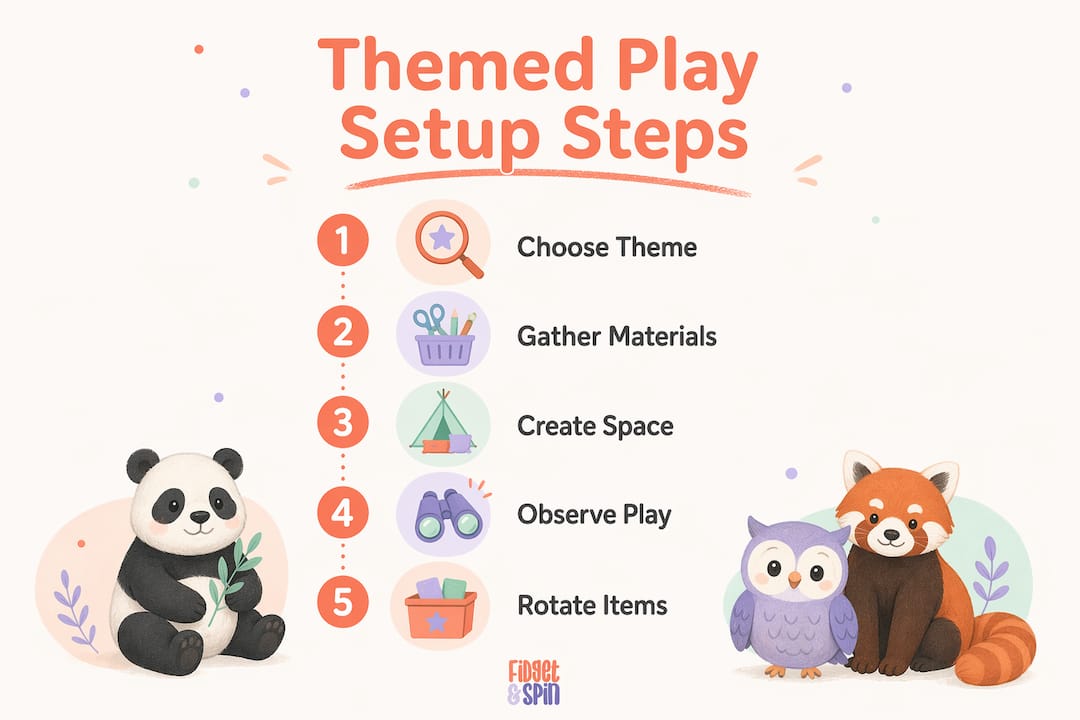
To start, you don’t need a Pinterest-worthy setup or a dedicated playroom. You need:
- Observe first. Watch what your child gravitates towards this week, not last month.
- Choose one theme. Start narrow. “Ocean” is better than “nature.”
- Gather three to five relevant objects. A toy fish, some blue fabric, a small bucket.
- Set it up and step back. Resist the urge to direct. Let curiosity do its job.
- Follow their lead. If the ocean becomes a soup kitchen, that’s fine. That’s the point.
- Rotate after a few days. Novelty sustains engagement better than repetition.
Neurodiverse children, including autistic children, those with ADHD or PDA profiles, and children with sensory processing differences, often thrive with themed play precisely because the theme provides a predictable frame. It reduces the cognitive load of “what do I do?” without removing the freedom of “how do I do it?”
Why themed play matters for child development
The research on play-based learning is consistent and, frankly, more persuasive than most parenting trends. The Education Endowment Foundation found that play-based learning boosts child development by an average of four months, with generally very low implementation costs. Four months of developmental progress from activities that most children find genuinely enjoyable. That’s not a small thing.
The benefits spread across multiple areas at once:
- Language and communication. Settings that prioritise language-rich play see children spending most of their time in activities that build these skills, without formal instruction, as Ofsted’s early years research found.
- Social skills. Themed play gives children a shared narrative to enter. It’s far easier to join a game when you both know you’re astronauts.
- Problem-solving and creativity. A UCL 2025 systematic review found that loose parts play supports children’s independence, spatial skills, and creativity, particularly when materials are open-ended and child-directed.
- Emotional regulation. Shared imaginative play creates opportunities to process feelings safely, through narrative distance.
- Focus and sustained attention. A theme gives children a reason to stay. Remy would abandon most activities in under two minutes. Put a volcano in front of him and he’d spend forty minutes “erupting” it with baking soda.
Research note: The EEF is clear that implementation matters. The variation in outcomes across play-based approaches is wide, which means how you introduce and facilitate themed play shapes the results more than the theme itself.
For neurodiverse children, the learning through play benefits are particularly strong when the theme connects to the child’s own interests and processing style. A theme that feels relevant to them is not just more fun. It actively reduces the activation energy needed to engage.
Themed play ideas and activities to try at home
The best themed play ideas are the ones your child would choose themselves. Here are some that work well across a range of ages and sensory profiles.
Ocean or underwater world. Fill a tray with blue-dyed water or kinetic sand. Add shells, small sea creatures, and a scoop. For sensory-sensitive children, start with dry rice dyed blue before introducing wet materials. This theme naturally builds vocabulary, fine motor skills, and imaginative narrative.
Space exploration. Black fabric or a dark tray, silver foil “planets,” small figures, and a torch. Remy spent an entire afternoon narrating a moon landing with a toy rocket and a potato. The potato was the moon. I didn’t ask.
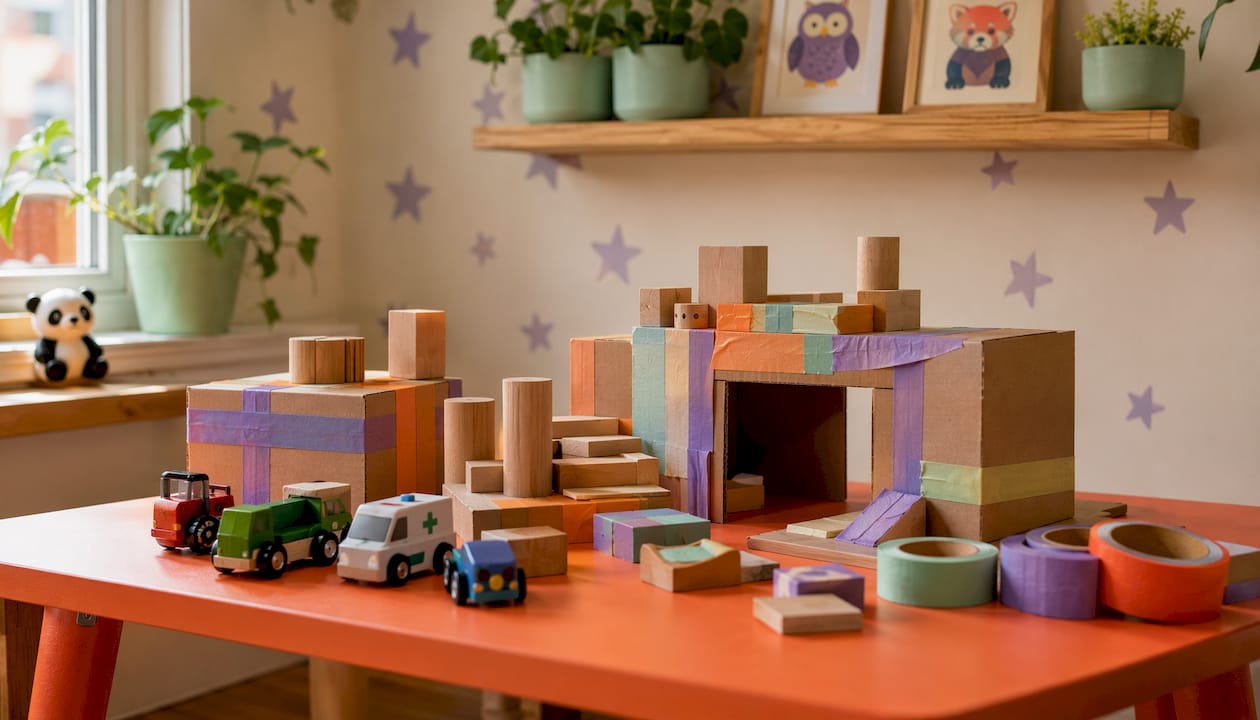
Builders and construction. Cardboard boxes, masking tape, and a few toy vehicles. Loose parts like wooden blocks, tubes, and fabric scraps extend this theme for weeks. The UCL review specifically noted that children repurpose everyday found objects to create meaning and build social connections during play.
Farm or animals. Small animal figures, hay or dried grass, a tray of soil or sand. Older children can sort animals by habitat, younger ones simply move them around and make the sounds. Both are valid.
Shops and markets. Empty food packaging, a small basket, and some play coins. This theme builds communication, turn-taking, and early maths concepts without any of it feeling like a lesson.
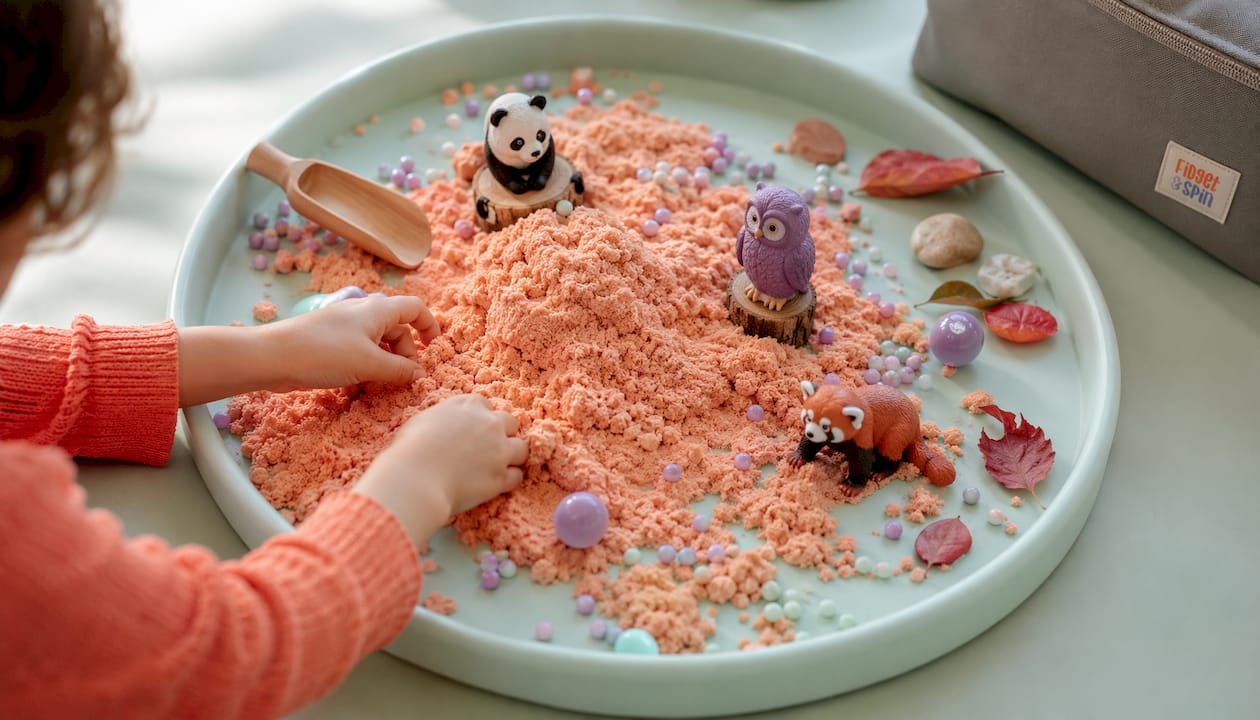
Sensory bins with a theme. A dinosaur dig in kinetic sand, a fairy garden in compost and moss, a pirate treasure hunt in dried lentils. These work especially well for children who need a clear “reason” to engage with a new texture. The theme provides the motivation; the sensory material is almost incidental.
Nature and seasons. Leaves, conkers, sticks, stones, and seed pods cost nothing and change with the calendar. The Development Matters guidance specifically recommends giving children opportunities to observe changes in living things and the local environment, and themed seasonal play does exactly that.
Rotate themes every few days rather than waiting until interest drops completely. Keeping things fresh prevents habituation and sustains the engagement benefits that make themed play worth the setup time.
Practical tips for setting up and encouraging themed play
Setting up themed play well takes less effort than most people expect. The hard part is resisting the urge to over-engineer it.
Create a dedicated but flexible space. It doesn’t need to be a whole room. A low tray on the floor, a corner of the kitchen table, or a mat in the living room all work. The key is that the child can access it independently and knows it’s theirs.
Rotate materials, not just themes. Swap out two or three items within a theme to extend its life. The ocean tray that’s been there for four days gets a new creature and a small net. Suddenly it’s interesting again.
Observe before you intervene. Watch what your child does with the setup before you join in. You’ll learn more in five minutes of observation than in twenty minutes of guided play. The Development Matters framework describes themed play as a scaffold that evolves with the child’s interests, requiring adults to observe and engage without dominating.
Involve siblings and caregivers. Themed play is genuinely intergenerational. Grandparents, older siblings, and childminders can all participate without needing a briefing document. The theme does the explaining.
Match the theme to the child’s current fascination. Not last term’s fascination. The one they’re in right now. Development Matters 2023 is explicit that engagement strengthens when themes align with the child’s own interests and home culture.
Keep adult input responsive, not directive. Join the play when invited. Ask open questions. “What’s happening here?” beats “Let’s make the fish swim to the castle.” One extends their thinking; the other replaces it with yours.
Pro Tip: For children who are hesitant about new textures or materials, introduce “bridge” tools first. A spoon, a pair of tongs, or a small shovel lets them interact with the material without direct hand contact. This mirrors the gradual sensory engagement progression used by occupational therapists, moving from observation through to full engagement at the child’s own pace, never yours.
What themed play actually looks like for neurodiverse children
I’ll be honest. The first time I tried to set up a themed play tray for Remy, he walked past it, picked up a single conker, and went to sit under the table with it. I’d spent forty minutes on a “woodland autumn” setup. He wanted one conker and some quiet.
That was the lesson. Not that themed play doesn’t work for autistic children. It absolutely does. But it has to start where they are, not where you hoped they’d be.
For children with sensory processing differences, the materials matter as much as the theme. A child who finds wet textures distressing won’t engage with an ocean tray full of water, no matter how much they love fish. Start dry. Start simple. One base material, one tool, one or two small figures. Add complexity only after they’ve engaged comfortably on multiple occasions.
The relationship between adult and child shapes outcomes more than any particular theme or material. As the UCL research on play and sensory sensitivity makes clear, high-quality adult-child interaction is what gives play its developmental power. Materials alone don’t do it.
“Children create their own purpose from those materials… children can use them in countless ways.” — Practitioner quoted in the UCL 2025 systematic review on play and learning
For children who use AAC or PECS, themed play offers a rich context for communication. A farm theme gives you animals, actions, colours, and sounds to model. A space theme gives you “up,” “down,” “fast,” “dark.” The vocabulary emerges from the play, not from a flashcard.
Some practical adaptations that genuinely help:
- Reduce visual clutter. Fewer items in the tray, not more. Overwhelm shuts engagement down fast.
- Use the child’s specific interest as the entry point. A child who loves trains but resists messy play is far more likely to reach into a bin of kinetic sand if there’s a train buried in it.
- Allow observation as participation. Watching is a valid stage. Don’t rush past it.
- Keep sessions short. Ten engaged minutes beats forty minutes of dysregulation.
For inclusive play strategies that go further, the principles are the same: pace, choice, and a relationship the child trusts.
Key takeaways
Themed play works best when it starts with the child’s current interest, uses open-ended materials, and is supported by a responsive adult who observes before intervening.
| Point | Details |
|---|---|
| Start with the child’s interest | Themes aligned with a child’s current fascination produce stronger engagement than adult-chosen topics. |
| Play-based learning has real impact | The EEF found play-based learning boosts development by an average of four months, at very low cost. |
| Materials need relationships | High-quality adult-child interaction shapes developmental outcomes more than materials or themes alone. |
| Gradual sensory introduction works | Use bridge tools like spoons or tongs before expecting direct contact with new textures. |
| Rotate themes regularly | Changing materials every few days prevents habituation and sustains children’s interest and learning. |
Come and play with us
At Fidget and Spin, we’ve built every session around exactly these principles. Our weekly sensory play sessions in Brighton and Hove are designed for neurodiverse children aged 1–6, with three zones that let children self-select their level of engagement. No pressure. No side-eye. Just play that actually fits.
If you’re thinking about a birthday celebration, our SEN-friendly parties are built for children who find mainstream venues too loud, too unpredictable, or just too much. Packages start at £220. Every child belongs here.
FAQ
How do you explain a theme to a child?
You don’t need to explain it. Set up the materials and let the child discover the theme through play. A tray of sand with buried dinosaurs explains itself.
How do you introduce pretend play to a young child?
Start by playing alongside them and narrating what you’re doing simply and without pressure. Modelling pretend play yourself, picking up a toy and saying “the bear is hungry,” gives children a script to borrow before they create their own.
What is themed play?
Themed play is child-led exploration organised around a central idea or topic, such as space, animals, or a season. It combines imaginative play with open-ended materials to support language, creativity, and social development.
How do you introduce a new activity to a child who is hesitant?
Follow a gradual approach: let them observe first, then offer a tool so they can interact without direct contact, and only invite fuller engagement once they’ve shown curiosity. Never force participation. Resistance is information, not failure.
Recommended
- Effective early years play strategies for neurodiverse children | Fidget and Spin Brighton
- How to make play inclusive for neurodiverse kids | Fidget and Spin Brighton
- Neurodiverse play areas: a parent’s design guide | Fidget and Spin Brighton
- How to encourage imaginative play in neurodiverse kids | Fidget and Spin Brighton