TL;DR:
- A quiet birthday party prioritizes sensory comfort, structure, and the child’s regulation needs over social norms. Proper planning of small guest lists, calming spaces, and predictable transitions helps children enjoy the celebration without overload. Success depends on creating a safe, understanding environment tailored to each child’s sensory preferences.
A quiet birthday party is a celebration designed around sensory comfort, predictable structure, and the child’s regulation needs rather than social convention. If you’ve ever watched your child shut down twenty minutes into a party that took weeks to plan, you already know why this matters. Knowing how to throw a quiet birthday party means rethinking almost every default: the venue, the guest list, the games, the singing. The good news is that none of it is complicated. It just requires someone to have thought it through first. That’s what this is.
What essential preparations help plan a quiet birthday party?
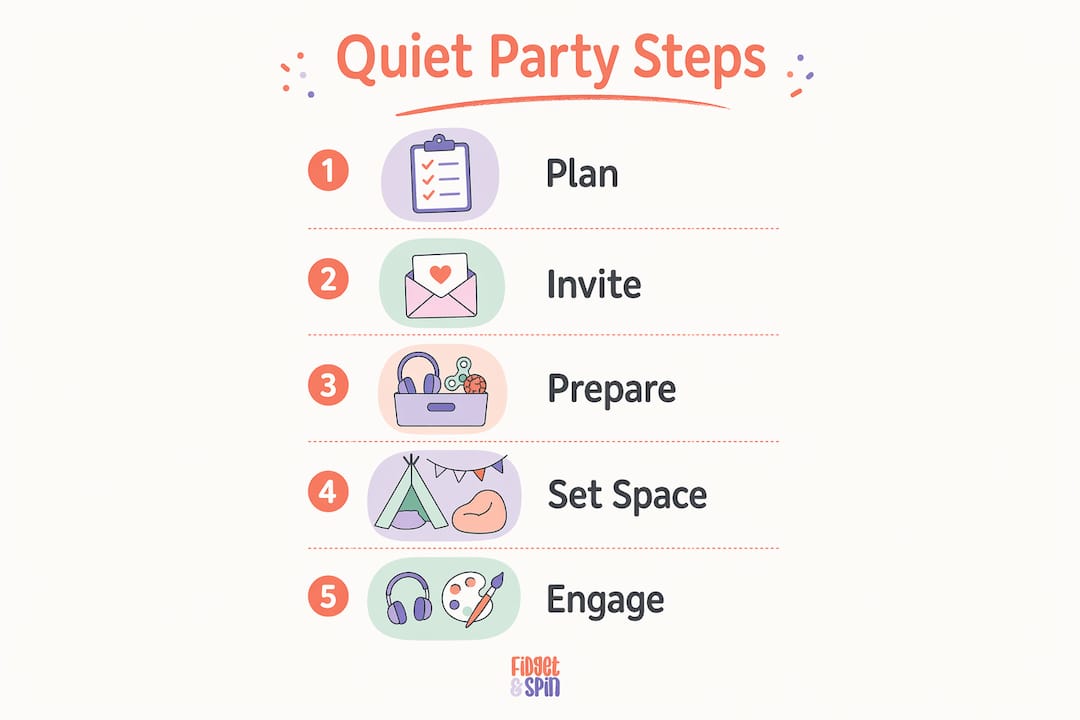
The foundation of a calm celebration is built before anyone arrives. Get the preparation right, and the party almost runs itself. Get it wrong, and you’re firefighting from the moment the first guest knocks.
Keep the guest list small. A guest list of 4–8 children reduces social and sensory overload and creates a more manageable environment. That number feels counterintuitive if you’re used to whole-class invitations, but it genuinely changes the atmosphere of the room.
Choose the right time of day. Think about when your child is typically most settled. For many neurodiverse children, mid-morning after breakfast works better than a post-lunch slot when energy and regulation are less predictable. A party duration of 60–90 minutes significantly lowers exhaustion and sensory overload compared to a traditional two or three hour event. Shorter is almost always better.
Write a sensory-aware invitation. Your invitation does more work than you think. Include start and end times, the number of guests, a brief outline of activities, and any sensory accommodations in place. Clear invitations with this detail reduce anxiety for both children and their parents before the day even begins.
- Ask guests about sensory triggers, dietary needs, and communication preferences in advance.
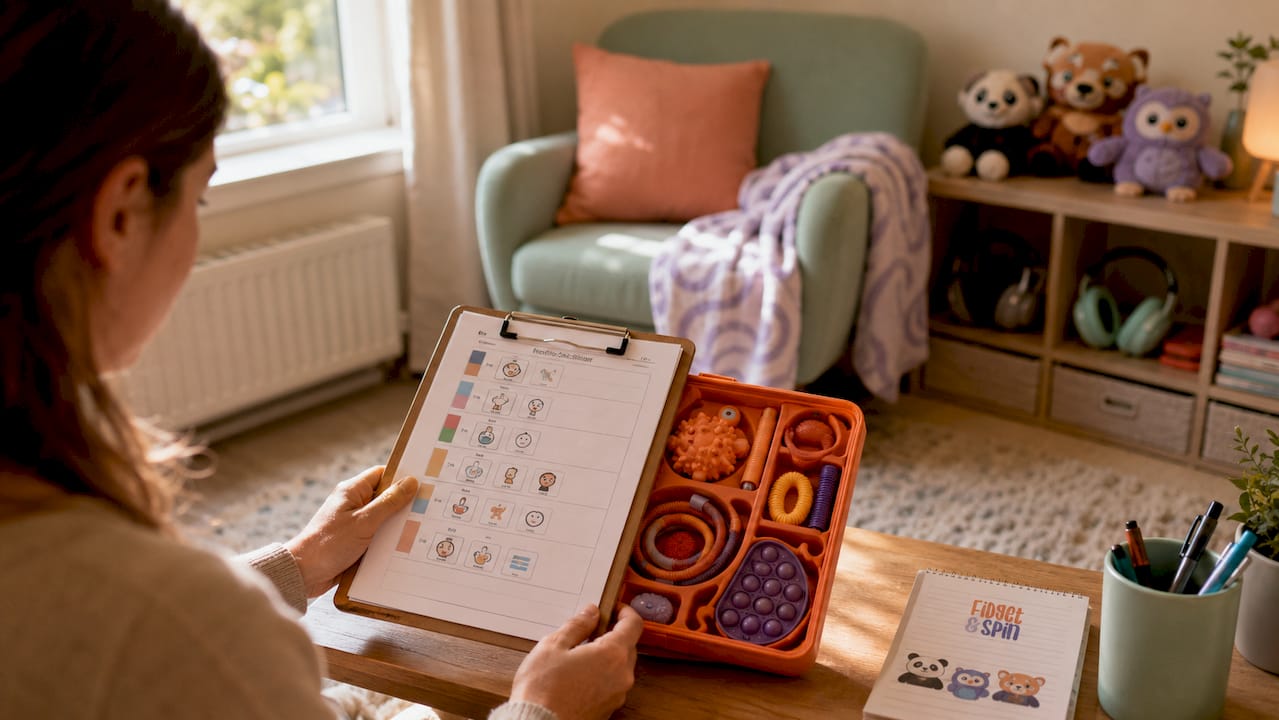
- Prepare a visual schedule for your child showing each part of the party in order.
- Use a social story to walk your child through what will happen, who will be there, and what the quiet space looks like.
- Pack a sensory soothe kit with familiar sensory tools such as fidgets, weighted toys, and noise-cancelling headphones.
- Brief any attending adults on the plan before they arrive.
Pro Tip: Send the visual schedule to guests’ parents a few days before the party. Other neurodiverse children in the group will benefit from it just as much as your own child.
How do you create a calming quiet space at a party?
The quiet space is the single most important thing you can add to a sensory-friendly party. Not the activities, not the cake. The space.
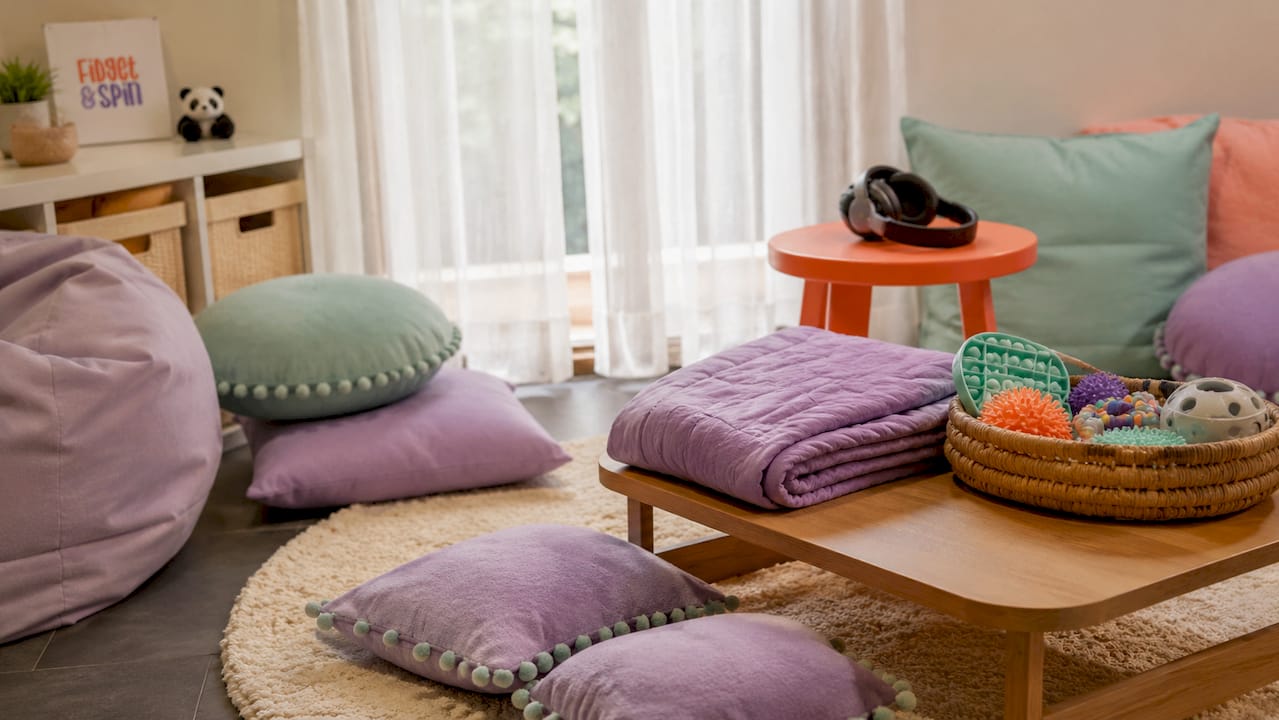
A designated quiet room or corner with soft seating and noise-cancelling options gives children a sensory reset without the stigma of being removed from the party. The key word there is designated. A pile of cushions shoved in a corner at the last minute does not send the same message as a space that was clearly prepared and waiting.
Setting up a tent or pop-up den inside a room works particularly well. A tent creates defined physical and emotional boundaries that an open corner simply cannot replicate. Children feel genuinely enclosed and separate from the noise, not just slightly further away from it.
Stock the space with:
- Weighted blankets or lap pads
- Stress balls, fidgets, and chewable jewellery
- Noise-cancelling headphones
- A few familiar books or a small sensory activity
- Soft, warm lighting (a battery-powered lamp works well)
Call it the “chill-out area” or the “calm corner.” Never call it time-out. Language matters enormously here. The quiet space must function as a safety net established before overload begins, not a consequence of it. Children should not have to ask permission to use it.
Adults should check in gently and briefly, without pressure or commentary. A quiet “I’m just here if you need me” is enough.
Pro Tip: Show your child the quiet space before any guests arrive. Let them spend a few minutes in it alone. That familiarity makes it feel safe rather than unfamiliar when they need it most.
What sensory-friendly activities work best for a low-key birthday?
Activity choice makes or breaks a quiet birthday celebration. The goal is engagement without escalation.
Activity stations with optional participation allow children to engage at their own pace. A craft table, a Lego station, a small sensory tray, and a reading corner give children genuine choice. Nobody is forced to join a group game they find overwhelming. Nobody is left standing awkwardly at the edge.
Here is a practical sequence for structuring the party:
- Arrival activity ready from the start. Have one calm, low-demand activity already set up when guests arrive. This removes the social pressure of an unstructured entry.
- Gradual arrivals where possible. Letting your child arrive before other guests allows them to habituate to the environment as it fills, preventing sudden sensory shocks from noise and crowd.
- Structured activity block. Run one or two autism-friendly party games with clear rules and predictable outcomes. Clear rules reduce social unpredictability, which is often more distressing than the activity itself.
- Food. Keep this calm and seated. Familiar foods alongside party food reduces refusal and stress.
- Cake and singing. Seat everyone. Have headphones available. Singing ‘Happy Birthday’ seated with headphones on offer keeps the moment predictable and lowers social pressure significantly.
- Gift opening (optional). Many neurodiverse children find public gift-opening overwhelming. Open gifts after guests leave, or set up a small private moment with just one or two people present.
- Calm wind-down. Return to free-choice stations for the final fifteen minutes before the party ends.
Use a visual timer for transitions between each stage. Warn children two minutes before any change. Unstructured free time is the part of a party most likely to tip into overload, so keep it brief and always have a low-demand option available.
Pro Tip: Print the visual schedule and pin it at child height. Children who struggle with verbal processing can check it themselves without needing to ask an adult.
How do you prepare adults and the environment for a peaceful party?
The adults in the room shape the atmosphere as much as the activities do. Brief them properly.
Ask every attending adult to keep their voice low and avoid sudden loud noises. Explain that unsolicited hugs or physical contact can be distressing, and that children should always be asked before being touched. This is not an unusual request. It is basic respect, and most adults respond well when it is framed that way.
For the environment itself:
- Use soft, steady lighting. Avoid flickering bulbs or harsh overhead fluorescents.
- Keep decorations minimal. Balloons are a common trigger (the unpredictability of popping). Bunting and paper decorations work well.
- Play calming background music at low volume, or no music at all. Silence is underrated.
- Limit the number of unfamiliar adults in the space. Every unknown face is a small additional processing demand.
Give your child a clear exit plan. A code word or agreed signal lets them communicate that they need a break or want to leave without having to explain themselves in front of guests. Knowing they can leave early actually lowers anxiety and often means they stay longer. That is not a paradox. It is how regulation works.
Make sure you and any co-hosting adult know the early signs of distress for your child specifically. Flushed cheeks, repetitive movement, withdrawal, or a sudden change in eye contact can all signal that a reset is needed before a meltdown occurs.
Key takeaways
A quiet birthday party works because it removes sensory barriers before they arise, giving neurodiverse children the conditions they need to actually enjoy their own celebration.
| Point | Details |
|---|---|
| Keep the guest list small | Invite 4–8 children to reduce social and sensory overload from the start. |
| Shorten the party | A 60–90 minute celebration lowers exhaustion and overload risk compared to longer events. |
| Build a quiet space first | Set up a chill-out area before guests arrive so children can use it freely without asking. |
| Structure every transition | Use visual timers and two-minute warnings to prevent distress at activity changes. |
| Brief all adults in advance | Ask adults to keep noise low, avoid unsolicited touch, and respect the exit plan. |
What I’ve learned from getting this wrong first
The first birthday party we threw for Remy was, in hindsight, a masterclass in what not to do. Twelve children, a village hall, a bouncy castle, and a playlist I thought was “fun.” He lasted forty minutes before he was under the table with his hands over his ears, and I spent the rest of the party apologising to other parents while Anthony tried to coax him out. I cried in the car on the way home.
What I know now is that I was trying to give Remy the party I remembered wanting as a child. That was my mistake, not his. He did not need a bouncy castle. He needed three friends, a Lego table, and someone who had thought about the lighting.
The shift that changed everything was accepting that there is no correct way to celebrate. Success is the birthday child feeling safe, understood, and in control. Even if that means celebrating with one trusted friend and a homemade cake eaten in the garden. That is a real party. That counts.
I also stopped apologising for the accommodations. The quiet space, the short duration, the no-balloons rule. These are not limitations. They are the design. When you frame it that way to other parents, most of them are quietly relieved. Their children needed it too. They just hadn’t said so.
If you are reading this the night before a party you are dreading, please know: you are not alone in that feeling. And the fact that you are planning this carefully already puts you miles ahead of where I was.
— Caitlin
Sensory birthday parties in Brighton and Sussex
If you want professional support rather than going it alone, Fidget and Spin runs sensory birthday parties in Brighton, Hove, and wider Sussex, designed specifically for neurodiverse children aged 1–7. Every detail, from the lighting to the group size to the quiet zones, is built around sensory processing differences.
Anthony and I created Fidget and Spin because mainstream venues were not built for children like Remy. The parties we offer are the ones we wished existed when he was small. Three packages are available, from The Wee One at £220 to The Whole Shebang at £530, each with calm environments, small groups, and a team who genuinely understands what your child needs. You can also explore our weekly sensory sessions if you want to find your feet before committing to a party booking.
FAQ
How long should a quiet birthday party last?
A party of 60–90 minutes is the recommended duration for neurodiverse children. Shorter parties significantly reduce exhaustion and sensory overload compared to traditional two or three hour events.
How many children should I invite to a sensory-friendly party?
A guest list of 4–8 children creates a manageable social environment and reduces sensory overload. Smaller groups allow children to regulate more easily and engage at their own pace.
What should go in a quiet space at a birthday party?
Stock the quiet space with weighted blankets, fidgets, noise-cancelling headphones, soft lighting, and a few familiar books or sensory activities. The space should be set up before guests arrive and accessible without permission.
How do I handle the ‘Happy Birthday’ singing for a sensory-sensitive child?
Seat everyone before singing and have noise-cancelling headphones available. Singing from a seated position keeps the moment predictable and removes the pressure of being a standing focal point.
What if my child wants to leave their own party early?
Agree on a code word or signal before the party starts. Knowing they can leave early without explanation actually lowers anxiety and often helps children stay longer and enjoy more of the celebration.
Recommended
- Autism friendly party games: your 2026 guide | Fidget and Spin Brighton
- Birthday party for a non verbal child: a real guide | Fidget and Spin Brighton
- Birthday party for an autistic child in Brighton | Fidget and Spin Brighton
- Planning a birthday for an autistic child: a real guide | Fidget and Spin Brighton