Low light play is any activity done with one soft, steady light source instead of overheads, and it works because the child controls it, not because the dark is magic. Torches, lamps, projectors, sensory bottles. The rule is simple: dim, steady, no strobe, and the child holds the switch. Get those three right and you’ve got a genuinely calming corner, not just a dark room with toys in it.
TL;DR:
- Using a steady, dimmable light source checked for flicker helps create a calming low-light corner without unnecessary complexity or expensive equipment.
- Incorporating simple items like a torch, cushions, and a small choice basket can produce effective sensory relief, emphasizing control and predictability.
- Light colour influences behaviour, with warm yellow tones encouraging playfulness, but individual responses vary, so observe your child’s preferences first.
- For children with photosensitivity or seizure history, avoid flashing, strobing, or moving lights and keep sessions short with clear exit points.
- Regularly rotating toys and lighting setups over weeks sustains engagement and prevents clutter, while giving children control enhances overall calming effectiveness.
Table of Contents
- What actually makes low light play calming
- A quick safety and setup checklist for a calm low-light corner
- 1. Torch shadow puppets and silhouette stories
- 2. Slow-settling glitter sensory bottles
- 3. A steady star or galaxy projector, on the slowest setting
- 4. Coloured translucent sheets over a lamp
- 5. A single-light tactile tray station
- 6. Slow fibre-optic strands for touch-safe visual play
- 7. A lamp-guided treasure path
- 8. Quiet music and dim light for drawing or listening
- How to read your child’s sensory profile and adjust
- Building a low-cost kit that doesn’t turn into clutter
- Why we built low-stim sessions in the first place
- What the research actually supports, and what it doesn’t
- Prefer a session someone else has already set up?
- Sources
- FAQ
What actually makes low light play calming
My son Remy used to melt down under the fluorescent strip lights at soft play. Not tantrum. Meltdown. Nervous system overload, cause and effect, plain as day. So we started messing about with a desk lamp and an old torch in his bedroom, and within a week he was asking for “the dim game” before bed. That’s when I realised low light play isn’t a gimmick. It’s one lever, alongside sound and texture, in what researchers call a low-arousal environment, where the aim is fewer competing sensory demands, not zero stimulation.
Here’s the bit nobody tells you when you’re googling this at 11pm: it’s not about buying a sensory tent from an advert on your feed. A lamp, a cushion, and a torch will get you further than most of what’s marketed at anxious parents.
A quick safety and setup checklist for a calm low-light corner
Pick a spot before you pick a light. A low-traffic corner with a clear, obvious exit matters more than anything you plug in, especially if your child bolts when overwhelmed. You need to see them, and they need to see the way out.
- Choose one steady, dimmable light source. Check it for flicker by filming it on your phone camera; if the video shows a strobing effect the eye misses, swap the bulb.
- Secure cables along skirting boards, keep water and hot surfaces well away, and store small parts in closed boxes so the floor stays clear.
- Add a soft base, a beanbag or a pile of cushions, plus a small choice basket with three to five items, not a toy box tipped out.
- Use a simple picture or word card showing the “rules”: lights on, lights off, time to stop.
- Give your child an easy switch, a lamp with a big accessible button, or a token they hand you to mean “on” or “off”.
Steady, dimmable, non-flashing lighting is the consistent thread through most practical sensory light guidance, and it’s echoed by DIY sensory room guides that favour cheap, controllable setups over anything elaborate.
Pro Tip: Test any new light for a week before you invest in extras. If your child avoids the corner, it’s the light, not the layout, you need to change first.
1. Torch shadow puppets and silhouette stories
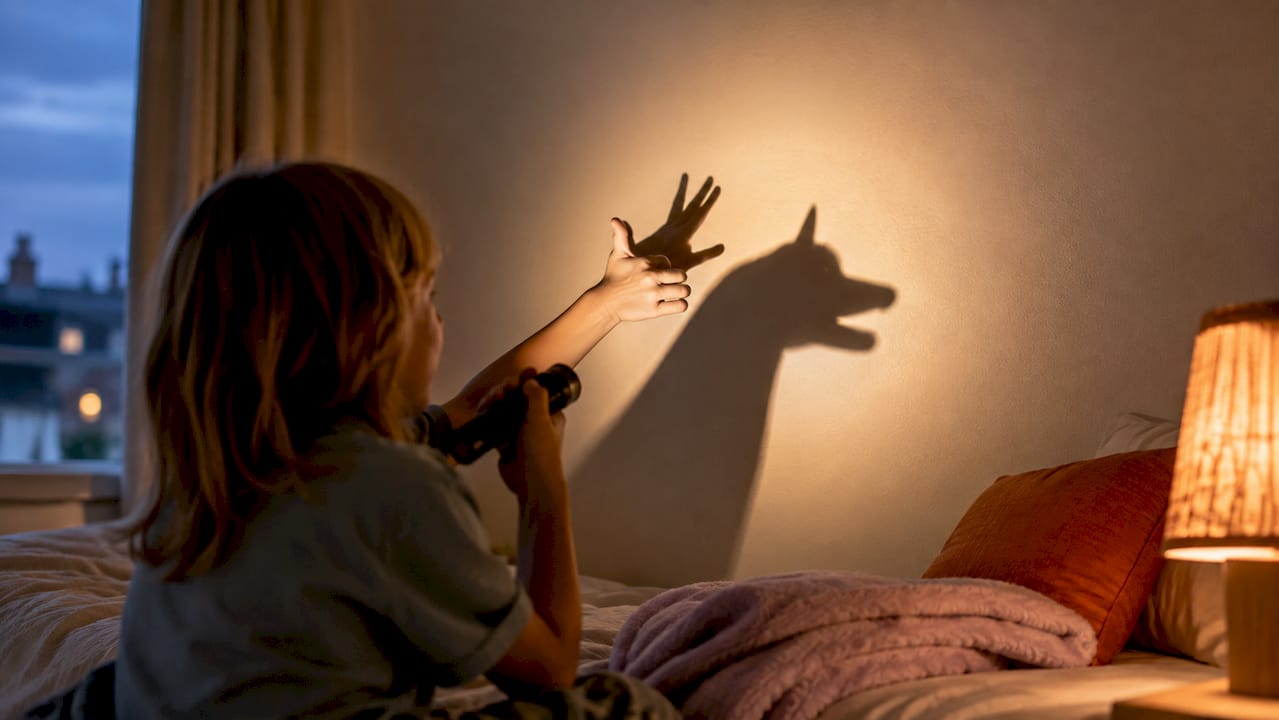
Hand your child the torch, not the other way round. Let them cast shapes on the wall or ceiling while you narrate, or better, let them narrate and you do the funny voices. Torch light play supports visual tracking and fine motor control, and it scales easily: toddlers just like the beam moving, six-year-olds want a story with a beginning, middle, and a dragon.
2. Slow-settling glitter sensory bottles
Fill an old drinks bottle with water, glitter glue, and fine glitter, then let it settle under a single lamp. The slow drift gives visual focus without the sudden movement that overwhelms some children. Cheap, unbreakable, and endlessly rewatchable at bedtime.
3. A steady star or galaxy projector, on the slowest setting
Skip anything that spins fast or flashes colours. A projector on its stillest mode, low brightness, throws a gentle constellation across the ceiling and gives kids something to focus on that isn’t demanding a response from them.
4. Coloured translucent sheets over a lamp
Cellophane or coloured acetate clipped over a lamp shade shifts the whole room’s tone in seconds. Warm, yellow-toned light has been linked to more playful behaviour in small studies, while red and bright white sometimes correlated with more negative responses, though individual reactions varied a lot. Try warm tones first and watch your own child’s face, not the study.
5. A single-light tactile tray station
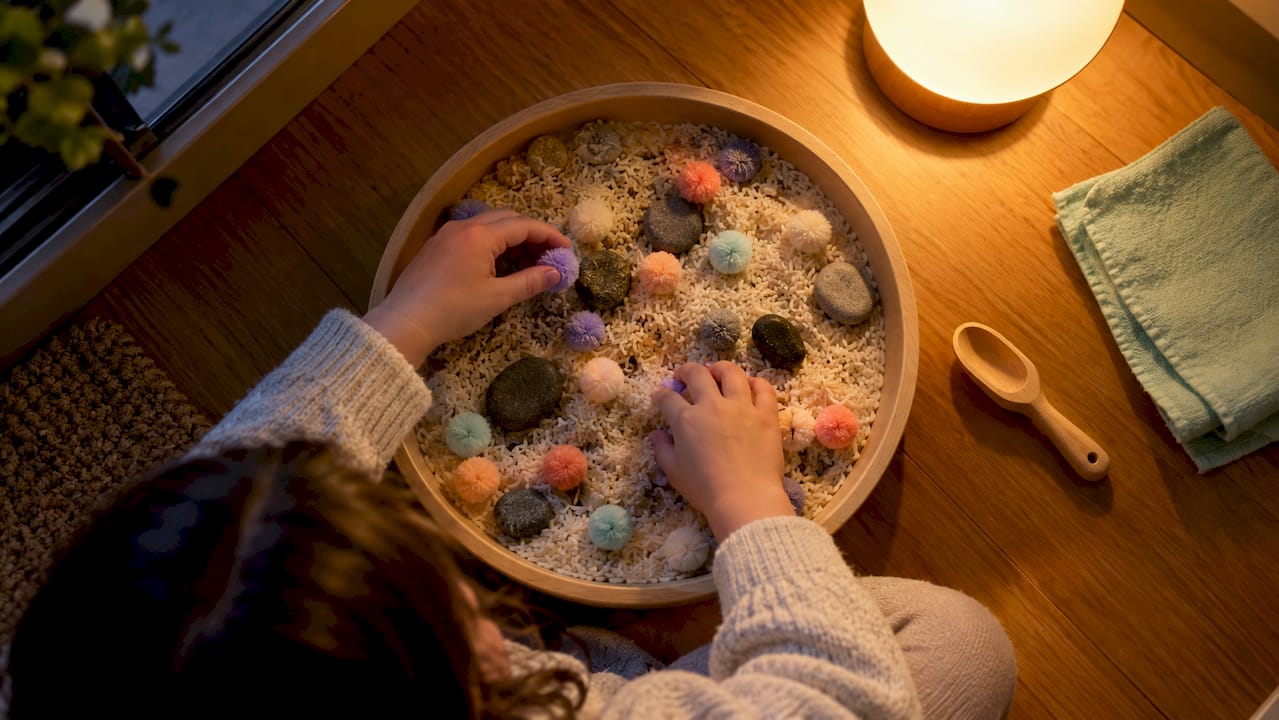
One lamp, one tray, textured objects: dry rice, pompoms, a few smooth stones. The narrow pool of light does the job an entire sensory room would, focusing attention on hands rather than eyes darting round a busy space.
6. Slow fibre-optic strands for touch-safe visual play
These stay cool, bend safely, and give a gentle glow kids can hold, stroke, or drape over themselves. Good for children who want visual input but flinch from bright direct light.
7. A lamp-guided treasure path
Mark a route across the floor with soft light pools, cushions as stepping stones, a torch-lit “treasure” at the end. Movement plus visual interest, without the chaos of a fully lit room.
8. Quiet music and dim light for drawing or listening
Sometimes the win is doing nothing dramatic at all. Dim the lights, put on something instrumental, hand over paper and chunky crayons. This one scales down easily for toddlers (scribbling) and up for older kids (proper pictures, or just lying still listening).
Rotate one or two items every few weeks rather than swapping the whole set. New enough to stay interesting, familiar enough to stay calming.
How to read your child’s sensory profile and adjust
Watch the body, not just the face. A child who’s regulating well tends to soften, shoulders drop, breathing slows, maybe some quiet humming. A child heading towards overwhelm might go rigid, cover their eyes, or start staring fixedly at the light rather than engaging with it. That’s your cue to dim further or switch off, not push on because “we’ve only just started”.
Colour genuinely seems to matter, though the evidence base is still small. Research on light colour and behaviour found warm and yellow tones associated with more playful engagement, while red and white sometimes tracked with more negative behaviours. Variation between children was large, so treat this as a starting hypothesis, not a rule.
- Prefer steady or very slow-moving light over anything fast or flashing.
- Avoid strobe or rapid-flash settings entirely; these carry a genuine photosensitivity risk.
- If your child has a seizure history or known photosensitivity, speak to a clinician before introducing any moving or flashing light effects.
- Keep sessions short at first, with a predictable start and a clear, easy exit.
Adjustable, indirect, flicker-free lighting is what research into autism-friendly environments consistently points to, and it’s worth remembering that flicker is often invisible to adults but very noticeable to some autistic children. If a setup causes unexplained agitation, check the bulb before you check anything else.
Building a low-cost kit that doesn’t turn into clutter
You don’t need much. A dimmable warm lamp, a pop-up tent or a blanket draped over a table, and a small choice basket will outlast almost anything flashier you’re tempted to buy. Design guidance consistently favours predictability and a small consistent corner over elaborate multisensory rooms, and that’s borne out at home too. Remy’s favourite “sensory room” for two years was a beanbag under a clothes rail with a sheet over it.
- Buy warm-white LED bulbs, a lamp guard if you’ve got a climber, and cord covers for trailing cables.
- Store spare items in a closed, labelled box, out of sight until it’s their turn.
- Swap one or two items every two to four weeks rather than refreshing everything at once.
- Hand over control with a low switch, picture cards, or a token system so your child decides what happens next.
Pro Tip: Keep the “reserve” items somewhere your child can’t see them. Novelty works far better as a surprise than as a shelf they can already survey and reject.
For more on choosing lighting that actually suits your child’s sensory profile, see our piece on sensory friendly lighting, and if tactile trays interest you, we’ve written more on tactile play ideas that pair well with a dim corner.
Why we built low-stim sessions in the first place
I’ve left more soft play centres early than I can count. Fluorescent lights, tannoy announcements, forty kids screaming with joy or distress, impossible to tell which. Remy would go from fine to flat on the floor in about ninety seconds, and I’d be gathering shoes while someone’s well-meaning nan told me he “just needs to socialise more.”
That’s why our weekly sessions run three separate zones. Wiggle & Bounce for kids who need big movement to regulate. Squish & Squeeze for tactile, hands-on input. Snuggle & Chill for exactly what this article’s about, low light, soft textures, no demands. One activity you could try tonight straight from that zone: a single lamp under a blanket den, a torch, and nothing else expected of anyone for ten minutes.
What the research actually supports, and what it doesn’t
The evidence on light and behaviour in neurodiverse children is real but modest. Small studies, genuine individual variation, no single “correct” colour or brightness that works for every child. What the research does support clearly is the principle underneath all of it: steady beats flashing, dim beats bright, and predictable beats novel every single time.

Where I think a lot of well-meaning advice goes wrong is treating this as a shopping problem. Bubble tubes, £200 projectors, subscription light boxes. None of that outperforms a torch and a beanbag if the child isn’t in control of the switch. Control is the mechanism, not the equipment. If I had to boil this down to one instruction, it would be: buy less, rotate more, and let your child decide when the lights go off.
Start smaller than feels sufficient. One lamp, one tactile item, a week of watching before you add anything else. That patience is harder than buying a kit, but it’s what actually works.
— Caitlin
Prefer a session someone else has already set up?
Fidget and Spin exists because we couldn’t find low-stim spaces built for kids like Remy, so we built our own. If DIY corners at home feel like one more thing on your plate, our weekly sensory stay-and-play sessions run across three zones, including a dedicated low-stim space, for children aged one to six.
Sessions and SEN-friendly birthday parties are available across Sussex, from smaller gatherings to fuller celebrations. If a DIY low-light corner sounds right but a party still fills you with dread, our sensory birthday parties in Brighton are built the same way: predictable, low-stim options included, and no expectation that every child performs “having fun” the same way. Get in touch to check dates, or book straight through the site if you already know which package fits.
Sources
For deeper detail on autism-friendly lighting design, see Optimising colour and lighting strategies. For light colour and behaviour, read the study on light colour effects. For broader sensory play context, Sensory Play and Child Development is a useful parenting-focused overview.
- DIY Sensory Room for Autism (2025) — Calming Ideas, Affordable Builds & At‑Home Solutions
- Sensory lights for autism: bubble tubes, projectors & calm corners
- Optimising colour and lighting strategies for autism‑friendly learning environments (Irani et al. 2026)
- Effects of light colour on behaviour in autistic children (2025)
FAQ
Is low light play safe for children with photosensitivity?
Steady, non-flashing light is generally considered lower risk, but any child with a seizure history or known photosensitivity should be assessed by a clinician before trying moving or flashing effects. Stick to still or very slow-moving light and avoid strobe settings entirely as a default precaution.
What colour light works best for calming play?
Warm, yellow-toned light has been associated with more playful behaviour in small studies, while red and bright white sometimes correlated with more negative responses. Individual variation is large, so start with warm tones and watch how your own child responds.
How much does it cost to set up a low-light play corner?
A basic setup, a dimmable lamp, a cushion or beanbag, and a small choice basket, can be built very cheaply using items you likely already own. DIY sensory room guidance consistently favours small, affordable builds over expensive equipment.
Does Fidget and Spin offer low-stimulation sessions?
Yes. Our weekly sensory stay-and-play sessions include a dedicated Snuggle & Chill zone for low-stim, cosy play alongside movement and tactile zones, for children aged one to six across Brighton and Hove.
How often should I change the toys in a sensory choice basket?
Swapping one or two items every two to four weeks tends to keep a choice basket interesting without overwhelming the space with clutter. Keep spares out of sight in closed storage so each swap feels genuinely new.