

TL;DR:
- Raising a neurodiverse child in Brighton & Hove involves navigating tailored support options focused on family fit and local systems. Practical strategies include sensory play, visual routines, and building trusted community networks to promote regulation and well-being. Flexibility, observation, and community connections are key to finding effective, sustainable approaches for each family.
If you’ve ever sat at your kitchen table at 11pm, scrolling through a sea of conflicting parenting advice and wondering which bit actually applies to your child, you are not alone. Raising a neurodiverse child aged 1 to 7 is a genuinely different experience, full of joy and discovery, but also uncertainty and the occasional feeling that the rulebooks were written for someone else’s family entirely. Here in Brighton & Hove, there is a growing community of parents, carers, and professionals who understand that. This guide cuts through the noise with practical, evidence-backed strategies tailored to the local landscape, so you can spend less time searching and more time connecting with your little one.
Table of Contents
- How to evaluate parent support options
- Practical strategies used by Brighton & Hove families
- Comparing support styles: behavioural, neurodiversity-affirming, and combined approaches
- Creating inclusive environments at home and beyond
- What works in theory vs. what matters most for your family
- Explore more support for your child in Brighton & Hove
- Frequently asked questions
Key Takeaways
| Point | Details |
|---|---|
| Choose evidence-based support | Opt for approaches like Triple P and PMIs with strong local and research backing when possible. |
| Mix and match strategies | Blend behavioural, neurodiversity-affirming, and family-suited routines for best results. |
| Embrace local resources | Take advantage of Brighton & Hove’s network of groups, play sessions, and workshops for ongoing support. |
| Adapt your environment | Make inclusive changes at home and in the community using visual aids, sensory tools, and communication supports. |
| Trust your instincts | Balance research evidence with your knowledge of what helps your child thrive day to day. |
How to evaluate parent support options
With so many options available, from online courses to local groups to specialist therapists, it can feel like choosing a support path requires a degree in itself. It doesn’t. What it actually requires is a clear sense of your child’s neurotype, your family’s practical reality, and a few straightforward criteria to guide you.
Start by thinking about fit, not just evidence. A programme can have mountains of research behind it and still not suit your family if it clashes with your child’s sensory profile, your working hours, or your own neurodivergent traits. Research on neurodevelopmental trait similarity suggests that when parents share neurodivergent traits with their children, their instincts about what works are often more accurate than generic programmes give them credit for.
When evaluating support options, ask yourself:
- Is it evidence-based? Look for approaches backed by peer-reviewed research or local clinical expertise, not just social media popularity.
- Does it suit my child’s sensory and communication needs? Some children do brilliantly in group settings; others need one-to-one or very small groups first.
- Can I sustain it? A support method you can do twice a week consistently is far more valuable than an intensive programme you burn out on after a fortnight.
- Does it include me as a partner, not just a recipient? The best programmes treat you as an expert on your own child.
- Is the facilitator familiar with local systems? Someone who knows Brighton & Hove’s EHCP process, local SEND services, and community groups is worth their weight in gold.
For families in Brighton & Hove, the council’s Triple P Stepping Stones parenting course is a strong starting point. It is specifically designed for parents of children under 12 with SEND, including neurodiverse conditions, and focuses on positive behaviour strategies across six group sessions plus two individual consultations. It is structured enough to feel purposeful but flexible enough to adapt to different family needs. Understanding how sensory sessions work alongside these kinds of programmes can also help you build a fuller picture of what consistent, supportive experiences look like for your child.
Pro Tip: Prioritise groups where facilitators understand local systems and offer ongoing support beyond the course itself. A group that ends after six weeks without a clear “what next” can leave families feeling stranded.
Practical strategies used by Brighton & Hove families
Once you know what to look for in support, it’s easier to try practical and effective methods that local families actually rely on. The good news is that Brighton & Hove has a genuinely impressive range of local resources, and many of them are free or low cost.
Here is a step-by-step approach that many local families find helpful:
-
Start with an advice line. Amaze SENDIASS provides independent advice, workshops, support groups, and benefits guidance for families in Brighton & Hove. Their team understands the local SEND landscape inside and out, and calling them before you attend anything else can help you feel oriented.
-
Attend a parent coffee morning. The BHISS Autism and Language team runs monthly parent coffee mornings, as well as workshops like Just Right (which focuses on supporting calm and regulated states), and individual family support for autistic children aged 0 to 16. These sessions are informal, welcoming, and enormously reassuring, especially when you’re new to navigating SEND support.
-
Try simple home adaptations first. You don’t need a specialist-designed sensory room to make a meaningful difference. Low lighting in one corner, a weighted blanket, a visual timetable on the fridge, and a reliable snack routine can all reduce daily friction significantly.
-
Use sensory play as a bridge. Research consistently shows that support through sensory play helps children with ADHD and other neurodiverse profiles to regulate their nervous systems, build focus, and reduce anxiety. A local sensory playgroup can offer this in a structured, peer-supported environment that also gives you a break from facilitating everything yourself.
-
Build a small network of trusted people. Whether that’s one other parent from a coffee morning or a key worker at nursery who really gets your child, these relationships sustain you on the hard days.
“No two families are the same. Find local groups that let you try approaches before committing. The ones worth staying with will welcome you back regardless.”
Pro Tip: Look for providers who welcome siblings at sessions and offer taster sessions for your child. The first visit is often about the child deciding if they feel safe, not about what the provider offers on paper.
Comparing support styles: behavioural, neurodiversity-affirming, and combined approaches
Having tried several practical support options, it helps to understand the key approaches used and what the evidence says about each. This isn’t about choosing a side. Most experienced practitioners blend elements depending on the child in front of them.
Behavioural approaches like Triple P are built on clear strategies for managing behaviour, reinforcing positive actions, and reducing disruption. They have strong empirical backing: parent-mediated interventions for autistic children aged 2 to 17 show clinically relevant effects on adaptive functioning and reductions in disruptive behaviour across multiple studies. For early years especially, these approaches can offer parents a sense of agency and a manageable toolkit.
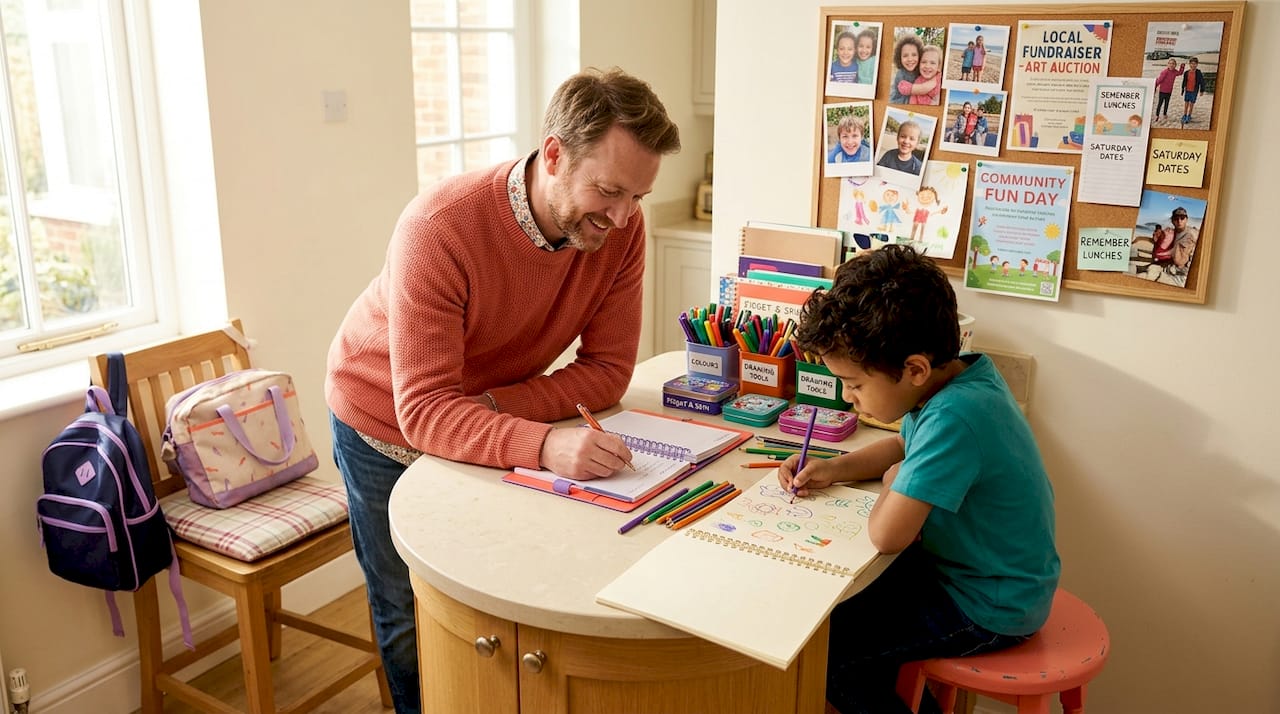
Neurodiversity-affirming approaches take a different starting point. Rather than reducing or redirecting behaviour, they ask what the behaviour is communicating and how the environment can be adapted to reduce the need for it. Low-demand parenting, for example, focuses on reducing anxiety and sensory overload rather than compliance. The evidence base is still developing, but the lived experience of many families, particularly those with autistic children or children with sensory processing differences, speaks loudly in its favour.
Combined or blended approaches are increasingly what local providers like BHISS offer: drawing on Triple P-style strategies while also incorporating sensory awareness, low-demand principles, and neurodiversity-informed communication. Understanding SEN play sessions as part of this blended picture can be genuinely helpful.
| Approach | Aims | Strengths | Challenges |
|---|---|---|---|
| Behavioural (e.g. Triple P) | Reduce disruption, build positive skills | Strong evidence base, structured, accessible | May not address root sensory/anxiety needs |
| Neurodiversity-affirming | Reduce demand, adapt environment | Centres child’s wellbeing, reduces masking | Less formal evidence, needs adaptation per child |
| Combined/blended | Balance skill-building with sensory and emotional needs | Holistic, flexible, increasingly available locally | Requires skilled facilitation |
Stat callout: Parent-mediated interventions improve social functioning and reduce disruptive behaviour in autistic children across a wide age range, making them one of the most studied forms of family-based support available.
You might also want to explore food sensitivity tips as part of a blended approach, since sensory sensitivities around food can significantly affect a child’s regulated state and readiness to engage.
Creating inclusive environments at home and beyond
Once you’re familiar with support styles, it’s time to adapt daily environments for lasting impact. The environments your child moves through every day, at home, at nursery, at playgroups, shape how regulated, safe, and able to engage they feel. Small, consistent changes make a real difference.
Here are some practical adaptations to consider:
- Visual schedules: A simple picture sequence of the day reduces uncertainty and helps neurodiverse children anticipate transitions. BHISS can advise on Makaton-based visual aids that combine signs, symbols, and speech to support communication at home and in early years settings.
- Sensory zones: Designate one corner of a room as a calm space with soft textures, low light, and minimal noise. This becomes an anchor, not a punishment space.
- Co-regulation routines: Rather than telling a dysregulated child to calm down (which is a bit like asking someone to stop sneezing mid-sneeze), sit with them, breathe visibly, and model the state you want them to reach.
- Communication supports: Makaton signing, PECS (Picture Exchange Communication System), and AAC (Augmentative and Alternative Communication) devices can all reduce frustration for pre-verbal and minimally verbal children.
Research into low-intensity developmental behavioural interventions with parent education shows that even relatively modest input (averaging 2.9 hours per week over six months) improved skill acquisition meaningfully in preschoolers with developmental disorders including autism. You don’t need to overhaul your entire life. Consistency and intention matter more than volume.
| Environment | Useful adaptation | Why it helps |
|---|---|---|
| Home | Visual daily schedule, calm corner | Predictability reduces anxiety |
| Nursery or school | Makaton visuals, key worker relationship | Consistency builds trust |
| Playgroups | Sensory-friendly layout, low noise option | Supports self-regulation during play |
| Community spaces | Ear defenders, quiet exit strategy | Reduces overwhelm in unpredictable settings |
Pro Tip: Choose routines you can maintain even on the weeks when everything goes sideways. A simple, reliable routine your child can count on during harder periods is worth far more than a perfect system that collapses under pressure. And consider parent mindfulness tips to help you stay grounded when the day is full-on.
You can book a sensory session to experience a structured sensory environment in action, which can give you concrete ideas to bring back to your own home setup.
What works in theory vs. what matters most for your family
Here is something that took me a while to accept: the most evidence-backed intervention in the world is only useful if your child will actually engage with it, and if you can realistically facilitate it without running yourself into the ground.
We talk a lot about research in the SEND space, and that research genuinely matters. But evidence is built on averages. Your child is not an average. They are a specific, beautifully complex person whose needs sit at the intersection of their neurology, their sensory profile, their history, your family’s particular rhythms, and a hundred other factors that no study has ever measured.
What this means practically is that intuition deserves more credit than parents of neurodiverse children are often given. If a recommended approach makes your child more anxious or more dysregulated, that is information. It doesn’t mean the approach is bad; it means it’s not right for your child right now. You are allowed to pause, reflect, and try something else.
Brighton & Hove, for all its quirks, is genuinely one of the better places in England to be navigating this. The density of welcoming, informed groups means you can try a coffee morning, find it’s not the right fit, and try something else the following month without running out of options. That flexibility is precious. One local parent shared recently that what she wished she’d known earlier was simply this: “You don’t have to commit to anything straight away. The Brighton playgroup experiences that worked best for us were the ones we stumbled into without expecting much and just kept coming back to.”
The truth is that the best framework for your family is one that blends research-backed methods with your own observations, your child’s feedback (verbal or otherwise), and the warmth of a community that already understands you. You’re not behind. You’re figuring it out, one session at a time.
Explore more support for your child in Brighton & Hove
If this article has sparked some ideas, or simply confirmed what your gut was already telling you, the next step doesn’t have to be a big one.
At Fidget and Spin, our sensory stay-and-play sessions are designed specifically for neurodiverse children aged 1 to 7 in Brighton & Hove. Each session features themed sensory zones, gentle group activities, and a safe, welcoming space where your child can explore at their own pace. You can book a sensory play session directly, or if spaces are limited, join the waitlist to stay connected. Want to know what to expect before you come? Find out exactly how sessions work so you and your child can arrive feeling prepared and curious, not anxious.
Frequently asked questions
What local courses are there for parents of neurodiverse young children in Brighton & Hove?
Brighton & Hove council offers Triple P Stepping Stones and BHISS workshops tailored for parents of children under 12 with SEND, covering positive behaviour strategies and sensory regulation approaches.
Do parent-mediated interventions actually help young autistic children?
Yes. Clinical reviews of PMIs show meaningful improvements in adaptive behaviour and reductions in disruptive behaviour for autistic children aged 2 to 17, making them one of the strongest family-based options available.
Which communication supports are useful at home?
Visual aids including Makaton signing, picture schedules, and social stories can significantly improve understanding and reduce frustration for neurodiverse children at home and in early years settings.
How can parents reduce overwhelm while supporting their child’s needs?
Start with one or two sustainable changes rather than overhauling everything at once; small, consistent adaptations build confidence and reduce the pressure of feeling like you need to do it all perfectly from the start.
Where can I meet other parents of neurodiverse children locally?
BHISS parent coffee mornings and Amaze SENDIASS sessions are two of the most welcoming, well-informed spaces in Brighton & Hove for parents looking to connect, share experiences, and access practical support.