
TL;DR:
- Effective SEN toddler groups in Sussex feature small attendance, sensory-friendly environments, and trained facilitators. They offer parent support, inclusive play, and accessibility without requiring a formal diagnosis. Cost-effective options are available, focusing on child regulation and community connection.
The best SEN toddler groups in Sussex combine sensory-friendly environments with genuine parent-carer community, because neurodiverse toddlers need spaces built around their regulation needs, not spaces they are expected to tolerate. If you have spent any time in a mainstream baby group watching your child bolt for the exit while a facilitator cranks up “Wheels on the Bus,” you already know the difference. This guide covers what makes these groups work, where to find them across Sussex, and what to look for when you are standing in a car park at 9:45am wondering whether today will be a five-minute visit or a full hour.
1. What makes SEN toddler groups in Sussex actually work?
The groups that genuinely help neurodiverse toddlers share a few non-negotiable features. They limit numbers, reduce sensory input, and treat parent support as part of the session, not an afterthought. The formal term used by practitioners is “inclusive early years provision,” and the best examples in Sussex align with both the SEN Code of Practice and the Early Years Foundation Stage (EYFS) framework.
Sensory regulation sits at the heart of effective provision. A child who cannot regulate cannot play, connect, or learn. Groups that understand this design their spaces accordingly, rather than hoping the child will “settle in.”
2. Sensory-friendly features that reduce overstimulation
The physical environment matters more than most mainstream groups acknowledge. Intentional sensory adaptations such as removing background noise and limiting group sizes profoundly affect child regulation and parent confidence. That is not a soft preference. It is the difference between a child who can engage and one who is already in fight-or-flight before they have taken their coat off.
Effective sensory adaptations in Sussex groups typically include:
- Limited attendance. Groups capped at 9–10 children reduce the noise, movement, and unpredictability that trigger dysregulation.
- No background music. Removing ambient sound gives children with auditory sensitivities room to process their environment.
- Dimmed or adjusted lighting. Harsh fluorescent lights are a known trigger for children with sensory processing differences.
- Sensory zones. Dedicated areas for big movement (think Wiggle & Bounce), quiet cosy spaces (Snuggle & Chill), and tactile play (Squish & Squeeze) let children self-select based on their regulation state.
- A Regulation Station. A low-sensory corner with calming tools where a child can decompress without leaving the session entirely.
Pro Tip: Ask any group before you book whether they remove background music and cap numbers. If they cannot answer both questions clearly, the session probably was not designed with sensory needs in mind.
3. Groups that blend play with parent support and expert signposting
The best toddler support groups in Sussex do not just occupy your child for an hour. They provide spaces to share experiences and access expert signposting on benefits like Disability Living Allowance (DLA). That matters enormously, because navigating the support system while also managing a dysregulated toddler is genuinely exhausting.
Groups like The Nest SEND Play Group embed parent-carer support directly into the session structure. Optional parent information segments covering complex topics such as DLA and Carer’s Allowance run alongside play, so you can dip in without missing what your child is doing. Bright Beginnings takes a similar approach, with trained facilitators who hold inclusion and nurture specialisms and co-facilitate play rather than simply supervising it.
“Parent-carer groups are equally vital for sharing lived experience and accessing support signposting, helping families navigate complex support systems.”
The community aspect is not a bonus feature. For many parents, it is the main reason they keep coming back. Knowing that the person next to you also left Tesco in a hurry last Tuesday is worth more than any leaflet.
4. Where and when SEN toddler groups in Sussex take place
Practical details matter when you are planning around nap times, meltdown windows, and school runs. Most inclusive groups in Sussex run during quieter weekday mornings on a term-time basis. Inclusive Stay and Play groups such as the one at Welcome Baptist Church in Heathfield typically meet on Thursdays from 10am to 11am during term time. That timing is deliberate. It avoids the post-school-run chaos and catches toddlers before the afternoon energy crash.
| Feature | What to look for |
|---|---|
| Session timing | Weekday mornings, term-time only |
| Group size | Maximum 9–10 children per session |
| Booking policy | Pre-booking required to manage numbers |
| Diagnosis requirement | No formal diagnosis needed to attend most groups |
| Venue type | Community centres, church halls, dedicated play spaces |
Pro Tip: Book as early as possible. Sessions with capped numbers fill quickly, and a waiting list is a good sign the group is doing something right.
Most groups do not require an official diagnosis to attend. That policy removes a significant barrier for families who are mid-assessment or who have chosen not to pursue a formal diagnosis. You do not need a letter from a paediatrician to know your child needs a quieter room.
5. How groups support non-verbal children and diverse communication needs
Communication support is where many mainstream playgroups fall completely flat. A child who uses AAC (Augmentative and Alternative Communication), PECS (Picture Exchange Communication System), or who is simply pre-verbal needs a facilitator who understands that silence is not disengagement. Play-based SEN groups led by trained staff use curricula aligned with the EYFS and SEN Code of Practice to support communication and social development at each child’s own pace.
Key features that support diverse communication needs include:
- Trained facilitators. Staff with experience in autism education and Early Years inclusion can read non-verbal cues and adapt activities in real time.
- Child-led play. Low-pressure environments that allow children to engage at their developmental stage reduce anxiety for both children and parents.
- Visual supports. Groups that use visual schedules, now-and-next boards, or PECS-compatible resources make the session predictable and therefore safer for children who struggle with transitions.
- No forced participation. A child who needs to watch from the edge of the room for three sessions before joining in is doing exactly what they need to do.
Expert facilitators stress the importance of co-facilitating play with trained staff to support communication development rather than merely providing playtime. That distinction is significant. Supervision and facilitation are not the same thing.
6. Cost and budget-friendly options for families
Cost is a real consideration, and it is worth being direct about it. Many families attending SEN support groups for toddlers are also managing reduced working hours, additional therapy costs, and the general financial weight of raising a neurodiverse child. The good news is that affordable options exist across Sussex.
- Low-cost sessions. Specialised sensory-friendly groups in Sussex are typically around £5 per session for children aged 3–6. That is a reasonable entry point for a weekly commitment.
- Free and donation-based groups. Some community-run groups operate on a donation basis or are fully funded through local charities and council grants. Check your local Family Information Service or SEND Local Offer for current listings.
- Council and charity funding. Local authorities in East Sussex and West Sussex publish SEND Local Offer directories. These list funded provision that does not appear on general parenting websites.
- Weighing cost against quality. A free session in a noisy hall with no sensory adaptations costs more in recovery time than a £5 session designed for your child’s needs.
The neurodiverse play groups guide for Sussex covers additional free and low-cost options across the county if you want a broader picture.
Key takeaways
The most effective SEN toddler groups in Sussex combine capped attendance, sensory adaptations, trained facilitators, and parent support within a single session structure.
| Point | Details |
|---|---|
| Sensory environment is non-negotiable | Groups should cap numbers at 9–10 children and remove background music as a minimum. |
| No diagnosis needed | Most inclusive groups in Sussex do not require a formal diagnosis to attend. |
| Parent support is part of the session | Look for groups that include signposting on DLA, Carer’s Allowance, and local services. |
| Cost need not be a barrier | Quality sensory sessions in Sussex start from around £5, with free options available via SEND Local Offer directories. |
| Communication support matters | Groups with trained facilitators and child-led play serve non-verbal children far better than standard playgroups. |
What I have learned from turning up, leaving early, and trying again
I have sat in the car outside a village hall for ten minutes deciding whether to go in. I have carried Remy out of a session at the fifteen-minute mark because the fire alarm test nobody warned us about sent him into complete shutdown. I have smiled politely at a well-meaning facilitator who told me he would “come out of his shell” if I just gave it time. I know this territory.
What I have found, after years of trial and error, is that the groups worth attending are the ones where nobody blinks when your child spends the whole session under a table. Where another parent hands you a coffee without making it weird. Where the facilitator crouches down to your child’s level and waits, without rushing, without performing patience for your benefit.
The group activities guide for SEN children has practical advice on settling into new settings if you are in that early, tentative phase. My honest advice is simpler: go once, leave when you need to, and go again. The right group will feel different from the first five minutes.
Do not let one bad experience put you off the whole idea. The bad experience was probably a mainstream group that stuck a “SEN-friendly” label on a Tuesday morning session and called it done. The real thing exists. It just takes a bit of finding.
— Caitlin
Fidget and Spin: sensory play built for your child
Fidget and Spin runs weekly sensory stay-and-play sessions in Brighton and Hove, designed from the ground up for neurodiverse children aged 1–6. Every session uses three sensory zones, capped numbers, and no background music. There is no expectation that your child will join in, sit still, or perform sociability.
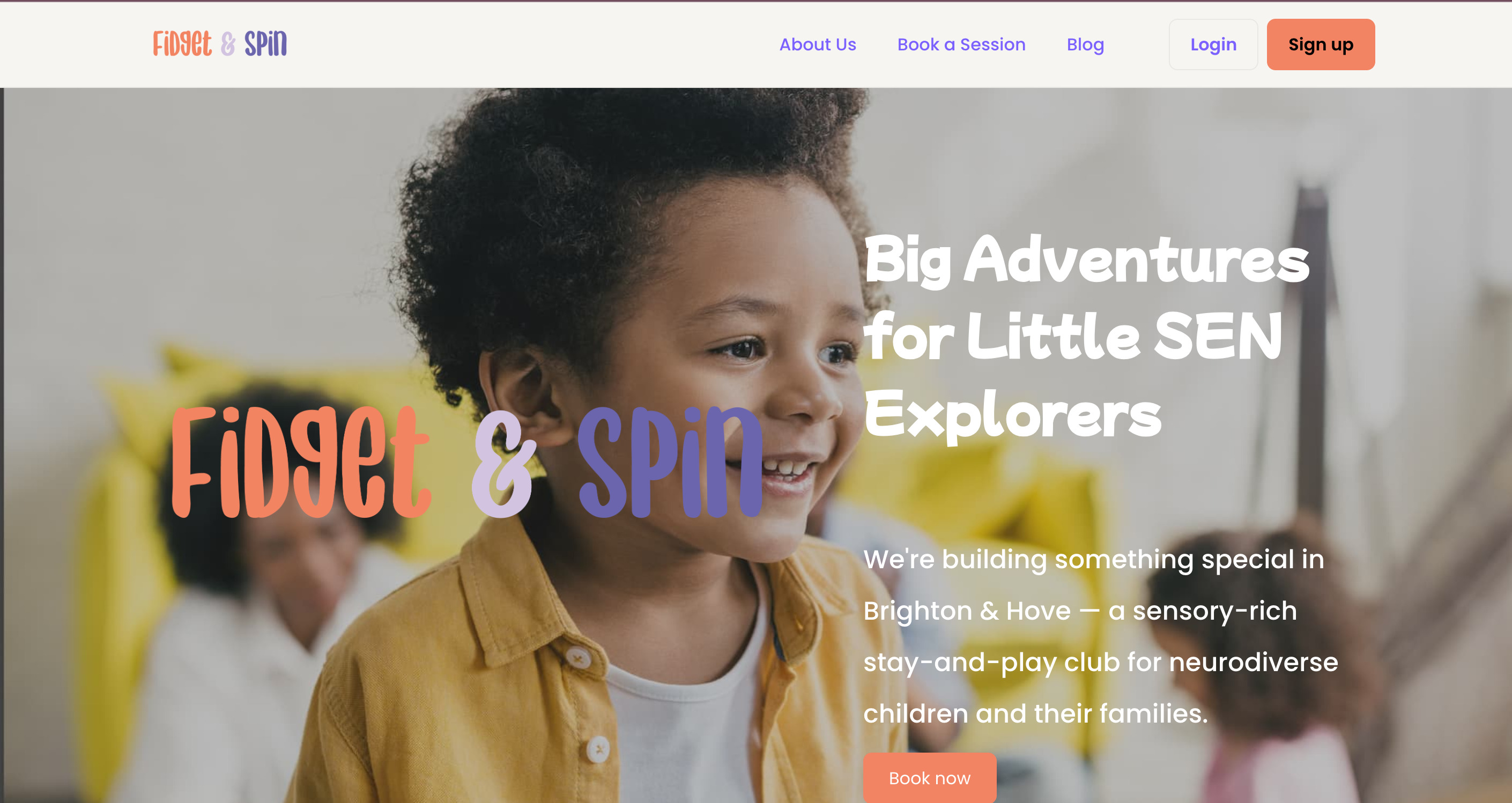
Anthony and I built Fidget and Spin because the sessions we needed for Remy did not exist. If you are looking for a sensory play session that genuinely works for your child, or a sensory birthday party that does not require a week of recovery, you can find all the details and book directly on the website. We would love to see you there.
FAQ
Do SEN toddler groups in Sussex require a diagnosis?
Most inclusive SEN toddler groups in Sussex do not require a formal diagnosis to attend. Groups are open to any child whose parent feels a lower-sensory, smaller-group environment would suit them better.
How many children attend a typical SEN play session?
Effective SEN play sessions cap attendance at 9–10 children per session. That limit reduces noise, unpredictability, and the sensory load that triggers dysregulation in neurodiverse toddlers.
How much do SEN toddler groups in Sussex cost?
Costs vary, but specialised sensory sessions in Sussex start from around £5 per session. Free and donation-based options are also available through local SEND Local Offer directories and community charities.
What communication support do these groups offer?
The best groups employ facilitators trained in autism education and Early Years inclusion, and they accommodate children who use AAC, PECS, or who are pre-verbal. Child-led, low-pressure play is the standard approach, not the exception.
Where can I find SEN toddler groups near me in Sussex?
Your local authority’s SEND Local Offer is the most complete directory. The autism-friendly play groups guide for Brighton also lists specific options across East and West Sussex with session details.
Recommended
- Neurodiverse play groups in Sussex: a parent’s guide | Fidget and Spin Brighton
- Autism-friendly play groups in Brighton: 2026 guide | Fidget and Spin Brighton
- Play groups for non-verbal children in Brighton | Fidget and Spin Brighton
- SEN parenting UK: what support is actually out there | Fidget and Spin Brighton