TL;DR:
- Creating inclusive SEND party venues involves controlling lighting, sound, and providing quiet spaces to meet neurodiverse children’s needs. Planning short, small, child-led activities with advance communication reduces anxiety and ensures enjoyment. Local Sussex venues offering autism-friendly parties follow these principles, with expert advice available for parents.
I’ve left more parties early than I care to count. Remy would last twenty minutes in a neon-lit soft play before the noise, the chaos, and the unpredictability of it all became too much. We’d slip out the side door, both of us relieved, and I’d spend the drive home wondering why every venue seemed designed for a child who wasn’t mine.

Finding a genuinely inclusive SEND party venue in Sussex isn’t about finding somewhere that “tolerates” your child. It’s about finding somewhere built for them.
What makes a SEND-friendly party venue work for neurodiverse children?
The non-negotiables, in plain terms:
- Lighting control. No harsh fluorescents, no strobes. Warm, adjustable lighting or the option to bring your own lamps. NHS England’s sensory-friendly guidance flags controllable lighting as a core environmental requirement for neurodiverse children.
- Sound management. Low or no background music. No microphone shouting. A venue where you can turn things down without a fight.
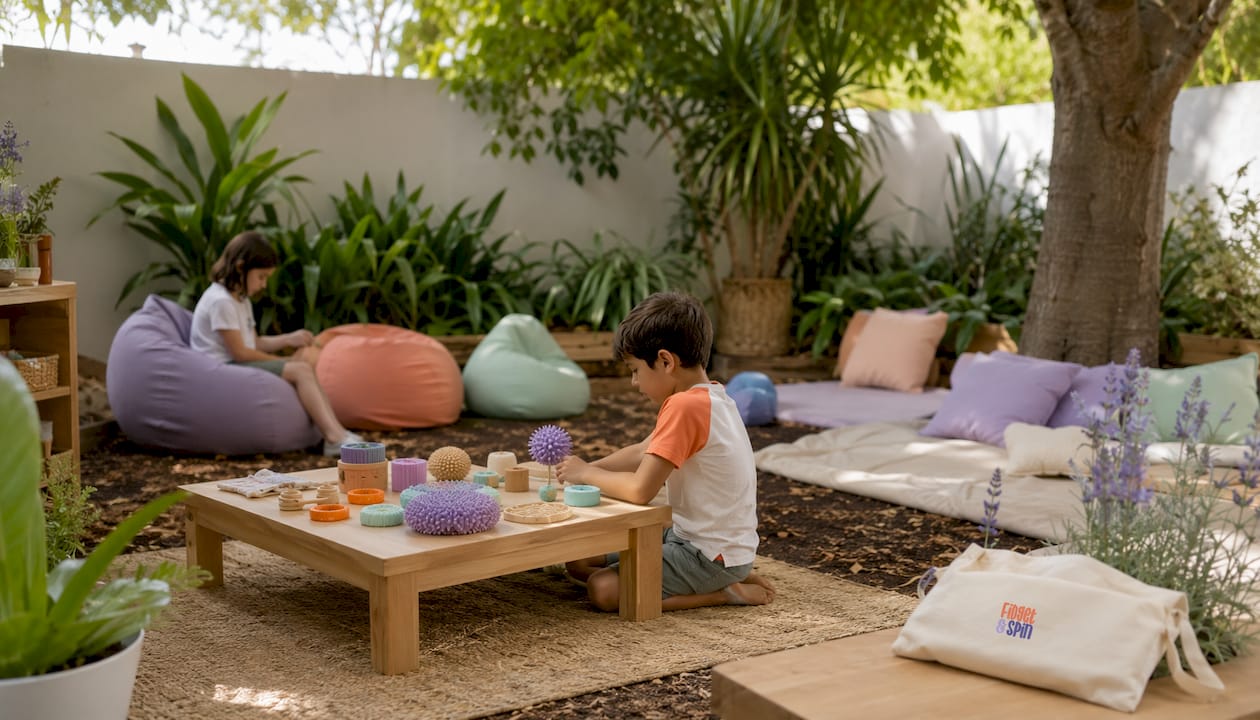
- A dedicated quiet zone. Not a cupboard. A proper calm corner with soft seating, dim lighting, and a few sensory items. Children need agency to self-regulate rather than being expected to participate continuously.
- Step-free access, accessible toilets, and enough space for wheelchairs or mobility aids. These aren’t extras; they’re basics.
- Staff who actually know SEND. Not a laminated certificate on the wall. People who understand processing differences, can adapt in the moment, and know basic emergency protocols.
- Flexibility over rigid programming. No forced Pass the Parcel. Informing hosts in advance about communication styles, whether your child uses PECS, AAC, or Makaton, means the day can flex around your child rather than the other way around.
How to plan a sensory-friendly party your child will actually enjoy
Keep it small and short
The Daisy Chain Project recommends 4–8 children and 60–90 minutes. That’s not a limitation. That’s the sweet spot where most neurodiverse children can stay regulated and actually have fun. Remy’s best party was six kids, ninety minutes, and no agenda. He still talks about it.
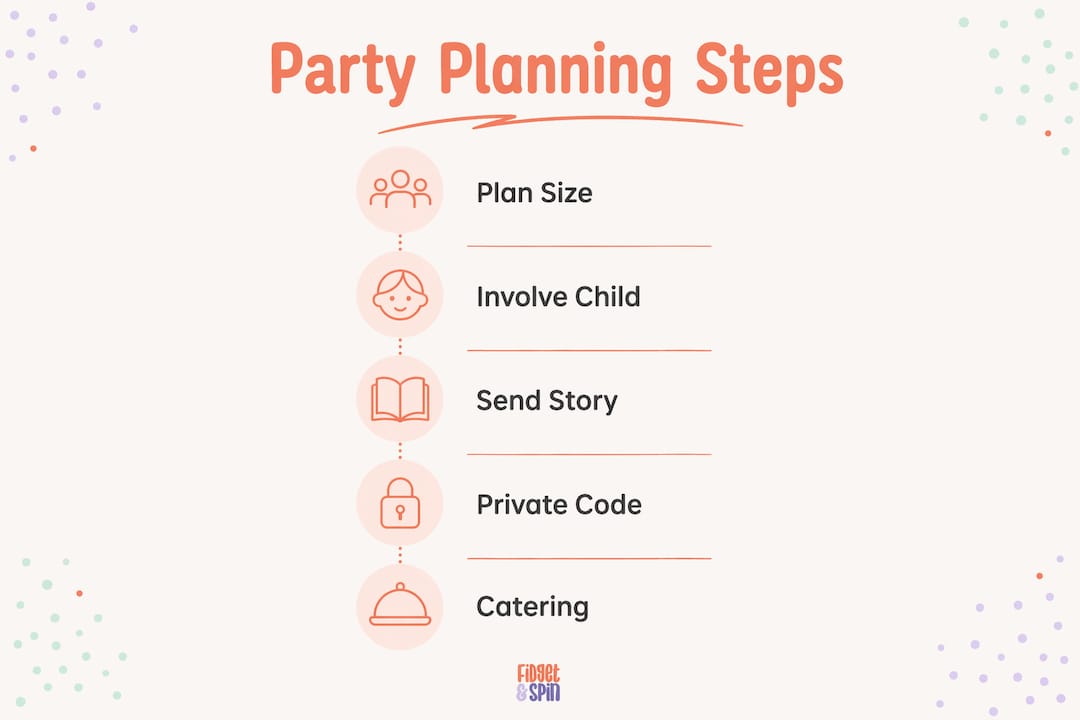
Involve your child in the planning
Ask them where they want to go, what they want to eat, which friends feel safe. Child-led activity stations let children move between interests without pressure, which produces far better outcomes than any structured game. Over-planning activities is one of the most common mistakes I see parents make.
Send a social story beforehand
A few photos of the venue, a simple running order, the time cake comes out. That’s it. Predictable information shared in advance is the single most effective way to reduce pre-party anxiety. You can find a practical guide to building one on the Fidget and Spin social stories page.
Agree a private code word
Before you arrive, agree a word or hand signal that means “I need a break” or “I want to go home.” This empowers your child to communicate without escalation, and it removes the dread of being trapped.
Sort the catering early
Flexible catering options that account for dietary needs and sensory sensitivities reduce stress on the day enormously. Ask venues directly about allergy policies and whether you can bring your own food.
Watch out for balloons
Most parents don’t realise balloons are a common sensory trigger, not just from popping but from their unpredictable movement. Keep them secured overhead or skip them entirely. Nobody misses them.
If you’re looking for a party built around these principles from the ground up, Fidget and Spin’s sensory birthday parties run across Brighton, Hove, and wider Sussex. Packages start at £220, and every session is designed by SEN parents who’ve sat in that car park after leaving early.
FAQ
What should I ask a venue before booking a SEND party?
Ask whether lighting and music are adjustable, whether a quiet room is available, whether staff have SEND experience, and whether the venue has step-free access and accessible toilets.
How many children should I invite to a SEND-friendly party?
A guest list of 4–8 children lasting 60–90 minutes keeps the environment low-stimulus and manageable for most neurodiverse children.
Do I need to tell the venue about my child’s communication needs?
Yes. Sharing communication styles such as PECS or AAC in advance lets hosts adapt the schedule and interactions, making the experience far less stressful for your child.
Are social stories really worth making for a party?
A simple photo guide of the venue and running order significantly reduces pre-party anxiety for neurodiverse children. It doesn’t need to be elaborate.
Can I find autism-friendly party options specifically in Sussex?
Yes. For local options, the autism-friendly party guide for Sussex covers venues and planning advice specific to the area.