TL;DR:
- Planning sensory-friendly events requires limiting guest numbers to four to eight children and keeping sessions between 60 and 90 minutes. Setting up a quiet corner beforehand and sharing a visual schedule at least a week in advance help reduce anxiety. Matching activities to a child’s sensory profile and having a clear plan support successful engagement and regulation.
Start here: pick a 60–90 minute slot, cap your guest list at 4–8 children, set up a quiet corner before anyone arrives, and send a visual schedule to families at least a week in advance. That one paragraph is the whole plan. Everything else in this guide is the how.
I know what it feels like to leave a noisy soft play twenty minutes in, Remy rigid under my arm, both of us done. That experience is why Anthony and I built Fidget and Spin, and it’s why I wrote this. If you want someone to take the whole thing off your hands, our sensory sessions and party packages are right here in Brighton and Hove.
TL;DR:
- Guest list: 4–8 children
- Duration: 60–90 minutes
- Chill-out space: set it up first, not as a last resort
- Visual schedule or social story: share it at least a week before
Table of Contents
- How do you work out your child’s sensory profile?
- Sensory activity ideas matched to each sensory system
- What does a good SEN-friendly party checklist look like?
- What to pack and how to set up on the day
- How do you handle meltdowns and tricky transitions?
- What questions should you ask before booking a venue?
- Key takeaways
- What I’d tell every parent planning their first sensory session
- Fidget and Spin’s sensory sessions and SEN party packages in Brighton
- FAQ
- Useful sources
How do you work out your child’s sensory profile?
I used to watch Remy at the park and think he was just “a lot.” Then I started actually noting what he was doing: crashing into things, seeking tight squeezes, covering his ears near the swings. Three weeks of that, across three different settings, and a picture emerged. He’s a seeker for proprioceptive input and an avoider for sharp, unpredictable sounds.
Over 90% of autistic children experience some form of sensory processing differences, and a 2024 systematic review found that matching activities to a child’s individual profile meaningfully improves participation. So the observation step is not optional.
Spend 2–3 weeks watching your child across home, an outdoor space, and a group setting. Keep a simple photo diary or a notes app. Look for:
- Seeker signs: crashing, climbing, spinning, mouthing objects, seeking tight hugs
- Avoider signs: covering ears, refusing textures, leaving crowded rooms, distress at unexpected sounds
- Mixed profile: seeking in one system (movement) while avoiding in another (touch)
Use what you find to choose activities, not to push past limits.
Pro Tip: Agree a code word or gesture with your child during a calm moment at home. “Pineapple,” a tapped shoulder, whatever works. Honour it the first time, without questions. That one act builds more trust than any amount of preparation.
Sensory activity ideas matched to each sensory system
Remy once spent forty minutes with a tray of dried lentils and a set of measuring spoons. No prompting, no performance. Just absorbed, quiet play. That’s what a well-matched activity looks like.
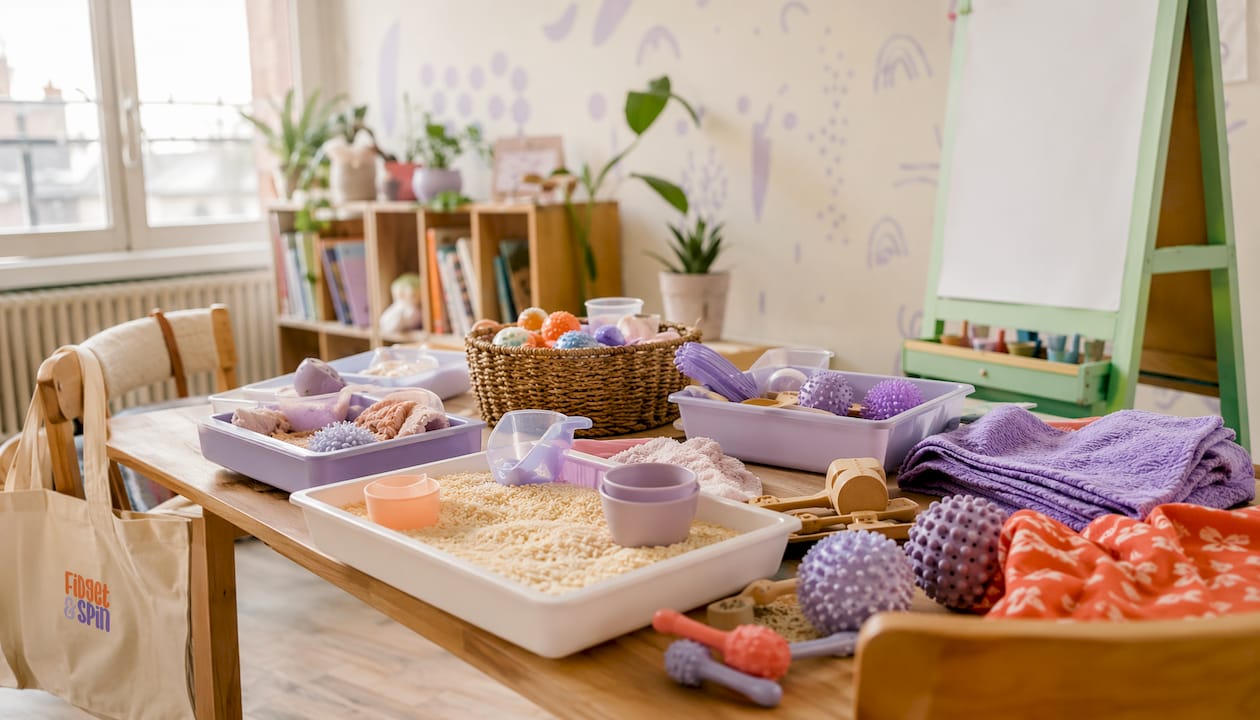
Organising activities by sensory system lets you make precise matches rather than guessing. Here are go-to activities grouped by system, with age notes and safety guidance.
Eight activities to copy straight into a party plan
- Crash pad pile (proprioceptive) — cushions or sofa cushions stacked for jumping into. Ages 2–7. Seeker. Check for sharp edges; keep pile low.
- Weighted lap play (proprioceptive) — a small bag of rice on the lap during a calm activity. Ages 3–7. Seeker/mixed. Max 10% of body weight.
- Blanket swing (vestibular) — two adults hold the corners of a blanket and gently rock a child inside. Ages 1–4. Seeker. Practitioner guidance: 10 seconds swinging, then 30 seconds rest; never spin fast or unsupported.
- Sensory tray (tactile) — dried rice, oats, or lentils with scoops and small toys. Ages 1–7. Seeker/mixed. Use taste-safe fillers for under-threes.
- Quiet craft table (visual/tactile) — stickers, foam shapes, simple collage. Ages 2–7. Avoider/mixed. Low demand; no right answer.
- Calm playlist corner (auditory) — child-chosen music through a small speaker, volume agreed in advance. All ages. Avoider. Offer ear defenders nearby.
- Scented dough (oral/olfactory) — homemade dough with lavender or vanilla. Ages 2–7. Mixed. Check for allergies before use.
- Bubble station (visual/oral) — blowing bubbles outdoors or near an open door. Ages 1–7. All profiles. Supervision near water.
For vestibular activities specifically, always pace carefully. If a child shows signs of overstimulation (flushing, giggling that tips into distress, sudden pallor), stop and offer stillness. For persistent sensory concerns, an occupational therapist referral is the right next step.
Structured play with clear routines and visual cues supports engagement and reduces anxiety. Set up activity stations before guests arrive so children can see the choices immediately.
What does a good SEN-friendly party checklist look like?
The dread before Remy’s fourth birthday was real. I had a list, a plan, and still felt like I was about to walk into a fire drill. What helped was making the plan so specific that there were no gaps for surprises to crawl through.
Experts recommend keeping the guest list small and the duration limited. Both guidelines exist because cumulative sensory load builds fast in a room of excited children.
| Planning element | Recommended range |
|---|---|
| Guest list | 4–8 children |
| Duration | 60–90 minutes |
| Chill-out space | 1 quiet corner, set up before guests arrive |
| Visual schedule | Shared at least 1 week in advance |
Sample 90-minute timeline:
- 0–15 min: Arrivals, free exploration of activity stations
- 15–35 min: Guided sensory activity (e.g. sensory tray or craft table)
- 35–55 min: Movement activity (crash pad, bubble station)
- 55–70 min: Snack or cake (warn children 2 minutes before lights change)
- 70–85 min: Calm wind-down (quiet playlist, sticker books)
- 85–90 min: Departures, one at a time if possible
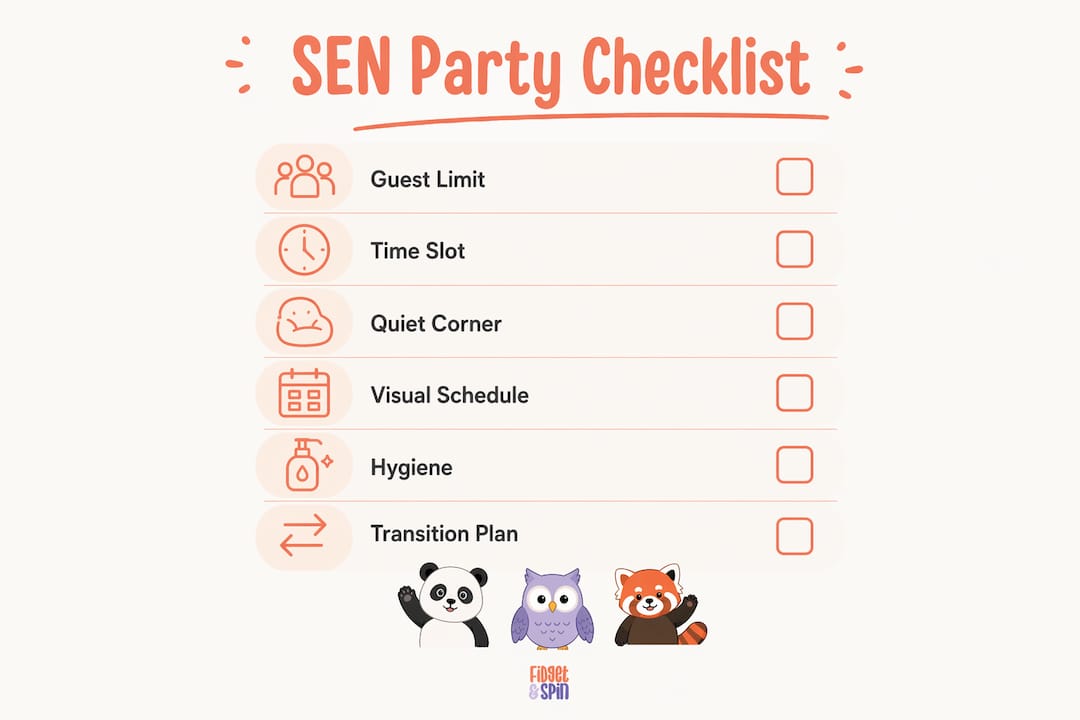
Checklist:
- Venue: controllable lighting and sound, step-free access, outside space
- Quiet corner stocked with ear defenders, fidgets, a weighted item
- Trusted adult assigned to the chill-out space throughout
- Exit code word agreed with your child before arrival
- Food laid out buffet-style with allergen labels visible
- Invites include a short parent note (see below)
Parent invite note template: “[Child’s name]'s party is low-noise and small. We’ll have a quiet corner available throughout. Please let us know your child’s sensory needs or any allergies in advance, and feel free to arrive for just part of the session if that works better.”
Pro Tip: Don’t call the quiet corner a “calm-down room.” Call it the cosy corner, the den, the snuggle spot. Language shapes how children feel about using it.
What to pack and how to set up on the day
I once packed the car and forgot the wipes. Reader, it was a sensory tray session. Learn from me.
A short pack list you can copy:
- Ear defenders (at least two pairs)
- Pillow crash pad or sofa cushions
- Pop-up tent or den for the chill-out corner
- Tactile tray materials (dried rice or oats, scoops)
- Wipes, hand sanitiser, small first-aid kit
- Allergen-free snacks clearly labelled
- Spare clothes for the child whose party it is
In Brighton and Hove, many sensory play resources can be borrowed through local SEN networks or bought cheaply at charity shops. Towels work as mats; cushions substitute for beanbags. You do not need specialist kit to run a good session.
Hygiene basics: clean porous toys between uses with a mild solution, keep food handling separate from tactile play areas, and display allergen information clearly for any buffet items.
How do you handle meltdowns and tricky transitions?
Halfway through a session, a child I’ll call T started pacing, then covering his ears, then heading for the door. His parent caught my eye. No drama, no announcement. She said their word quietly, took his hand, and they went to the den. Five minutes later he was back at the sensory tray.
That’s the whole model: reduce input, offer a choice, use the agreed exit if needed.
Practical transition tools:
- Visual countdown: show a timer or a simple “3 more minutes” card
- Preview the next activity before it starts: “After the tray, we’re having snacks at the table”
- Hand a small object (a fidget, a smooth stone) to invite side-loading attention during the shift
- Offer a genuine choice of arrival time: “Come at the start or join us after the first activity”
When a child is dysregulating, the goal is not to redirect them back into the activity. The goal is to reduce the load until their nervous system can settle. Everything else follows from that.
Pro Tip: After the party, give your child a brief, low-demand debrief: “That was a lot. What was your favourite bit?” Then plan something quiet for the rest of the day. Regulation doesn’t stop at the door.
For medical or communication needs at events, a medical ID system can help ensure any trusted adult has the right information quickly.
What questions should you ask before booking a venue?
Walking a venue with Remy taught me more than any checklist. He headed straight for the fire exit (echo, cold air, interesting handle) and refused the main room entirely. Now I visit every venue before I book.
Key questions to ask by phone or email:
- Can we control the lighting? Is there a dimmer switch or blackout option?
- Can we control the sound, including background music?
- Is there a separate room or screened area for a quiet corner?
- What is the maximum capacity, and can we book exclusively?
- Is the venue step-free throughout, including toilets?
- Is there parking or easy access from public transport?
- Do staff have experience supporting neurodivergent children?
- Can guests arrive at different times, or must everyone arrive together?
Sample email script: “We’re planning a small party for a neurodivergent child and need to confirm a few things before booking. Could you let us know whether we can control the lighting and sound, whether there’s a separate quiet space, and whether the venue is fully step-free? We’d also love to know your maximum capacity for an exclusive hire.”
In Brighton and Hove, village halls, community centres, and private studio spaces often offer more flexibility than commercial soft-play venues. Fidget and Spin’s sessions use venues specifically chosen for controllable acoustics, step-free access, and a dedicated low-stim zone.
Key takeaways
The most effective sensory-friendly sessions combine a matched activity plan, a guest list of 4–8 children, and a chill-out space that is set up before anyone walks through the door.
| Point | Details |
|---|---|
| Observe first | Watch your child across three settings over 2–3 weeks to identify seeker, avoider, or mixed profile. |
| Keep it small and short | Guest list 4–8 children; duration 60–90 minutes reduces cumulative sensory load. |
| Chill-out space from the start | Set it up before guests arrive and give it a welcoming name, not a corrective one. |
| Share a visual schedule early | Send it at least a week in advance to reduce pre-party anxiety. |
| Fidget and Spin | Weekly sensory sessions and three SEN party packages in Brighton, Hove and Sussex, built for exactly this. |
What I’d tell every parent planning their first sensory session
The session that taught me the most went sideways almost immediately. We’d planned a movement circuit. Three children arrived, one took one look at the crash pad and burst into tears, and another refused to leave it for forty minutes. The visual schedule went out of the window by minute ten.
What I’d do again: the chill-out corner was ready before anyone arrived, and that saved us. What I’d change: I’d co-create the activity choices with each child beforehand, even just showing photos and asking “yes or no?” The children who’d seen pictures of the activities settled faster than those who hadn’t.
The practical lessons I carry now: make the chill space genuinely inviting (a soft light, a familiar fidget, a small weighted blanket), use photo social stories rather than written schedules for younger children, and always assign one trusted adult to the quiet corner so it never feels abandoned.
At Fidget and Spin, our weekly sessions run across three zones: Wiggle and Bounce for big movement, Snuggle and Chill for low-stim cosy play, and Squish and Squeeze for tactile exploration. Every zone exists because one of them is where Remy goes when the world is too much. We built what we couldn’t find.
Fidget and Spin’s sensory sessions and SEN party packages in Brighton
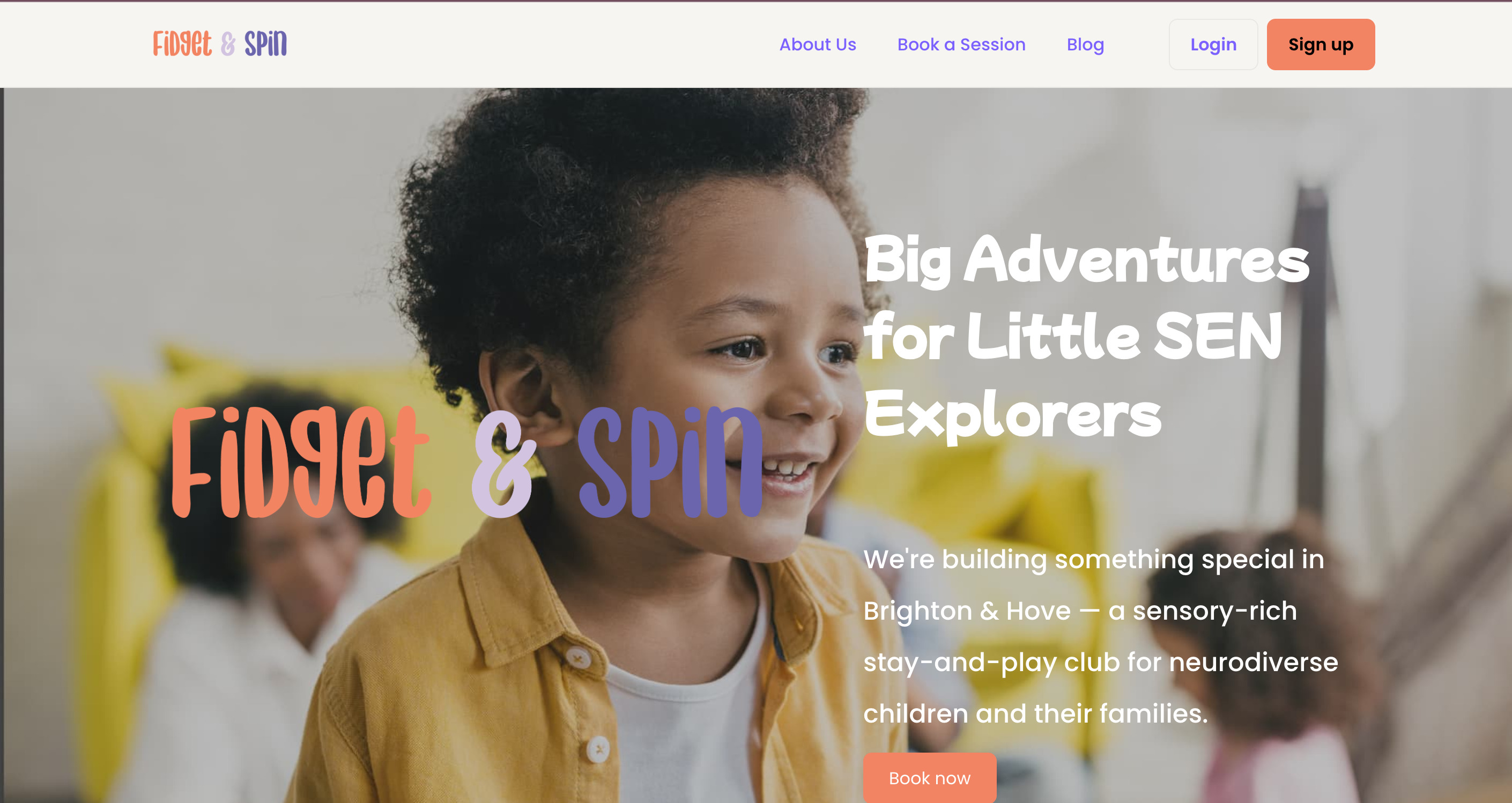
When a party feels impossible, the answer isn’t to lower your expectations. It’s to change the format entirely. Fidget and Spin runs weekly sensory stay-and-play sessions for neurodiverse children aged 1–6, and SEN-friendly birthday parties for ages 1–7 across Brighton, Hove and wider Sussex. Three packages: The Wee One (£220), The Big One (£320), and The Whole Shebang (£530). Every party includes a private sensory setup, flexible arrival options, a dedicated chill-out space, and a visual schedule prepared in advance. Concession spots are available through our Pay-It-Forward scheme at checkout. Check dates and book directly at fidgetandspin.com/parties.
FAQ
How many children should attend an SEN-friendly party?
Keep the guest list to 4–8 children. Smaller groups reduce cumulative sensory load and give each child more space to regulate.
How long should a sensory-friendly birthday party last?
60–90 minutes is the recommended duration. Beyond 90 minutes, most children’s regulation capacity drops significantly, regardless of how well the party is planned.
What is a visual schedule and why does it help?
A visual schedule is a simple sequence of pictures or symbols showing what will happen and in what order. Sharing it at least a week before the event reduces pre-party anxiety by removing the unknown.
What should I do if my child has a meltdown mid-party?
Reduce sensory input immediately, offer a choice (the quiet corner or outside), and use your agreed exit code word if needed. The goal is to lower the load, not redirect the child back into the activity.
Does Fidget and Spin offer sessions for children who aren’t having a party?
Yes. Fidget and Spin runs weekly sensory stay-and-play sessions for neurodiverse children aged 1–6 in Brighton and Hove, with concession spots available through the Pay-It-Forward scheme.
Useful sources
- All Together Autism: sensory-friendly structured play — used for evidence on structured routines and visual cues supporting autistic children’s participation.
- Frontiers in Psychiatry / All Together Autism summary — source for the 90%+ figure on sensory processing differences and the 2024 systematic review on profile-matched activities.
- They Are The Future: sensory-friendly party planning — primary source for guest list (4–8) and duration (60–90 minutes) guidance.
- Kids Party Finder: planning a sensory-friendly party — venue selection and invite wording guidance.
- Dzieckologia: sensory processing home activities by system — framework for organising activities by sensory system.
- Fidget and Spin: sensory play best practices — internal source for session structure and three-zone model.
Recommended
- SEN activities in Brighton and Hove: 2026 parent guide | Fidget and Spin Brighton
- SEN community Brighton: your 2026 parent guide | Fidget and Spin Brighton
- Stay and play Brighton: the neurodiverse family guide | Fidget and Spin Brighton
- Sensory play Brighton: best sessions for neurodiverse kids | Fidget and Spin Brighton