TL;DR:
- Finding a sensory friendly cafe in Brighton requires careful assessment of environment, staff, and layout for sensory support. Visiting during quieter times and planning ahead with familiar items and clear expectations can improve the experience for neurodiverse families. Outdoor access and inclusive staff culture top the list of features that create a calm, welcoming space.
Finding a sensory friendly cafe in Brighton is not as simple as Googling “quiet coffee shop” and hoping for the best. You need low noise, forgiving lighting, staff who won’t flinch when your child bolts under a table, and ideally somewhere you can actually drink your coffee while it’s still warm. As a Brighton mum to Remy, my autistic and ADHD six-year-old, I’ve done a lot of reconnaissance. This guide shares what I’ve found, what’s genuinely worked for us, and what to look for when you’re choosing a calm, inclusive space for your family.
What makes a cafe sensory friendly for neurodiverse children?
A sensory friendly cafe is defined by its environment, its staff, and its layout working together to reduce sensory overload for neurodiverse children. That’s the standard the autism and SEND community uses, and it’s a useful benchmark when you’re assessing a new venue.

The physical features matter most. Private nook areas and secluded garden sections give neurodiverse children somewhere to regulate without leaving the venue entirely. High ceilings, sound-dampening barriers, and non-linear seating all reduce the acoustic chaos that tips a child from coping to not coping. Harsh fluorescent lighting is a particular problem. Natural light or dimmable lamps make a real difference.
Staff awareness is the other half of the equation. A venue can have perfect acoustics and still feel hostile if the staff look alarmed when your child stims or melts down. The best spaces have people who understand sensory processing differences and respond with patience rather than performance.
Here’s what to look for when you’re assessing a cafe:
- Noise levels: Is there background music? Is it loud? Are there hard floors that amplify every scrape of a chair?
- Lighting: Natural light preferred. Avoid venues with strip lighting or no natural windows.
- Layout: Enough space between tables to move without bumping into strangers. Bonus points for a separate quiet area.
- Outdoor access: A garden or outdoor seating area gives you an exit valve when things escalate.
- Menu predictability: Simple, clearly described food. Fewer surprises for children with food sensitivities.
- Staff attitude: You’ll know within 30 seconds of walking in whether the staff are going to be allies or obstacles.
Pro Tip: Ring ahead on a weekday morning and ask directly: “Do you have a quieter time to visit with a child who has sensory needs?” Most venues will tell you honestly, and some will go out of their way to help.
Top 10 sensory friendly cafes in Brighton for neurodiverse families
These venues were chosen based on atmosphere, layout, staff culture, and sensory accommodations. Not all of them market themselves as autism friendly cafes in Brighton. Some are simply calm, spacious, and staffed by people who get it.
1. The Third Space
The Third Space is the most purpose-built sensory venue on this list. It offers a warm hydrotherapy pool, accessible changing rooms, and inclusive activity zones including sensory cooking and play, all designed specifically for people with autism and complex needs. This is not a cafe in the traditional sense, but it functions as a community gathering space where families can eat, play, and regulate together. If your child needs a high level of sensory support, this is the place to start.
2. Garden Cafe Brighton
Garden Cafe on North Road is one of those places that feels calm without trying too hard. The dispersed seating avoids the cramped, overwhelming atmosphere of many city centre spots. Pricing runs roughly £1–£20 per person, which makes it accessible for families who are testing a new venue and don’t want to commit to a big spend. The plant-filled interior softens the acoustics naturally, and the pace is unhurried.
3. Barefoot Café Bar at Yellowave
Barefoot Café Bar sits at Yellowave beach sports venue and has a free sandy play area that is genuinely useful for children with sensory needs. Sand play and outdoor seating combined with a location away from heavy street traffic make this one of the better Brighton cafes for sensory needs. Baby change facilities are available. The outdoor setting means noise disperses naturally rather than bouncing off walls. On a mild day, this is one of the most relaxed options in the city.
4. The Secret Garden at Oeuf
Oeuf’s Secret Garden is a strong choice for families who need an outdoor refuge. Enclosed garden seating provides a serene space for children to regulate sensory input without leaving the venue. The garden design uses natural barriers that reduce ambient noise from the street. Inside, the cafe has a relaxed, independent feel without the sensory assault of a busy chain. It’s the kind of place where nobody looks twice if your child needs to sit on the floor for a bit.
5. The North Star
The North Star is a pub, not a cafe, but it earns its place here because of its staffing model. Neurodiverse staff trained to support people with learning disabilities and autism create an environment that is genuinely empathetic rather than performatively inclusive. It operates as both an inclusive workplace and a training space supported by Team Domenica. The result is a welcome that feels natural. Staff here understand sensory processing differences because they live them. That changes everything about how a visit feels.
6. Open Art Cafe
Open Art Cafe combines a relaxed cafe environment with art activities, which makes it a strong option for children who regulate better when their hands are busy. The layout is open without being cavernous, and the creative focus attracts a tolerant, diverse crowd. Art-based activities give children a clear purpose during the visit, which reduces the pressure of unstructured sitting. For families whose children struggle with the formlessness of a standard cafe outing, this structure helps.
7. A community cafe with sensory-aware staff
Brighton has a number of community-run cafes, often attached to arts centres, libraries, or charity spaces, that operate with a quieter, more inclusive culture than commercial venues. These spaces tend to have lower footfall, flexible seating, and staff who are used to welcoming people with a range of needs. They rarely advertise themselves as autism friendly cafes in Brighton, but they often function that way. Ask at your local SEN network or SENCO for recommendations specific to your area of the city.
8. Cafes with outdoor garden access
Any Brighton cafe with a proper enclosed garden becomes a significantly better option for neurodiverse families. The outdoor setting disperses noise, provides movement space, and gives children a natural regulatory break without requiring a full exit. Several independent cafes in Hove and Preston Park have garden seating that works well in this way. Check Google Maps satellite view before you visit to assess whether the outdoor space is genuinely enclosed or just pavement seating on a busy road.
9. Cafes near parks
Positioning matters. A cafe adjacent to a park gives you a built-in exit strategy when your child hits their limit. You can step outside, let them run, and return when they’re ready. Preston Park Cafe, Hove Park Cafe, and the cafe at Stanmer Park all sit within or beside green space. None of them are purpose-built sensory venues, but the proximity to open space makes them far more manageable than a city centre spot with nowhere to decompress.
Pro Tip: Check whether the park cafe has a side entrance directly onto the green. A direct route out, without navigating through the cafe, is worth more than any amount of soft furnishings.
10. Venues willing to accommodate with prior notice
Many venues without advertised sensory accessibility will accommodate specific sensory requests if you visit off-peak or communicate your needs in advance. Visiting on a weekday morning, asking for a corner table away from speakers, or requesting that background music be lowered are all reasonable asks. Most independent Brighton cafes will say yes. The key is asking before you arrive, not after your child is already overwhelmed.
How to plan a sensory friendly cafe outing in Brighton
Planning is the difference between a good outing and one you’re still recovering from three days later. These steps have made our visits with Remy significantly more predictable.
Before you go:
- Visit the cafe’s website or social media to show your child photos of the space. Familiarity reduces anxiety before arrival.
- Ring ahead and ask about quieter times. Weekday mornings are consistently the calmest period in most Brighton cafes.
- Ask specifically whether they can seat you away from speakers, near a window, or in an outdoor area.
- Check the menu online so your child can choose in advance. Fewer decisions on the day means fewer flashpoints.
What to bring:
- Ear defenders or noise-cancelling headphones. Non-negotiable for us.
- A small sensory toy or fidget from home. Familiar objects help with regulation in unfamiliar spaces.
- A visual schedule or simple social story if your child uses them.
- Snacks from home as backup, in case the menu doesn’t work out.
During the visit:
- Arrive early in the session to avoid the lunchtime rush.
- Identify the quiet zone or outdoor area as soon as you arrive. Point it out to your child before they need it.
- Sensory-friendly event adjustments like lowered volume or dimmed lights can be requested for private family visits with prior arrangement. It never hurts to ask.
- Give your child a role: choosing where to sit, carrying the tray, picking a drink. Agency helps.
Pro Tip: After the visit, let your child rate the cafe out of five using whatever system works for them. It gives them ownership of the process and builds a family shortlist you can return to with confidence.
Additional resources and community support in Brighton
Brighton has a genuinely active SEN community, and connecting with it makes finding calm coffee shops and inclusive spaces much easier. Other families have already done the reconnaissance.
- Autism-friendly playgroups in Brighton are a good starting point for finding community-recommended venues alongside structured play.
- Sensory play sessions in Brighton run by local organisations give children regular exposure to managed sensory environments, which builds tolerance and confidence for less controlled spaces like cafes.
- Local Facebook groups for SEN parents in Brighton and Hove are active and honest. Search for Brighton SEND Parent Carer Forum for peer recommendations.
- Team Domenica and other Sussex SEN charities often share venue recommendations and run their own inclusive social events.
- Fidget and Spin’s weekly stay-and-play sessions across Brighton offer a structured sensory environment for neurodiverse children aged 1–6, which complements the less structured experience of a cafe outing.
Key takeaways
A sensory friendly cafe in Brighton works best when calm design, inclusive staff, and practical planning all come together for the family visiting.
| Point | Details |
|---|---|
| Design features matter most | Look for dispersed seating, natural light, outdoor access, and sound-dampening spaces. |
| Staff culture is the hidden factor | Venues employing neurodiverse staff or trained inclusive teams create the most genuinely welcoming environments. |
| Off-peak visits change the experience | Weekday mornings are consistently quieter; ring ahead to confirm and request accommodations. |
| Preparation reduces overwhelm | Bring ear defenders, familiar sensory toys, and review the menu before you arrive. |
| Community knowledge is your best resource | Local SEN parent networks hold the most current, honest venue recommendations in Brighton. |
What I’ve actually learned from taking Remy to cafes
Honestly, the first few times we tried cafe outings with Remy, I spent the entire visit watching the door. Not because I thought he’d bolt (though that was also a concern), but because I was braced for the look. You know the one. The slow turn from the next table when he started humming. The slight tightening around the eyes.
What changed things wasn’t finding a perfect sensory venue. It was finding places where the staff set the tone. The North Star model, where inclusive workplace culture shapes how every customer is treated, is the thing I wish more venues understood. When staff are relaxed and welcoming, other customers follow their lead. When staff look uncertain, everyone tenses up.
The other thing I’ve learned is that outdoor space is worth more than any amount of soft furnishings or quiet corner tables. Remy can regulate in a garden in a way he simply cannot in an enclosed room, no matter how thoughtfully designed. If a cafe has a proper outdoor area, that’s my first filter now.
I’d also say: lower your expectations for the first visit to any new venue. Go for twenty minutes. Order one drink. Leave before it gets hard. Then go back. The second visit is always better because your child knows what’s coming. The third visit, you might actually finish your coffee.
— Caitlin
Fidget and Spin: sensory-friendly sessions and parties in Brighton
If cafe outings are one piece of the puzzle, structured sensory play is another. Fidget and Spin runs weekly stay-and-play sessions in Brighton for neurodiverse children aged 1–6, across three zones designed around different sensory needs: big movement, low-stimulation cosy spaces, and tactile play.
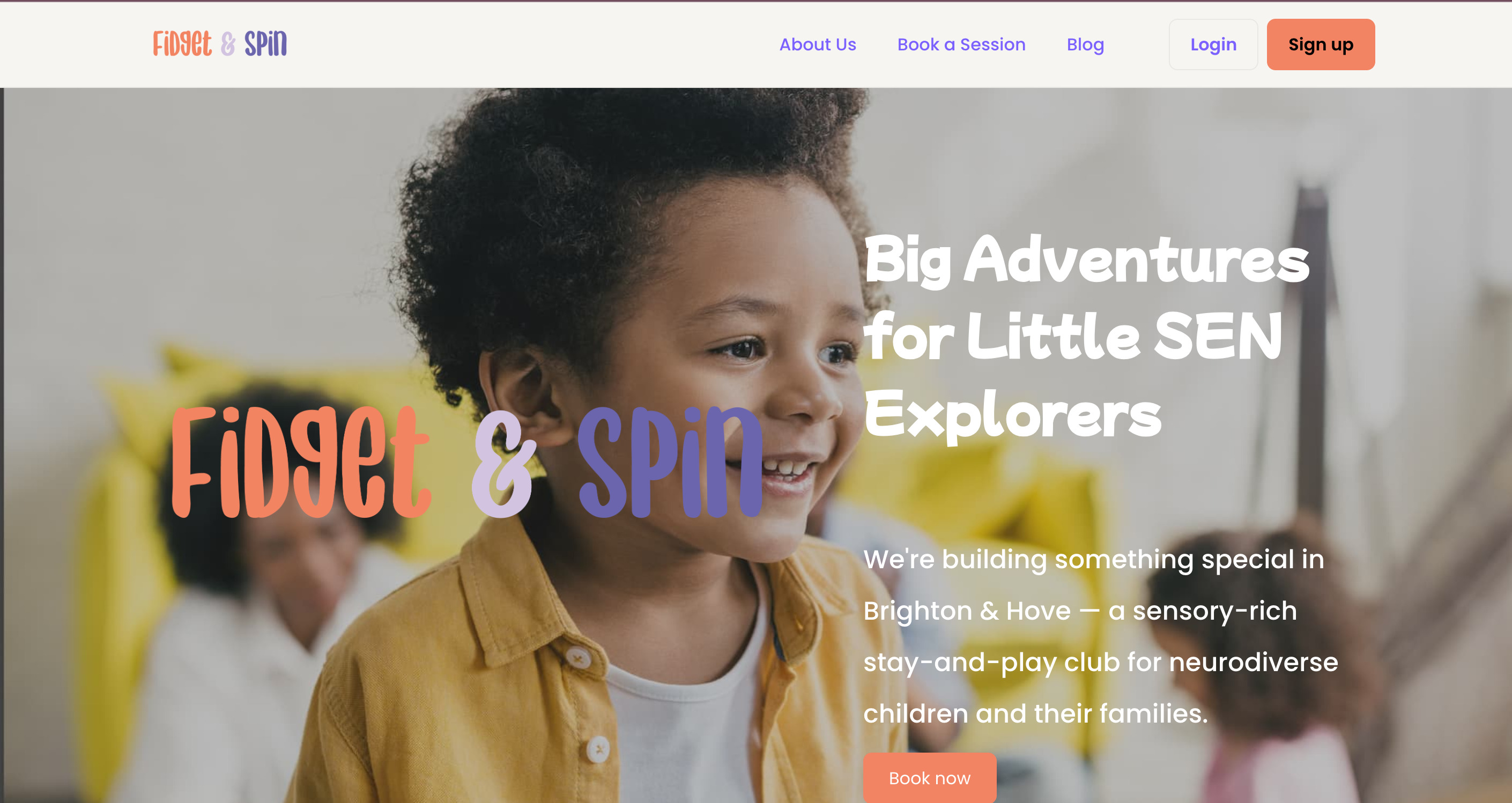
Anthony and I built Fidget and Spin because the mainstream options weren’t built for children like Remy. Every session is designed with sensory processing differences in mind, staffed by people who understand what your family actually needs. We also run SEN birthday parties across Brighton, Hove, and wider Sussex, with three packages starting at £220. If you want to see how our sessions are structured, the full session guide explains everything. Come and find your people.
FAQ
What is a sensory friendly cafe?
A sensory friendly cafe is a venue designed to reduce sensory overload through calm lighting, low noise levels, flexible seating, and staff trained to support neurodiverse guests. The term is used by the autism and SEND community to describe spaces that accommodate sensory processing differences.
Are there autism friendly cafes in Brighton?
Brighton has several venues that accommodate autistic children and families, including The Third Space, Barefoot Café Bar at Yellowave, and community-run spaces with inclusive staff cultures. Not all advertise sensory accessibility formally, but many will accommodate requests made in advance.
What is the best time to visit a cafe with a neurodiverse child?
Weekday mornings are consistently the quietest period in most Brighton cafes. Visiting off-peak and ringing ahead to request a quieter table or reduced background music significantly improves the experience for children with sensory processing differences.
What should I bring to a cafe with a sensory-sensitive child?
Ear defenders, a familiar sensory toy, and a backup snack from home are the three most useful items. Reviewing the menu in advance and showing your child photos of the venue also reduces anxiety before arrival.
How do I find sensory friendly venues near me in Brighton?
Local SEN parent Facebook groups, the Brighton SEND Parent Carer Forum, and organisations like Team Domenica share current venue recommendations. Fidget and Spin’s community also exchanges information on inclusive spaces across Brighton and Hove.
Recommended
- Autism-friendly play groups in Brighton: 2026 guide | Fidget and Spin Brighton
- Sensory play Brighton: best sessions for neurodiverse kids | Fidget and Spin Brighton
- Sensory party Hove: top inclusive options for neurodiverse kids | Fidget and Spin Brighton
- Neurodiverse play areas: a parent’s design guide | Fidget and Spin Brighton