TL;DR:
- Sensory play activities stimulate a child’s senses to support development and regulation. Brighton offers various inclusive options designed for neurodiverse children, focusing on accessibility and sensory variety. Regular participation benefits motor skills, emotional regulation, and early literacy development.
Sensory play is defined as any activity that stimulates a child’s senses to support motor development, emotional regulation, and early communication. For neurodiverse children aged 1–7 in Brighton and Hove, finding the right session is not just about fun. It is about finding a room where your child can exist without someone giving you that look. Brighton has a growing number of sensory play options, from The Third Space in Hove to Little Learners UK and Fidget and Spin, each offering something different for families navigating sensory processing differences, autism, ADHD, and PDA.
1. The best sensory play Brighton has for neurodiverse children
Brighton’s sensory play scene has grown considerably, but not all sessions are built with neurodiverse children in mind. The ones worth your time share three things: a predictable environment, staff who actually get it, and enough sensory variety to meet different needs in the same room. The list below covers the sessions and venues I would genuinely recommend to another SEN parent, not just the ones with the nicest Instagram grid.
2. The Third Space, Hove: specialist sensory activities
The Third Space in Hove is one of the most genuinely accessible sensory venues in the area. It offers sensory sport and cooking alongside a warm hydrotherapy pool with hoist access, designed specifically for people with complex needs. Wheelchair access and adapted changing facilities are standard, not an afterthought. For families whose children have physical needs alongside sensory processing differences, this matters enormously. Integrated sensory environments like this one reduce anxiety for the whole family, not just the child.
3. Little Learners UK: messy play and mark-making in Brighton
Little Learners UK runs sensory and messy play classes across Lewes and Brighton, welcoming babies from five months old. Sessions cover wet and dry sensory experiences alongside mark-making activities that build fine and gross motor skills. The connection to early literacy is real. Sensory and messy play gives children physical confidence and positive associations with mark-making, which is foundational for early literacy. Parents regularly report seeing gains in coordination and independent writing within 12–15 months of regular attendance. For pre-school children who learn through touch and movement, these classes are worth trying early.

4. Fidget and Spin: sensory stay and play in Brighton and Hove
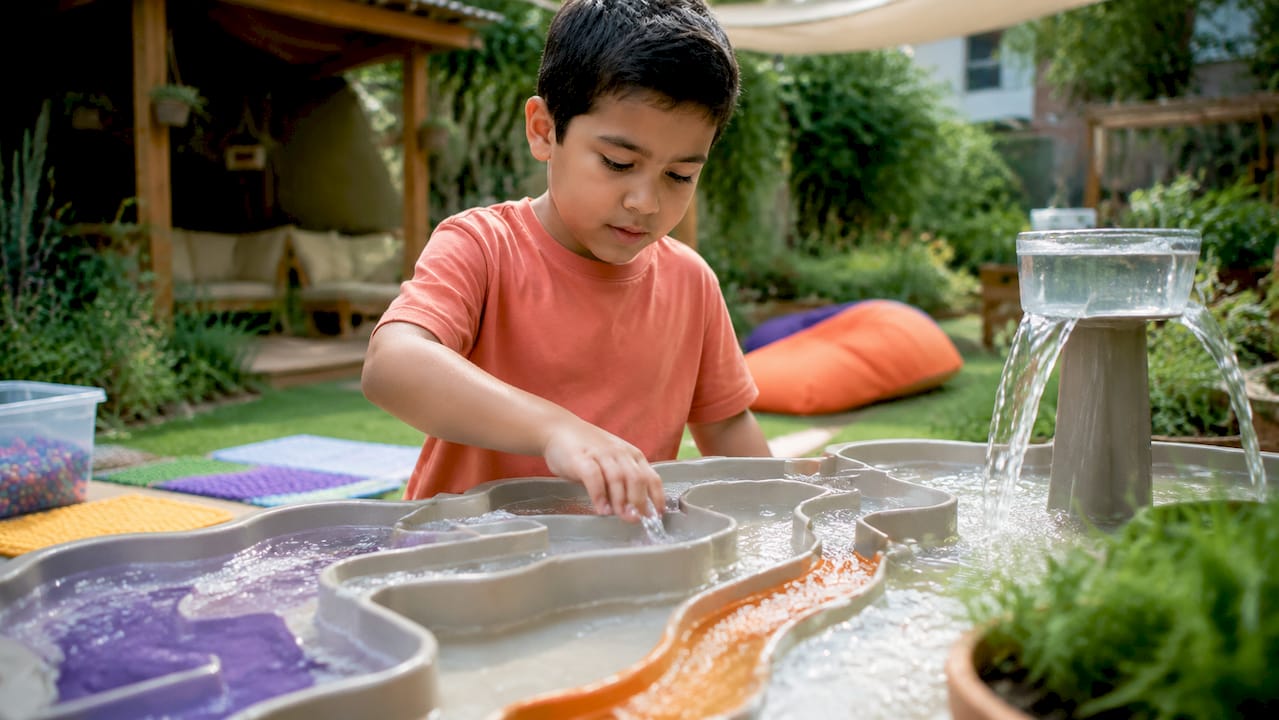
Fidget and Spin runs weekly sensory stay-and-play sessions designed by SEN parents, for SEN families. Anthony and I built it because every mainstream baby group and soft play we tried with our son Remy felt like it was designed for someone else’s child. Sessions are structured around three zones: Wiggle and Bounce for big movement, Snuggle and Chill for low-stimulation rest, and Squish and Squeeze for tactile play and fidgets. Children aged 1–6 can move between zones at their own pace. There is no expectation to join in, no circle time you have to sit through, and no one raising an eyebrow when your child needs to leave early.
Pro Tip: If your child struggles with transitions, arrive a few minutes before the session opens. Getting into the space before it fills up makes a real difference to how they settle.
5. Withdean Sports Complex: sensory toddler zone and soft play
Withdean Sports Complex offers a dedicated sensory toddler zone within its soft play area, with sessions costing between £5.25 and £5.60 for children aged four and under. Sessions typically run for 90 minutes. It is one of the more affordable Brighton sensory activities available, which matters when you are attending weekly. SEN sessions at Withdean require pre-booking via DigiTickets, so confirm the booking process before you turn up. Arriving to find a session full, with a dysregulated child in the car park, is not a situation anyone needs.
6. Sing, Sign and Sensory: creative sensory arts at Brighton Fringe
Sing, Sign and Sensory is a Brighton Fringe event that uses inflatable pods and soft projections to create a calming, multi-sensory arts experience for babies and neurodiverse children. Controlled air movement, textures, and gentle light make arts participation genuinely accessible. Creative sensory arts environments like this one support early communication and bonding through interactive stimuli. It is not a permanent weekly session, so check Brighton Fringe listings for dates. When it runs, it is one of the most thoughtfully designed Brighton sensory experiences available.
7. How sensory play supports neurodiverse children’s development
Sensory play builds motor skills, supports emotional regulation, and lays the groundwork for early literacy. For neurodiverse children, the benefits are not abstract. Wet and dry messy play, playdough, movement activities, and tactile exploration all contribute to the physical confidence children need to develop early literacy and communication skills.
“Sensory play is foundational for early literacy, giving children physical confidence and positive associations with mark-making.” — Little Learners UK
Emotional regulation is the piece that often gets overlooked in the listings. A well-designed sensory session does not just entertain a child. It gives them a predictable, low-demand environment where their nervous system can settle. That has a knock-on effect for the whole family. When Remy leaves a session regulated, the rest of the day is different. That is not a small thing.
8. What to look for in accessible sensory play sessions
Physical accessibility and sensory environment design are the two areas where Brighton venues vary most. Before booking, check for the following.
- Hoist access and wheelchair-friendly spaces. Not all sensory venues provide these. Hoist access and wheelchair design are critical for children with complex physical needs alongside sensory processing differences.
- Quiet zones and sensory pods. A venue with one large, loud room is not the same as one with designated low-stimulation areas. Look for spaces that offer both high-energy and calm options within the same session.
- Adapted changing facilities. Safe, accessible changing rooms matter for children who need support with personal care.
- Staff training in PDA, AAC, and sensory processing. Ask directly. A staff member who understands demand avoidance responds very differently to a child who is refusing to engage.
- Booking procedures. SEN-friendly sessions often require booking via third-party platforms. Confirm the process before the day.
Pro Tip: Ring ahead and describe your child’s specific needs before attending a new venue. A good session will welcome the conversation. A bad one will tell you everything you need to know.
9. Structured classes versus sensory stay and play: which suits your child?
Choosing between a structured class and a stay-and-play session comes down to your child’s sensory profile and what you need from the experience as a parent.
Structured classes, such as those run by Little Learners UK, offer professional guidance, a clear developmental focus, and a consistent format each week. They work well for children who benefit from predictability and for parents who want to understand the purpose behind each activity. The trade-off is that structured classes carry more social demands. There is usually a group dynamic, a pace to keep up with, and less room to opt out.
Stay-and-play sessions, including Fidget and Spin’s weekly groups, offer flexible, child-led exploration. Children move between zones at their own pace. There is no wrong way to play. The community element is also different. You are sitting next to other SEN parents, not making small talk with parents whose children are doing the activity correctly while yours is face-down in the playdough.
| Session type | Age range | Typical cost | Sensory intensity | Inclusivity focus |
|---|---|---|---|---|
| Little Learners UK (structured) | 5 months–pre-school | Not publicly listed | Medium | Developmental, sensory |
| Withdean sensory toddler zone | Under 4 | £5.25–£5.60 | Medium | Soft play, SEN sessions |
| Fidget and Spin stay and play | 1–6 years | Not publicly listed | Low to medium | Neurodiverse-specific |
| The Third Space (Hove) | Varied | Not publicly listed | Low to high | Complex needs, physical access |
| Sing, Sign and Sensory | Babies and young children | Not publicly listed | Low | Creative arts, communication |
The honest answer is that many families use both formats. A structured class for skill-building, a stay-and-play for the days when your child needs to move on their own terms.
- Structured classes suit children who thrive with routine and clear expectations.
- Stay-and-play suits children who need autonomy and low demand.
- Both formats build community, but in different ways.
- Cost and location will always be a factor. Check what is available locally before committing.
Key takeaways
The best sensory play in Brighton for neurodiverse children combines physical accessibility, sensory variety, and staff who understand processing differences.
| Point | Details |
|---|---|
| Accessibility varies widely | Check for hoist access, quiet zones, and adapted changing before booking any new venue. |
| Structured versus stay-and-play | Choose based on your child’s sensory profile, not what sounds most educational. |
| Booking SEN sessions | Many venues require advance booking via third-party platforms. Confirm before you travel. |
| Developmental benefits are real | Regular sensory play supports motor skills, regulation, and early literacy over time. |
| Community matters | Sessions designed for neurodiverse families reduce anxiety for children and parents alike. |
What I have learned from three years of sensory play in Brighton
I spent the first two years of Remy’s life dragging him to sessions that were not built for him. Baby sensory classes where the facilitator looked alarmed when he bolted. Soft play where the noise level was genuinely dangerous for his regulation. One birthday party where we lasted eleven minutes before leaving through a fire exit. I am not exaggerating.
What changed things was finding spaces where the other parents already knew. Where nobody explained my child to me. Where the session design assumed that children might need to move, or hide, or not participate at all, and that was fine. Brighton does have those spaces. They are not always the most visible ones, and they are not always cheap, but they exist.
My practical advice: do not waste energy on venues that make you justify your child’s needs. The right session will not require you to apologise for anything. And if you are a SENCO or early years professional reading this, the single most useful thing you can do is keep an updated list of genuinely accessible local sessions and share it with families at diagnosis or EHCP review. Most of us are finding these places by word of mouth, years later than we should.
The real impact of sensory play on neurodiverse children is not just developmental. It is the look on a child’s face when they walk into a room that was made for them.
— Caitlin
Fidget and Spin’s sensory sessions in Brighton and Hove
Fidget and Spin runs weekly sensory stay-and-play sessions across Brighton and Hove, designed from the ground up for neurodiverse children aged 1–6. Every session includes the three sensory zones, a low-demand environment, and a community of parents who are not going to stare.
Anthony and I also run SEN birthday parties for children aged 1–7, with three packages starting at £220, covering Brighton, Hove, and wider Sussex. No overwhelming venues. No pressure to perform. Just a party that actually works for your child. You can book a session or find out more about how our sessions are structured at fidgetandspin.com.
FAQ
What is sensory play and why does it matter for neurodiverse children?
Sensory play is any activity that engages a child’s senses to support motor development, regulation, and communication. For neurodiverse children, it provides a low-demand way to build physical and emotional skills at their own pace.
Where can I find sensory play sessions in Brighton for autistic children?
Fidget and Spin, The Third Space in Hove, Little Learners UK, and Withdean Sports Complex all offer sessions suited to neurodiverse children, each with different formats and accessibility features.
Do I need to book SEN sensory sessions in advance?
Yes. Many SEN-friendly sessions, including those at Withdean Sports Complex, require pre-booking via platforms such as DigiTickets. Always confirm the booking process before travelling.
What is the difference between sensory stay and play and a structured sensory class?
A sensory stay-and-play session is child-led and flexible, with no expectation to follow a group activity. A structured class follows a set format with guided activities, which suits children who benefit from routine and clear expectations.
How soon will I see developmental benefits from regular sensory play?
Parents attending Little Learners UK sessions report gains in fine and gross motor skills, including improved mark-making and coordination, within 12–15 months of regular attendance.
Recommended
- Neurodiverse play areas: a parent’s design guide | Fidget and Spin Brighton
- How to make play inclusive for neurodiverse kids | Fidget and Spin Brighton
- Group activities for SEN children: a practical guide | Fidget and Spin Brighton
- Sensory play best practices for neurodiverse kids | Fidget and Spin Brighton