A small, sensory-friendly birthday party is short, predictable and led by the child, not the theme. The practical gold standard: 60 to 90 minutes, three to six close friends, a quiet zone the child can retreat to without explaining why, and a visual schedule shared beforehand so nothing arrives as a shock.
That shape works because it protects regulation instead of testing it. Experts consistently point to that 60 to 90 minute window as the point before sensory fatigue sets in for most children, and a small guest list means fewer unpredictable bodies, voices and social demands to track at once. I’ve watched my son Remy go from bouncing off the walls with excitement to hiding under a table in under an hour. Duration matters more than decoration ever will.
Before you plan a single game, sort these five things:
- Guest count: a few children, chosen for comfort, not popularity
- Length: 60 to 90 minutes, hard stop
- Quiet zone: a named, physical space the child can go to alone
- Visual schedule: shared days in advance, not sprung on the morning
- Sensory kit: packed and ready before anyone arrives
Key Takeaways
A short, small, predictable party with a visual schedule and a genuine quiet zone gives neurodiverse children the best chance of actually enjoying their own birthday.
| Point | Details |
|---|---|
| Keep it short | Aim for 60 to 90 minutes to avoid pushing past your child’s regulation capacity. |
| Keep the guest list tiny | Three to six close friends reduces social and sensory load significantly. |
| Send a visual schedule early | Share timing and activities four to five days ahead so nothing is a surprise. |
| Skip or adapt the birthday song | Try a silent countdown or a family-only cake moment instead of a public sing-along. |
| Book Fidget and Spin if you’d rather not DIY | Sussex-based SEN party packages from £220, with built-in quiet zones and flexible timings. |
Table of Contents
- Small birthday party ideas: planning without the overwhelm
- Choosing a venue that won’t fight against you
- What are the best sensory-friendly party activities?
- Food, cake and the birthday song problem
- Preparing your child before the day
- Running the party day without a meltdown
- If you’d rather book than DIY it
- Small parties I wish I’d known about sooner
- Sources
- FAQ
Small birthday party ideas: planning without the overwhelm
Nobody warns you that the invite list is the hardest bit. Not the cake, not the games. The list.
Pick the ceiling first: a few children is plenty for most neurodiverse kids, and often better than “everyone from school” because it keeps the social load manageable. Choose children your child actually seeks out, not the ones you feel obliged to invite back. Set the party at 60 to 90 minutes rather than the usual two-hour slog. That window gives enough time for a proper celebration without pushing anyone past their capacity.
Here’s invitation wording I’ve used and had other parents genuinely thank me for:
“We’re keeping this small and low key, just a few friends for about an hour. There’ll be a quiet corner if anyone needs a break, no surprises, and a rough running order below so everyone knows what’s coming. Let us know if your child has any sensory needs or foods to avoid, we’ll sort it.”
Checklist for the plan itself:
- Who’s invited, and who’s helping supervise (one adult per one or two children, minimum)
- Arrival window and a firm exit time, stated on the invite
- Budget notes: sensory-friendly supplies (soft materials, dimmable lighting, low-noise toys) often cost less than themed party favours
- When to mention the quiet zone: on the invite, not on the day, so nobody feels singled out for using it
Pro Tip: Tell guest parents about the quiet zone as a normal feature, not an accommodation. “There’s a chill corner for anyone who needs five minutes” reads very differently from “my child might need to hide.”
Choosing a venue that won’t fight against you
I’ve stood in a soft play reception area, phone pressed to my ear, asking whether they had anywhere quieter than the main hall. The answer was a hard no, and we left within twenty minutes of arriving.
Look for a venue with acoustic control (carpet, soft furnishings, no hard-surfaced echo chambers), lighting you can dim, and, ideally, a second room or alcove that isn’t part of the main event. Ringing venues directly and describing sensory needs upfront tends to get you far better answers than clicking through an online booking form, because staff can actually check what’s free and offer to hold a quieter slot.
Before you book, ask:
- Is there a separate quiet room, or at least a low-traffic corner?
- Can lights be dimmed and can music be turned down or off?
- Is the slot low-footfall, or will other groups be in and out?
- Are balloons, poppers or loud decorations optional rather than automatic?
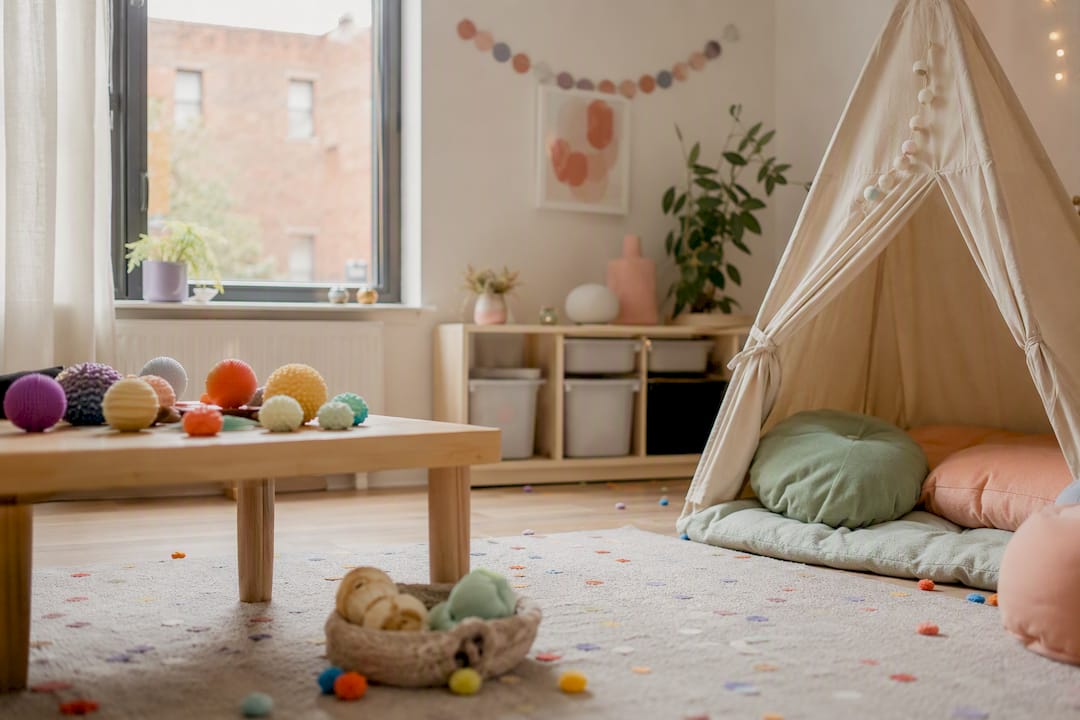
On arrival, set up zones: a main activity area, a food table away from the noise, a quiet corner with cushions and headphones, and a small “regulation station” where the sensory kit lives. Seat the birthday child near an exit, not boxed into a corner table. Visiting the venue in advance and briefing staff on what to expect makes an enormous difference on the day itself.
Home often beats any venue when your child’s triggers are unpredictable. You control the lighting, the noise, the exits, and nobody’s watching you leave early.
What are the best sensory-friendly party activities?
Forget the pass-the-parcel scrum. The best activities are the ones a child can dip in and out of without an audience noticing.
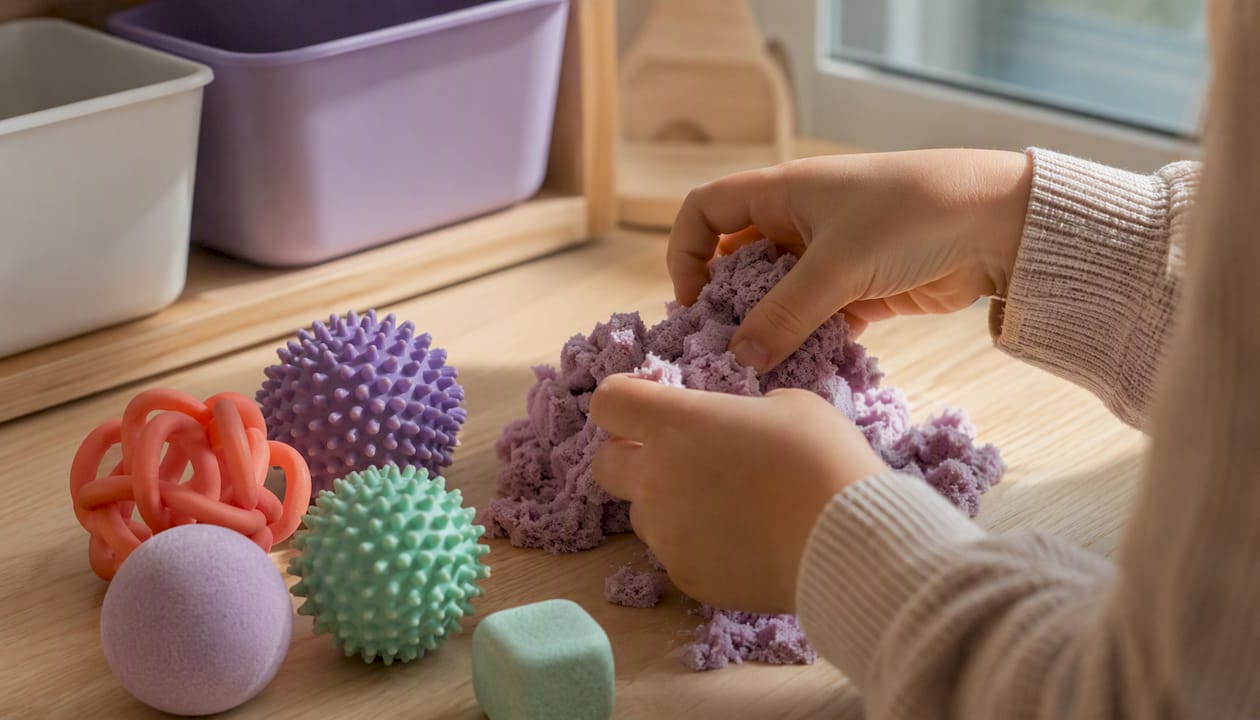
Sensory bins (rice, dried pasta, water beads) let children regulate through touch at their own pace. Cooperative craft stations, like decorating a shared banner, avoid the competitive edge of party games. A bubble station works for almost every sensory profile going, seeking or avoiding, because participation is entirely optional. Short films with beanbags or cushions instead of chairs give sensory-seeking kids room to move while sensory-avoiding kids get to sit still and low-stimulus.
Cap each activity station at two or three children at a time and rotate small groups through rather than running one big group activity. Use a visible timer so transitions aren’t a surprise.
- Sensory bin exploration: self-paced, works for tactile seekers and calms tactile-avoiders with gloves as an option
- Cooperative craft table: no winners, no losers, no forced turn-taking
- Bubble station: gross motor for movement-seekers, calm watching for everyone else
- Short film corner: low noise, flexible seating, easy exit if overstimulated
Our own autism-friendly party games guide has more adaptations if you want a longer menu to pick from.
Food, cake and the birthday song problem
The birthday song is often the worst sixty seconds of the whole party. Everyone staring, everyone singing off-key, everyone waiting for a reaction. For a lot of neurodiverse children, that’s not a treat, it’s a spotlight.
Skip it entirely, or try a silent countdown with fingers instead of voices. A family-only cake moment later that evening works well if a public one feels like too much. One lit candle rather than a full blaze reduces sensory input too.
Finger food beats a sit-down meal for most small gatherings, and labelling dishes clearly (allergens, ingredients) removes the guesswork for other parents. Keep the birthday child’s own snack familiar. This isn’t the day to introduce a new food.
- Serve food before the most stimulating activity, not immediately after it
- Offer one “safe” familiar snack alongside anything new
- Label dietary information clearly on the invite so nobody’s guessing on the day
- Save the cake moment for whenever suits the child, not the schedule
Our friends at Empanadas Australia have some genuinely useful dairy-free party food ideas if allergens are a factor in your group too.
Preparing your child before the day
Remy used to ask the same three questions about a party for a week straight. Who’s coming. What happens first. When does it end. The visual schedule stopped that spiral almost overnight.
Build a simple picture or word timeline: arrival, activity one, food, activity two, cake (or not), goodbyes. Send it four or five days before the party, and personalise it with your child’s actual name and the actual order of events, not a generic template. A visual schedule shared ahead of time takes the guesswork out of the day and is one of the simplest anxiety-reducers going.
Pair it with a short social story, three or four sentences: who’s coming, what the quiet corner is for, and exactly how to ask for a break (“I need a break” or a hand signal, whatever your child uses).
Pack the sensory kit the night before:
- Noise-cancelling headphones
- A favourite fidget
- Sunglasses if lighting is a trigger
- A familiar snack
- A comfort object
- A spare set of clothes
Pro Tip: If anxiety is running high, do a dry run. Visit the venue a few days early, even just to stand in the doorway. Familiarity beats reassurance every time.
Our planning guide for autistic children’s birthdays has fuller social story prompts if you want to build one from scratch.
Running the party day without a meltdown
Arrive fifteen minutes before your guests do. That window lets your child acclimatise to the space while it’s still quiet, rather than walking into a room that’s already loud and full.
A simple run sheet for a 75 minute party:
- 0 to 15 minutes: arrival, settling, quiet corner shown to everyone
- 15 to 40 minutes: main activity, small rotating groups
- 40 to 50 minutes: food
- 50 to 65 minutes: second activity or free play
- 65 to 75 minutes: cake moment (if wanted) and goodbyes
Brief supervising adults with one line: “If [child] uses this gesture, they need five minutes alone, don’t follow.”
- Agree a code word or signal for “I need a break” before the party starts
- Let the child leave a group activity without an announcement or a fuss
- End on something calm, not a high-energy game, so the last memory is a good one
- Text guest parents a quick thank-you afterwards, it closes the loop and often opens the door to the next small gathering
If you’d rather book than DIY it
Some years you’ve got the energy to plan every zone yourself. Other years you don’t, and that’s fine.
Fidget and Spin runs SEN-friendly birthday parties across Brighton, Hove and wider Sussex, built entirely around the small, sensory-first approach this article has just walked through. Every package includes private venue hire and three distinct sensory zones, Wiggle & Bounce for movement, Squish & Squeeze for tactile play, and Snuggle & Chill for a genuine low-stim retreat, so the quiet corner isn’t an afterthought, it’s designed in from the start. Timings flex around your child, not a fixed slot, and staff are experienced with autism, ADHD, PDA and sensory-processing needs, not just briefed on the day.
I’m an SEN parent myself, to Remy, who’s autistic and ADHD. Anthony and I built Fidget and Spin because we couldn’t find a party that didn’t require an exit strategy before we’d even arrived. That’s not a marketing line, it’s the whole reason the business exists.
Packages start at £220 for The Wee One, right up to £530 for The Whole Shebang, with small guest lists genuinely welcomed and supported. Have a look at the party packages or check how our sessions work if you want to see the format before booking a date.
Small parties I wish I’d known about sooner
We left a big soft play party early once, Remy overstimulated, me apologising on the way out, the birthday child’s mum kind about it but clearly disappointed. That evening we did three-person pizza and a film instead. No pressure, no countdown to a meltdown. He talked about that afternoon for months.
Smaller, predictable formats don’t feel like a compromise once you’ve lived one. They feel like relief. If you’ve never tried a tiny celebration, three friends, an hour, no fanfare, it’s worth one go. You might find, like we did, that it was never the size of the party your child needed. It was the shape of it.
Sources
These sources shaped the guidance above because they’re written by people who actually plan or support sensory-friendly events, not generic party blogs repackaging the same five tips.
- Sensory-friendly party planning — They Are The Future
- Inclusive birthday parties — Daisy Chain Project
- Celebrating with comfort and joy — Witherslack Group
FAQ
How many guests should a sensory-friendly birthday party have?
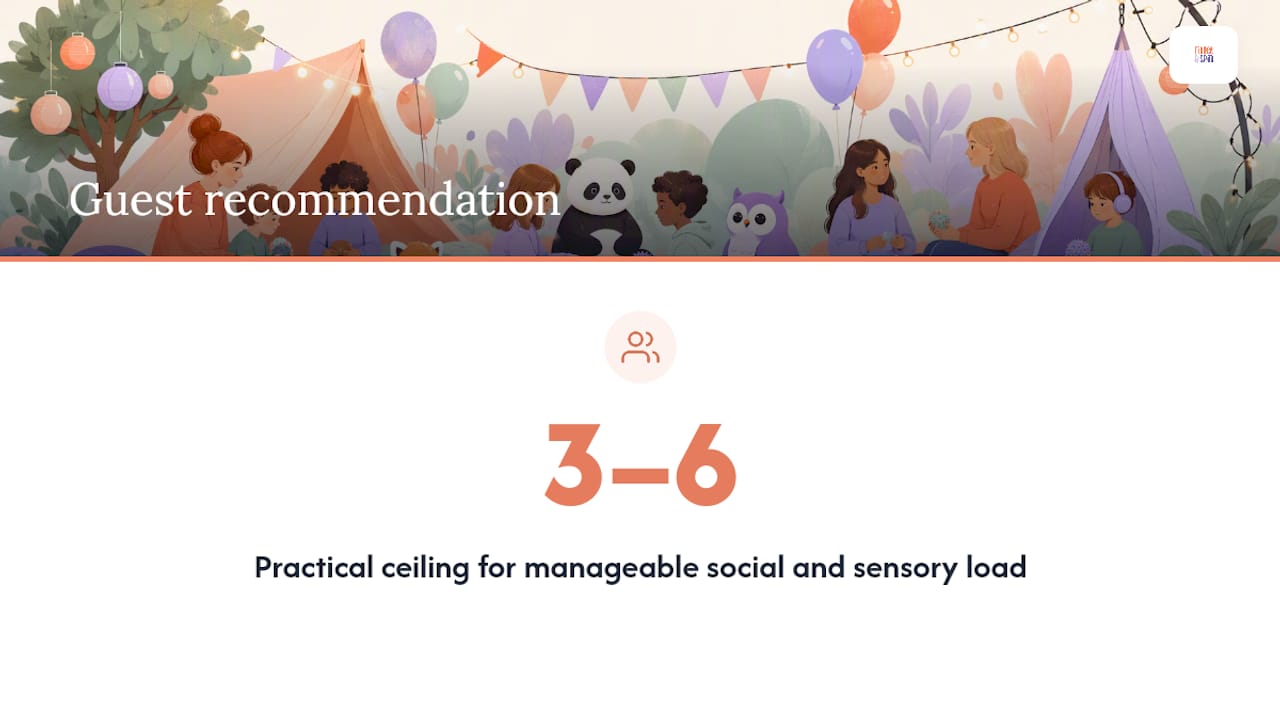
Three to six close friends is the practical ceiling for most neurodiverse children, keeping the social and sensory load manageable.
How long should a small sensory-friendly party last?
Sixty to 90 minutes is the widely recommended window before regulation fatigue tends to set in.
What should go in a sensory survival kit for a party?
Pack noise-cancelling headphones, a favourite fidget, sunglasses, a familiar snack, a comfort object and spare clothes.
Do we have to sing “Happy Birthday” at the party?
No. A silent countdown, a family-only cake moment, or simply skipping the song altogether are all common, low-pressure alternatives.
Where can I book a sensory-friendly birthday party?
Fidget and Spin runs private, SEN-friendly party packages across Brighton, Hove and Sussex, with three sensory zones and flexible timings built around small guest lists.
Recommended
- Birthday without party ideas: practical alternatives for parents | Fidget and Spin Brighton
- Picky eater party food that actually works for SEN birthdays | Fidget and Spin Brighton
- How to throw a quiet birthday party for neurodiverse kids | Fidget and Spin Brighton
- Creative sensory play ideas for parents and early years | Fidget and Spin Brighton