
TL;DR:
- Social stories are personalized, evidence-informed narratives designed to help neurodiverse children understand social situations. They reduce anxiety and promote learning by offering predictability, especially when paired with visuals, repetition, and real-world practice. Emphasizing a child’s strengths fosters engagement and trust, making social stories more effective in supporting social and emotional development.
Social stories might sound like something you’d find in a nursery picture book corner, but they’re far more powerful than that. If you’ve been told they’re “just stories with pictures,” this article is here to set the record straight. Developed specifically to support neurodiverse children, social stories are structured, evidence-informed narratives designed to help children aged 1 to 7 understand and navigate social situations. Whether your child is autistic, has ADHD, or processes the world differently, this guide will walk you through what social stories are, why they work, and exactly how to use them at home and in group settings.
Table of Contents
- What are social stories and why do they matter?
- How social stories work: evidence and real-world outcomes
- Crafting and implementing effective social stories
- Personalisation and safety: digital tools and expert review
- Why focusing on strengths transforms social story outcomes
- Start your journey: support for SEN families
- Frequently asked questions
Key Takeaways
| Point | Details |
|---|---|
| Clear definition | Social stories are structured, evidence-backed communication tools for neurodiverse children. |
| Proven impact | Controlled studies show social stories improve social interaction and adaptive coping. |
| Practical strategies | Personalise stories, use visuals, and focus half the content on strengths for best results. |
| Human review required | Emerging digital tools can help, but expert oversight ensures accuracy and safety. |
What are social stories and why do they matter?
A social story is a short, personalised narrative that describes a specific social situation, concept, or skill from a child’s perspective. Carol Gray developed the concept in the early 1990s, primarily to help autistic children understand what happens in social situations and why. The goal isn’t to dictate correct behaviour; it’s to offer clarity. Think of social stories as a gentle map through unfamiliar social terrain, one your child can return to again and again.
Social stories target very specific outcomes. They might explain what happens at a birthday party, how to ask for help, or what to do when someone takes your toy. They work best when they’re calm, descriptive, and child-centred, avoiding commands in favour of perspective-giving language.

| Social story feature | Purpose |
|---|---|
| Descriptive sentences | Explain what happens in a situation |
| Perspective sentences | Share how others might feel or think |
| Directive sentences | Gently suggest what the child might do |
| Affirmative sentences | Reinforce shared values or feelings |
| Praise sentences | Acknowledge the child’s existing strengths |
Now, a word of honesty. Social stories aren’t magic. Systematic reviews show mixed but generally positive results: 5 out of 6 controlled trials found significant benefits for social interaction, and they’re effective for specific behaviours and routines. However, broader skill generalisation and long-term maintenance are less consistent. Knowing this doesn’t make social stories less useful; it just helps you use them more wisely.
“Social stories are most effective when used for specific, targeted skills rather than as a broad fix. Pair them with consistency, visual supports, and real-world practice for the best results.”
For children aged 1 to 7, the early years are when communication pathways are forming at a remarkable rate. This is precisely why tools like social stories, autism support therapies, and sensory-based play all carry such weight during this window. If you want to see how these ideas come alive in a real setting, how our sessions work at Fidget and Spin gives a brilliant picture of play-based social learning in action.
How social stories work: evidence and real-world outcomes
So how does a short story actually change behaviour? The mechanism is simpler than you might expect. Social stories reduce anxiety by replacing the unknown with something familiar. When a child knows what’s coming, their nervous system isn’t on high alert. That calm creates space for learning.
Here’s how a well-structured social story is typically delivered:
- Introduce the story before the situation occurs. Don’t wait until you’re in the car park of the dentist’s office. Read it days beforehand.
- Read it repeatedly, not just once. Repetition is how young brains consolidate information, especially neurodiverse ones.
- Use visuals alongside the text. Photos, illustrations, or PECS (Picture Exchange Communication System) symbols support comprehension across different communication styles.
- Keep it short and specific. One story, one situation. Don’t try to cover everything in a single narrative.
- Follow up with real-world practice. The story is the rehearsal; the real situation is the performance. Celebrate any effort made.
| Approach | Social stories | General instruction |
|---|---|---|
| Tone | Descriptive, child-centred | Often directive |
| Timing | Before the situation | During or after |
| Anxiety reduction | High (predictability) | Moderate |
| Individualisation | Essential | Often generic |
| Evidence base | Strong for specific skills | Variable |
The evidence is genuinely encouraging for specific outcomes. Social stories improved adaptive coping with bullying in one study, with clinically significant results (p<0.02). That’s not a small thing. For children who struggle to process social conflict or feel overwhelmed by peer dynamics, having a story that validates their experience and offers a gentle pathway forward can be genuinely life-changing.
Beyond bullying, social stories have been used effectively for managing transitions, coping with changes to routine, navigating group play, and supporting emotional regulation in children who find big feelings hard to handle. They’re also used alongside other strategies to support focus improvement in children with ADHD, creating a multi-layered approach to daily challenges.
At our sensory playgroup in Brighton, we see children visibly relax when a familiar routine or social narrative is in place. That predictability is powerful. It’s not about limiting experience; it’s about building the confidence to have more of it. How sessions support coping in group settings is something we’re deeply invested in, and social stories are one thread in that larger tapestry.
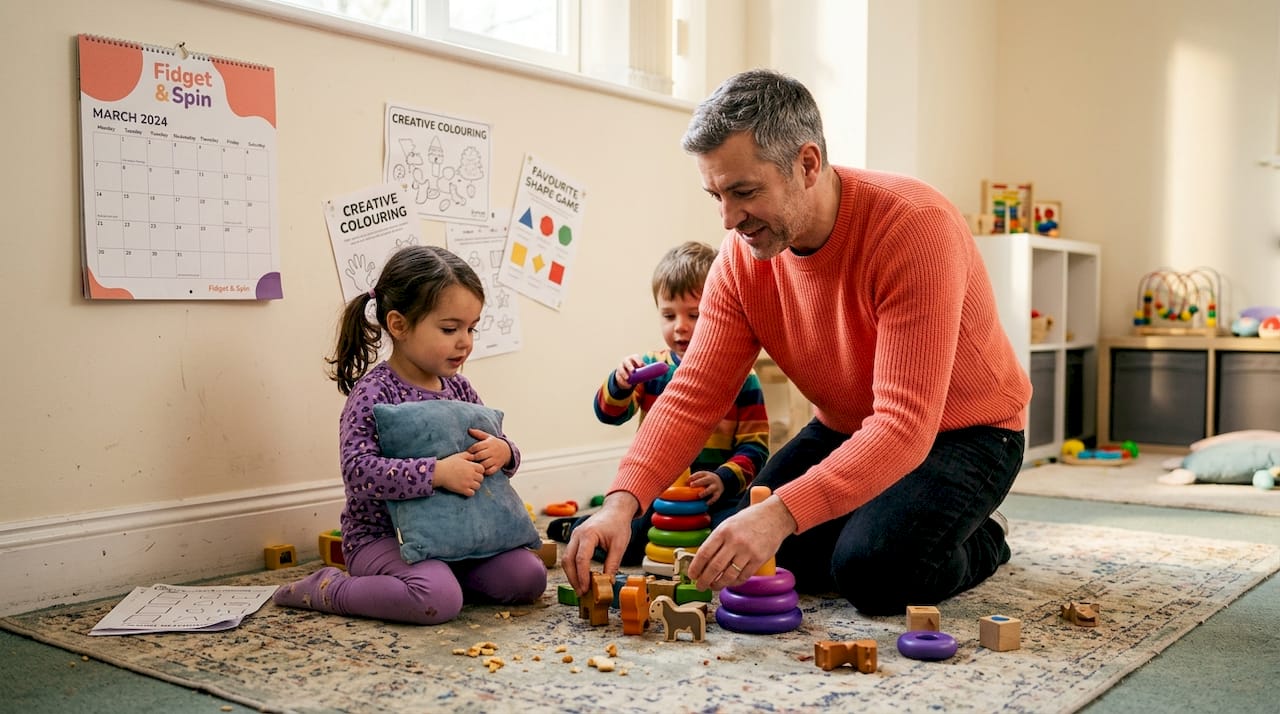
Pro Tip: Pair social stories with a consistent physical cue, like a particular cushion or a soft toy used only during story time. This helps signal to your child that it’s a calm, safe moment, which primes their brain for learning rather than defence.
Crafting and implementing effective social stories
Ready to write one? Good. It’s more straightforward than you’d think, and you don’t need to be a therapist or a published author. You just need to know your child.
Here are the essentials for writing and using social stories effectively:
- Start with one specific situation. Choose something that causes your child genuine distress or confusion. Sharing toys at playgroup, waiting in a queue, or saying goodbye at the nursery gate are all great starting points.
- Write in first person, from your child’s perspective. “When I arrive at playgroup, I might feel nervous. That’s okay. I can hold my comfort object until I feel ready to play.”
- Keep the language at your child’s level. A two-year-old needs three-word sentences; a six-year-old can handle a short paragraph. Match comprehension, not age norms.
- Include visuals. Photographs of real places and people your child knows are especially powerful. Illustrated symbols work beautifully for children using AAC (Augmentative and Alternative Communication).
- Ensure at least 50% of content praises strengths. This is a formal guideline from Carol Gray’s framework. Focus on what the child already does well, not just what they find difficult.
- Read it together, repeatedly, before the event. Not as a test; as a shared, calm ritual.
- Revise as your child grows. A story that worked brilliantly at age three may need updating by age five. Children change; stories should too.
One approach many parents overlook is using the story as a social engagement strategy that naturally invites conversation. After reading, ask open questions: “What do you think happens next?” or “How does that character feel?” You’re not quizzing your child; you’re extending the learning gently into dialogue.
The session structure we use at Fidget and Spin often mirrors social story principles: familiar routines, gentle narrative around each sensory zone, and consistent, calm language from our facilitators. It’s the same logic applied in a physical, playful space.
Pro Tip: Digital tools like simple slideshow apps or child-friendly book-making software can help you create beautiful, personalised stories quickly. Just make sure any AI-generated content is carefully reviewed before sharing with your child. More on that below.
Personalisation and safety: digital tools and expert review
Technology has made it genuinely easier to create personalised social stories. Several apps and even AI writing tools can generate basic narratives tailored to specific scenarios in minutes. For a time-pressed parent, that’s genuinely helpful.
But there’s a catch. AI-generated content, while impressive, doesn’t know your child. It doesn’t know that they’re soothed by dinosaurs, that “good job” feels hollow to them, or that they call their grandmother “Bibby.” Personalisation is the entire point of a social story, and no algorithm can replicate your knowledge of your own child.
Here’s how to use digital tools safely and effectively:
- Use AI or apps as a starting draft, not a finished product. Edit heavily to include your child’s real language, preferences, and contexts.
- Check every sentence for accuracy and appropriateness. AI can produce confident-sounding but inaccurate guidance, particularly around behavioural expectations.
- Involve a professional where possible. Speech and language therapists, educational psychologists, and specialist teachers can review stories for clinical accuracy before you use them.
- Review content for tone. Stories should never feel blaming or pressuring. If the draft uses language like “you must” or “you should always,” revise it.
“The best social story is the one your child sees themselves in. Technology can speed up the process, but it cannot replace the parent who knows their child’s world inside out.”
The use of AI for social stories is growing rapidly, and the autism community is actively exploring both the benefits and the risks. As with any tool, thoughtful application beats enthusiastic but uncritical adoption every time.
Why focusing on strengths transforms social story outcomes
Here’s something I want to say clearly, because most guides skim past it: the most common mistake in social story creation is framing everything around what the child can’t do yet.
We know the intention is good. You want to help. But a story that centres almost entirely on a child’s difficulty, written with the goal of “fixing” a behaviour, sends a quiet message: “You are a problem to be solved.” And children, even very young neurodiverse ones, pick up on that energy. It’s remarkable, actually. They feel it in the texture of the words.
At Fidget and Spin, we’ve watched children light up when they’re celebrated for what they already bring. The child who lines up the sensory bottles by colour with extraordinary precision isn’t exhibiting a quirk; they’re demonstrating a gift for pattern recognition. A social story that acknowledges that gift before addressing a challenge doesn’t just feel nicer. It actually works better. Because a child who feels seen and valued is a child who is open to learning.
This is the bit most conventional guides miss. They treat the 50% praise guideline as a structural rule to follow. We’d argue it’s a philosophy to embrace. When you write a story that genuinely celebrates your child’s strengths first, the guidance that follows lands softer. There’s no defensiveness, no shut-down, no resistance.
Try it. Write a story where the first half is entirely about everything your child does brilliantly. Then introduce the new or tricky situation. You’ll notice a different quality of engagement. That’s not anecdote; that’s how trust and openness work in the brain. Strengths aren’t a nice addition. They’re the foundation.
Start your journey: support for SEN families
If you’ve reached this point and you’re thinking, “I’d love to try this, but I’d also love somewhere safe to practise these skills with my child in real life,” then we’d love to welcome you.
At Fidget and Spin, our sensory play sessions are designed for exactly this: neurodiverse children aged 1 to 7, discovering the world through play, in a space that genuinely gets them. Each session uses familiar routines, gentle group activities, and structured sensory zones that naturally support the kind of social learning social stories prepare children for. If you want to understand the real-world session benefits before booking, our website has everything you need. Come and join a community of parents who understand, because they’re living it too.
Frequently asked questions
What is the best age to start using social stories?
Social stories are most effective for children aged 1 to 7, when early communication and social skills are developing rapidly. Starting early, with age-appropriate visuals and simple language, can make a significant difference.
How often should I read a social story to my child?
Read the story several times before the relevant situation arises, and then repeat it regularly to reinforce understanding. Implementation guidelines recommend reading repeatedly and revising the story as your child’s needs change.
Can social stories help with bullying?
Yes. Research shows that social stories improved coping with bullying in a clinically significant study, helping children develop adaptive responses to difficult peer situations.
What percentage of social story content should focus on strengths?
At least 50% should praise the child’s strengths or positive behaviours. This isn’t just a guideline; it’s central to making stories feel empowering rather than corrective.