TL;DR:
- Parallel play is a crucial developmental stage where children play side by side without direct interaction, fostering social awareness and learning. It especially benefits neurodiverse children by providing a low-pressure environment for observing and gradually engaging with peers. Supporting this phase involves creating calm spaces with duplicate toys, modeling calm play, and respecting individual pacing without forcing social interaction.
You glance over at your little one at a playgroup and notice something. They’re sitting right next to another child, both absorbed in their own puzzles, neither speaking nor looking at each other. Your heart does a small, worried flip. Are they struggling to connect? Is something wrong? The truth is, what you’re witnessing is one of the most important stages in early childhood development, and it has a name: parallel play. For parents of neurodiverse children especially, understanding this stage can shift your whole perspective from worry to wonder.
Table of Contents
- What is parallel play?
- Why parallel play matters in early childhood development
- Parallel play and neurodiversity: Unique perspectives
- How to support healthy parallel play at home and beyond
- When to look for more support: Benchmarks and reassurance
- Why rethinking play stages helps children thrive
- Explore sensory play sessions for more social growth
- Frequently asked questions
Key Takeaways
| Point | Details |
|---|---|
| Parallel play defined | Children play beside each other without interacting, building early social awareness. |
| Developmental importance | Parallel play is a natural, valuable stage for learning from peers and practising emotional skills. |
| Neurodiverse perspectives | For autistic and SEN children, parallel play offers a low-pressure path to social growth. |
| Caregiver strategies | Support parallel play by providing space, duplicate toys, and not rushing social interaction. |
| When to seek support | Watch for broader developmental progress rather than fixating on specific play stages. |
What is parallel play?
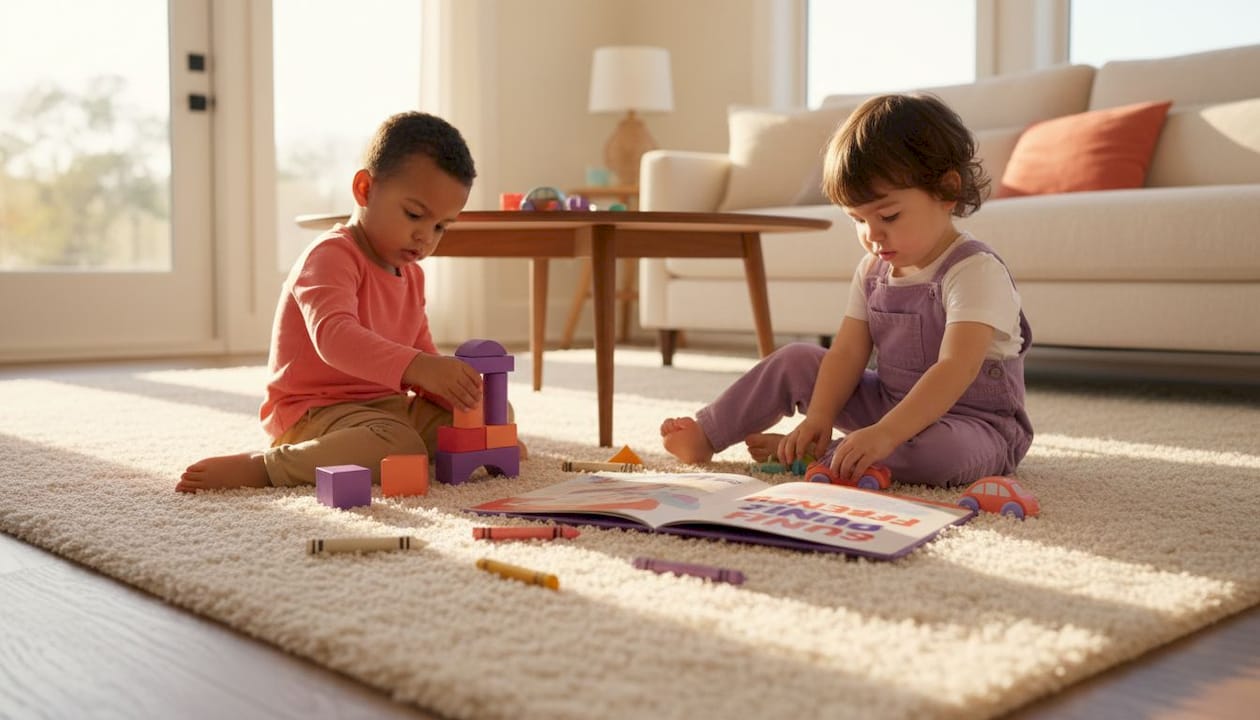
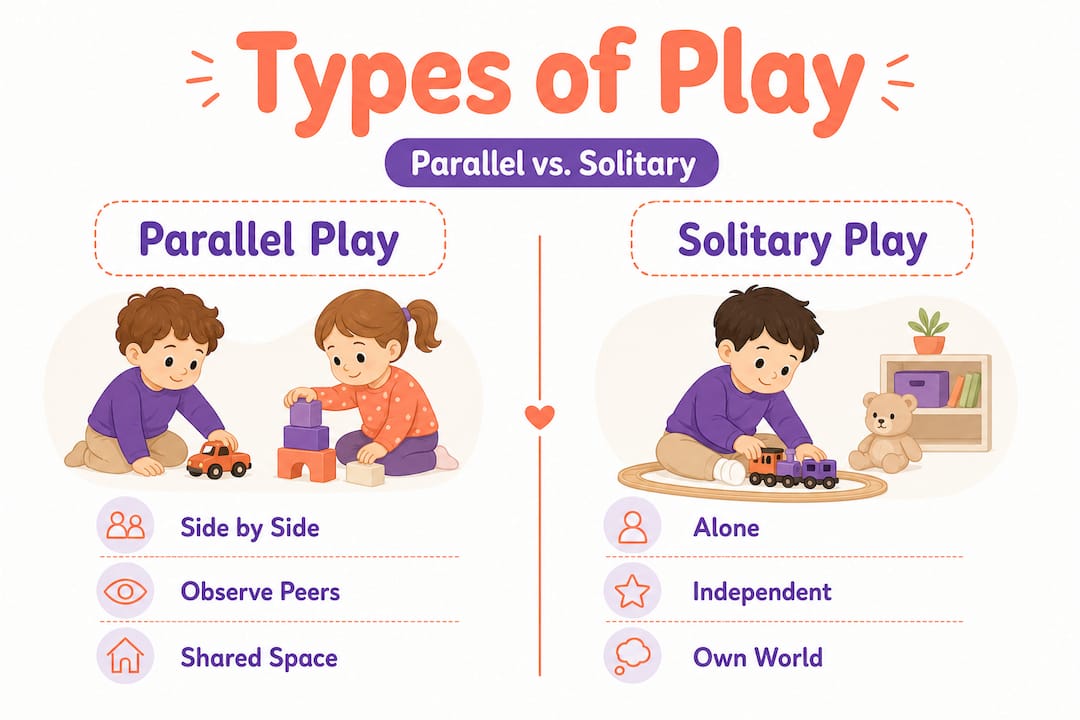
Parallel play is exactly what it sounds like. As Pampers describes, it’s “when young children play side by side or near each other without directly interacting.” Two children, same sandpit, entirely separate worlds. And yet, they’re not truly separate at all.
This is where a lot of parents get confused. It looks like the children are ignoring each other, so it can feel like a social failure or a missed opportunity. But that’s a misreading of what’s actually happening. Parallel play differs from solitary play in one crucial way: children are physically near others and aware of them, even if they’re not coordinating. There’s a quiet, low-key social awareness bubbling underneath.
Here’s a real-life example. Imagine two toddlers sitting side by side, each with their own set of LEGO bricks. One is building a tower, the other is lining up pieces in a row. They’re not working together, not asking for help, not even commenting on what the other is doing. But every so often, one peeks sideways. Takes a mental note. That’s not nothing. That’s social learning happening in real time.
“Parallel play is not antisocial. It is the first rehearsal for social life.”
Types of play compared
| Type of play | Typical age | Key features | Social interaction |
|---|---|---|---|
| Solitary play | 0–2 years | Plays alone, no awareness of peers | None |
| Parallel play | 2–4 years | Plays near others, aware but not interacting | Indirect awareness |
| Associative play | 3–5 years | Shares materials, talks to peers | Loosely connected |
| Cooperative play | 4+ years | Shared goals, role assignment, rules | Fully interactive |
Signs your child is in parallel play:
- Chooses to sit or play near another child rather than away from everyone
- Uses similar toys or materials but does not share or swap
- Occasionally watches what the other child is doing
- Does not initiate conversation but may comment briefly
- Seems content and calm rather than distressed
Understanding which type of play your child is engaging in helps you support the right session structure for play that meets them where they are.
Why parallel play matters in early childhood development
Parallel play isn’t a placeholder. It’s not simply what children do before they really start playing together. It’s a meaningful developmental milestone in its own right, and dismissing it as a lesser stage does children a disservice.

Developmental psychologist Mildred Parten mapped out a sequence of social play stages in the 1930s, and her framework remains influential today. Parallel play sits within Parten’s stages, typically emerging around ages 2 to 4. It’s part of a progression, but not a rigid ladder. Children don’t simply climb from one rung to the next and never look back.
Research also shows that by ages 2 to 4, children show increasing social and emotional play behaviours, moving gradually from playing next to others towards sometimes playing with them. Gradually. Not overnight. And that’s exactly right.
The real benefits of parallel play
- Observational learning. Children watch what their peers do and quietly absorb it. They notice how another child stacks blocks, how they react when something falls, how they respond to frustration. This watching is actually a form of social education.
- Shared focus without pressure. Being near others in a calm way builds tolerance for proximity. It’s a gentle way to practise co-existing with peers before the demands of direct interaction kick in.
- Emotional self-regulation. Parallel play is low-demand. It gives children space to manage their own feelings without the added complexity of navigating someone else’s emotions and responses at the same time.
- Building confidence. Feeling comfortable near others, without being required to perform socially, builds a quiet self-assurance. Children learn they can be around others and still feel safe.
- A natural bridge. When children are ready, parallel play transitions organically into associative play. You might notice a child glance at a peer’s creation and then start making something similar. That’s the bridge forming.
Pro Tip: It’s completely normal for children, including neurodiverse children, to move fluidly between types of play depending on the day, the environment, and how regulated they feel. A child might engage in associative play on a calm Tuesday and return to parallel play on a busy, overwhelming Friday. That’s not regression. That’s flexibility.
Look at relevant developmental benchmarks as a broad guide, not a strict timetable.
Parallel play and neurodiversity: Unique perspectives
For neurodiverse children, whether they’re autistic, have ADHD, sensory processing differences, or another profile entirely, parallel play can take on a special kind of significance. It’s not just a developmental phase. It can be a sanctuary.
Direct social interaction requires a huge amount of simultaneous processing. Reading facial expressions, interpreting tone of voice, navigating turn-taking, managing unexpected responses, regulating sensory input from the environment. For many neurodiverse children, that’s an enormous amount to handle all at once. Parallel play strips most of that away.
Parallel play offers neurodiverse children a lower-pressure way to practise being around peers. They can observe, adjust, and absorb social information at their own pace, without needing to perform or respond in real time. Think of it like watching a dance before you try the steps yourself. Much less terrifying.
For children with ADHD, parallel play also allows for movement and self-directed focus, both of which help with regulation. They can be near others without the constant demand to redirect their attention to a shared goal. There’s real strength in that kind of neurodiverse play that often gets overlooked.
Signs your child benefits from parallel play:
- 🧩 Seems more relaxed near peers than in direct interaction
- 🌊 Engages better when there’s no expectation to share or take turns
- 👀 Watches other children closely without approaching them
- 🎨 Mimics what they see others doing after the fact, not in the moment
- 💛 Appears content and regulated during side-by-side activities
Callout: Research consistently shows that for autistic children and those with sensory processing differences, the opportunity to engage socially without direct demands is not a consolation prize. It’s a genuine, positive pathway to social growth.
Pro Tip: Resist the urge to prompt your child to interact. Narrating what you are doing nearby, or playing alongside them yourself, can be far more effective than nudging them towards another child. Let them set the pace.
The design of sensory play environments can make all the difference here. Spaces that are calm, predictable, and sensory-aware naturally support the kind of relaxed presence that makes parallel play flourish.
How to support healthy parallel play at home and beyond
Understanding parallel play is one thing. Supporting it practically is another. The good news is that it doesn’t require a lot of specialist equipment or complicated routines. It does require a shift in expectation.
Caregivers support parallel play best by providing duplicate or similar materials and allowing enough uninterrupted time and space, without pushing for direct interaction. That last part is the hardest bit, because our instinct as parents is often to facilitate, to bridge, to encourage connection. Sometimes the most powerful thing you can do is step back.
Setting up for successful parallel play
- Choose a calm, contained space. A corner of a room, a low table with clear boundaries, or a defined area on a rug all help children understand where play is happening. Less visual noise means less overwhelm.
- Provide duplicate toys. Two sets of the same blocks, two portions of kinetic sand, two simple puzzles. Removing the need to share eliminates a major source of conflict and pressure.
- Minimise transitions. Sudden changes in activity or environment can disrupt the quiet comfort of parallel play. Give plenty of warning before moving on.
- Play alongside them yourself. Modelling calm, focused play sends a powerful message. It shows that being near someone, doing your own thing, is entirely valid.
- Invite rather than instruct. “I’m going to build something over here” is more effective than “Go and play next to your friend.”
- Let silences be. Not every moment needs narration or encouragement. Silence between children in parallel play is not awkward. It’s comfortable co-existence.
Common mistakes to avoid:
- Prompting your child to talk to or share with the other child before they’re ready
- Praising interaction so heavily that it creates pressure around socialising
- Ending the session too soon when it looks like “nothing is happening”
- Setting up identical activities but in separate rooms, which defeats the purpose
- Comparing your child’s pace to neurotypical peers
Pro Tip: Watch for the moment your child glances over at what another child is doing and then adjusts their own play. That tiny flicker of awareness is the spark of social development. It’s easy to miss, but enormously significant.
You can explore options to book a sensory session where this kind of environment is already thoughtfully built in.
When to look for more support: Benchmarks and reassurance
Parallel play alone is never a red flag. But it can be worth paying attention to the broader picture of your child’s social and emotional development, especially over time.
“Look for whether your child is making progress, not just which play stage they’re in.”
Rather than treating parallel play as a concern in isolation, look for broader social and emotional progress across different settings and over several months.
Signs that it might be worth a conversation with your GP or paediatrician:
- A noticeable regression in play level after a period of more interactive play
- No apparent awareness of or interest in other children across many months
- Significant distress when near peers, even in calm, low-demand settings
- Absence of any communicative behaviours, including eye contact, gesture, or vocalisation
- Flat emotional responses in all social situations, not just demanding ones
It’s also worth knowing that social development concerns can sometimes overlap with other factors, including stress, significant change at home, or sensory overwhelm. Context matters enormously.
Variation is normal. Especially for neurodiverse children. A child who spends most of their time in parallel play at age five may simply need a different pace, not a different outcome.
Why rethinking play stages helps children thrive
Here’s a thought that took us a while to properly sit with: the traditional view of play development as a neat ladder, where children climb steadily from solitary to cooperative play, isn’t actually how it works for most children. And yet, many parents are still inadvertently measuring their child against it.
Some developmental perspectives stress that children move fluidly between different types of play, not in a rigid sequence. A five-year-old who loves cooperative imaginative play might return to quiet, solitary parallel play when they’re tired or overwhelmed. That’s not a step backwards. That’s emotional intelligence.
In our sessions at Fidget and Spin, we’ve seen it time and again. The children who thrive most aren’t necessarily the ones who are nudged towards cooperative play the fastest. They’re the ones whose parallel play is respected and given room. Given that foundation, they find their own way to connection. Often in ways that are beautifully unexpected.
There’s a tendency in parenting culture to treat every developmental stage as something to graduate from. But parallel play isn’t a waiting room. It’s a place of real learning, real growth, and real social development, happening on your child’s own terms.
Swapping pressure for presence is not passive parenting. It’s a profound kind of attunement. And in our experience supporting families at our inclusive play experiences, that attunement makes all the difference.
Explore sensory play sessions for more social growth
If this article has resonated with you, you might be wondering what a genuinely supportive play environment actually looks and feels like in practice.
At Fidget and Spin in Brighton & Hove, we’ve designed our sessions around exactly these principles. Our spaces are calm, sensory-aware, and intentionally low-pressure. Parallel play isn’t just tolerated here. It’s celebrated. Each session features themed sensory zones where children can explore at their own pace, near peers, without expectation. When you’re ready to see how our sessions work or want to take the next step, you can book a sensory play session directly or join the waitlist to be notified of upcoming availability. Because every little SEN explorer deserves a space built just for them.
Frequently asked questions
Is parallel play normal for autistic children aged 5 or 6?
Yes, parallel play can last longer for autistic children and may look different from neurotypical play, but it remains a healthy and meaningful way to develop social awareness at their own pace.
Should I worry if my child only plays next to others and not with them?
This is a recognised and healthy stage. Watch for enjoyment and gradual progress over time, and seek advice if you notice regression or a complete absence of social growth across many months.
How can I encourage my child to move from parallel play to playing with others?
Set up side-by-side play with similar toys and avoid forcing interaction. Social development unfolds most naturally when children feel safe, not prompted.
Is parallel play the same as solitary play?
No. In parallel play, children are near and aware of each other, which is a meaningful distinction from solitary play, where there is no social awareness at all.
What ages is parallel play typical for?
Parallel play is most common from ages 2 to 4, but it can begin earlier and extend well beyond that, particularly in neurodiverse children, without being a cause for concern.