
TL;DR:
- SEN refers to children who require extra or different educational support, regardless of diagnosis. Identification is based on need, not medical labels, and supports are available through local support services in Brighton & Hove. Prioritizing participation and inclusive support can improve outcomes even without formal documentation.
If you’ve ever sat across from a professional and walked away wondering whether your child “counts” as having SEN, you’re not alone. So many families we speak to in Brighton & Hove are caught in that bewildering space between “something feels different” and “we haven’t got a diagnosis yet.” Here’s the thing: SEN isn’t about labels, it’s about whether your child needs support that goes beyond what’s typically offered. That distinction matters more than you might think, and it’s where we want to start.
Table of Contents
- What does SEN mean?
- How is SEN identified and supported?
- The SEN support cycle: what does it look like?
- Why SEN numbers are rising and what this means for your family
- Inclusive play for neurodiverse children in Brighton & Hove
- A new way to think about SEN: participation first, not labels
- How Fidget and Spin can help you on your SEN journey
- Frequently asked questions
Key Takeaways
| Point | Details |
|---|---|
| SEN means extra support | SEN is about extra or different educational help for children, not just a medical diagnosis. |
| Support is ongoing | Brighton & Hove uses the assess, plan, do, review cycle so support can adapt as your child’s needs change. |
| Participation comes first | Focus on removing barriers and helping your child join in, rather than chasing a particular label. |
| Local help available | Specialist teams and inclusive play options are available throughout Brighton & Hove. |
What does SEN mean?
SEN stands for Special Educational Needs. It refers to children who require extra or different educational support compared to most of their peers. The broader term you’ll often see written down is SEND, which stands for Special Educational Needs and Disabilities. The addition of “Disability” matters because it explicitly recognises that physical, sensory, and long-term conditions are also part of this picture.
Here’s a distinction worth holding onto. SEN is not the same thing as a diagnosis. A medical diagnosis (such as autism, ADHD, or dyspraxia) describes what’s happening neurologically or physically. SEN, on the other hand, is an educational and functional concept. It asks: does this child need provision that is additional to or different from mainstream provision? If the answer is yes, that child has SEN, regardless of whether they have a formal diagnosis sitting in a folder somewhere.

This framing is genuinely liberating for many families. It means your child doesn’t need to wait months or years for a diagnosis before getting support.
The four broad areas of SEN
The SEND Code of Practice groups needs into four areas:
- Communication and interaction: includes speech and language difficulties, autism, and challenges with social communication
- Cognition and learning: covers dyslexia, dyscalculia, moderate to severe learning difficulties
- Social, emotional and mental health (SEMH): includes anxiety, ADHD, attachment difficulties, and emotional dysregulation
- Sensory and/or physical needs: covers hearing and visual impairments, sensory processing differences, and physical disabilities
“A child or young person has SEN if they have a learning difficulty or disability which calls for special educational provision to be made for them.” SEND Code of Practice, 2015.
It’s worth looking at care guidance for families if your child has both educational and care needs, as the two can overlap significantly, especially in early years.
| Term | What it means | Requires diagnosis? |
|---|---|---|
| SEN | Child needs different or additional educational support | No |
| SEND | Broader term including disabilities | No |
| EHCP | Education, Health and Care Plan, for complex needs | No, but evidence needed |
| Diagnosis | Medical identification of a condition | Yes, via clinician |
How is SEN identified and supported?
After understanding what qualifies as SEN, it’s important to know how identification and support actually work in your local area.
In Brighton & Hove, SEN identification is led by educational need, not medical evidence. A nursery worker, childminder, or teacher who notices that a child is struggling can flag this without waiting for a GP referral. That’s an important detail, especially for younger children whose needs might not yet be medically documented.
Brighton & Hove Inclusion Support Service (BHISS) is the council’s specialist team for early years and school-age children. They work directly with families, early years providers, and schools to identify needs and put support in place. It’s a genuinely useful first port of call if you’re unsure where to begin.
Here’s how the identification process typically works:
- Concern is raised by a parent, carer, or practitioner who notices the child is not progressing or is struggling in specific areas.
- Initial observation and monitoring takes place within the setting, usually led by the SENCO (Special Educational Needs Coordinator), who every registered setting must have.
- Discussion with parents happens early in the process. You are a partner here, not an afterthought.
- A support plan is created that sets out what extra provision the child will receive.
- The cycle continues through regular review points to check whether support is working or needs to change.
How early years and childcare providers support children gives a detailed breakdown of how settings are expected to operate in Brighton & Hove, including the SENCO role and reporting responsibilities.
Understanding how support sessions work in specialist play settings can also help you understand what “good” looks like when you’re visiting or choosing provision for your child.
For families navigating more complex multi-agency care, it’s worth reading about navigating care pathways to understand how educational and health support can be coordinated effectively.
Pro Tip: Your child’s needs will change over time. Don’t treat the first support plan as the final word. Ask for regular reviews and come to them with your own observations from home. What works at three may not work at five.
The SEN support cycle: what does it look like?
Once a child’s needs are identified, the SEN support cycle guides practical intervention and ongoing adjustments.
The graduated “Assess, Plan, Do, Review” cycle is the backbone of SEN support in mainstream settings across England. Brighton & Hove settings follow this same approach. It’s not a one-off process. It loops continuously, adapting as your child grows and as you learn more about what works.
Here’s what each stage actually looks like in practice:
- Assess: The setting gathers information about your child’s strengths, difficulties, and barriers. This might include observations, conversations with you, developmental checks, or referrals to specialists.
- Plan: Together, the SENCO, practitioners, and you as the parent agree on specific targets and strategies. This is written into a support plan or Individual Education Plan (IEP).
- Do: The agreed strategies are put into place within the daily routine. This could mean visual timetables, sensory breaks, one-to-one time, or adjusted activities.
- Review: At regular intervals (usually termly), everyone involved looks at whether the child is making progress. The cycle then starts again.
A practical example: imagine a three-year-old in a Brighton nursery who finds transitions between activities overwhelming and often becomes distressed or withdrawn. The SENCO assesses the triggers, plans a visual countdown system and a calm-down corner, implements it with consistent staff, and then reviews after six weeks. The child begins to anticipate transitions more easily. The plan is updated to build on that progress.

| Stage | Who is involved | What it produces |
|---|---|---|
| Assess | SENCO, parents, practitioners, specialists | Clear picture of need |
| Plan | SENCO, parents | Written support plan with targets |
| Do | Practitioners, child, parents at home | Daily adjusted provision |
| Review | All parties | Updated plan or escalation to EHCP |
Pro Tip: Keep a simple notebook or notes app log of what you observe at home between reviews. A short daily note about mood, triggers, and what helped can transform a review meeting. It gives practitioners real data they can’t get from a classroom alone. You’ll find stories and inspiration from local families on the Fidget and Spin blog.
Why SEN numbers are rising and what this means for your family
Understanding the support cycle is crucial, but it’s also important to know how trends in SEN numbers affect you and the resources available to your family.
The proportion of pupils with SEN has risen consistently year on year. In January 2025, over 1.7 million pupils in England were identified with SEN. That’s not a small niche. That’s a significant and growing part of the school population.
What’s driving this? Mostly, improved awareness and better identification. Professionals are more trained than they were a decade ago to spot sensory processing differences, communication needs, and SEMH challenges in young children. Parents are more informed too. That’s genuinely a good thing, even if it puts pressure on local services.
For Brighton & Hove families, this means a few practical things:
- Start early. The earlier you raise concerns, the sooner support can be put in place. Don’t wait for a diagnosis before speaking to your setting.
- Know what to ask for. You can request a meeting with the SENCO, ask what SEN support is available, and ask for a written plan.
- Advocate persistently but collaboratively. Services are stretched. Being clear, calm, and consistent in your requests tends to produce better outcomes than conflict.
- Use the local offer. Brighton & Hove Council publishes a local offer online, which lists all the services and support available to families.
Key services and contacts in Brighton & Hove:
- BHISS (Brighton & Hove Inclusion Support Service)
- Brighton & Hove SEND team at the council
- SENDIASS (Special Educational Needs and Disabilities Information Advice and Support Service)
- NHS speech and language therapy
- Occupational therapy via community paediatrics
If your child has learning disabilities, specialist care and support services can work alongside educational provision to give a fuller picture of your child’s needs.
You can book sensory sessions as part of a broader support network, offering your child a weekly space that nurtures confidence and communication at the same time.
Inclusive play for neurodiverse children in Brighton & Hove
With rising numbers and a clear support cycle, families need practical advice on how to find and advocate for inclusive play locally.
Play is not optional. It is how children learn, communicate, process emotion, and build relationships. For neurodiverse children, the right play environment can make an enormous difference to their confidence and their ability to engage socially. The wrong one, with sensory overwhelm, rigid structure, or a lack of understanding from adults, can set things back significantly.
Finding inclusive play settings in Brighton & Hove means knowing what to look for and what to ask.
- Ask about adjustments before you arrive. A welcoming setting will be happy to discuss sensory sensitivities, communication preferences, or behavioural support before your first visit.
- Look for trained staff. Settings where practitioners have SEN or early years inclusion training tend to create better experiences for neurodiverse children.
- Check the environment. Dim lighting options, quiet corners, predictable routines, and access to sensory materials are all positive signs.
- Enquire about specialist involvement. Some settings work regularly with speech and language therapists, occupational therapists, or behaviour support specialists.
Brighton & Hove’s SEN team can signpost families to inclusive early years settings and support services locally.
Pro Tip: When you visit a new play setting, notice how staff respond when your child does something unexpected. Their reaction to a meltdown, a shutdown, or an unusual sensory behaviour tells you everything about how well they’ll support your child.
Explore our Brighton sensory playgroup to see what an inclusive, neurodiverse-friendly play space looks like in practice.
For older children or those with more complex care needs, supported living services can sometimes complement early years support as families plan ahead.
A new way to think about SEN: participation first, not labels
Here’s something that might feel counterintuitive after everything we’ve just covered. The most transformative shift you can make as a parent navigating SEN is to stop asking “does my child qualify?” and start asking “what does my child need to participate?”
We’ve met families who have spent two years pursuing a diagnosis, feeling like nothing can happen until that label arrives. Meanwhile, their child has missed out on inclusive play, targeted support, and joyful learning experiences simply because the paperwork wasn’t in place. That breaks our hearts a little.
SEN support is tied to need, not diagnosis. This is official guidance. Yet so much of how the system is discussed focuses on getting the “right” documentation that it can feel like the label is the goal. It isn’t. The goal is your child thriving.
Conventional wisdom says: get the diagnosis, get the EHCP, then the support will follow. And yes, formal documentation matters, especially for significant or complex needs. But day-to-day, what actually changes your child’s experience is whether the adults around them understand their sensory thresholds, whether the environment accommodates their communication style, and whether they feel safe and welcomed.
Inclusive support in play doesn’t wait for paperwork. It starts with understanding who your child is right now, what lights them up, and what helps them feel regulated enough to engage with the world.
Reframe your advocacy: participation first, paperwork later. Push for access, adjustments, and genuine inclusion regardless of diagnosis status. The label might help eventually. Real participation helps today.
How Fidget and Spin can help you on your SEN journey
Navigating SEN can feel like trying to solve a puzzle while someone keeps changing the pieces. But you don’t have to do it alone, and your child doesn’t have to wait for everything to be officially sorted before experiencing the joy of truly inclusive play.
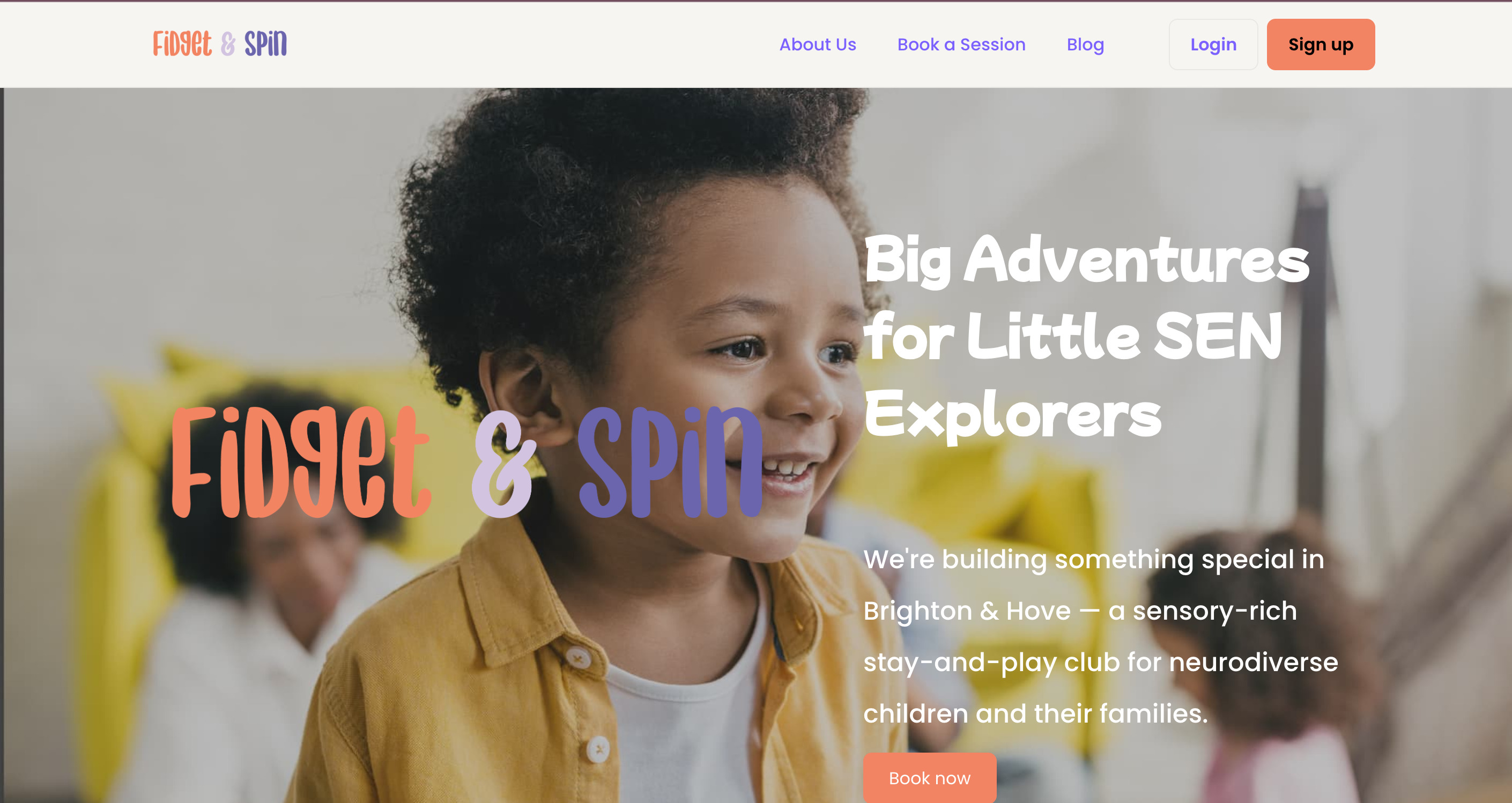
At Fidget and Spin, we run sensory stay-and-play sessions in Brighton & Hove designed specifically for neurodiverse children aged 1 to 7. Our sessions are built around the understanding that every child has different sensory needs, communication styles, and ways of engaging with the world. There’s no expectation to perform, no rigid structure that leaves no room for your child to just be. Learn more about how sessions support SEN children in a warm, specialist environment. When you’re ready, you can book a session or simply visit our playgroup page to find out more. We’d love to welcome you both.
Frequently asked questions
Is SEN different from SEND?
SEN stands for Special Educational Needs while SEND stands for Special Educational Needs and Disabilities. SEND is the broader, more inclusive framework now used across England to capture both educational and disability-related needs.
How do nurseries and playgroups in Brighton support children with SEN?
Every registered setting must have a SENCO, and early years providers follow the Assess, Plan, Do, Review cycle to put tailored support in place for individual children.
What kind of specialist help can my child access locally?
Families in Brighton & Hove can access BHISS and council SEND teams alongside NHS-linked specialists including speech and language therapists and occupational therapists.
Does my child need a diagnosis to get SEN support?
No. SEN provision is based on need, meaning your child can receive additional support without a formal diagnosis if their setting identifies that they need it.
Are numbers of children with SEN increasing?
Yes. SEN numbers have risen each year, with over 1.7 million pupils identified in England as of January 2025, reflecting improved awareness and identification rather than a sudden rise in conditions.